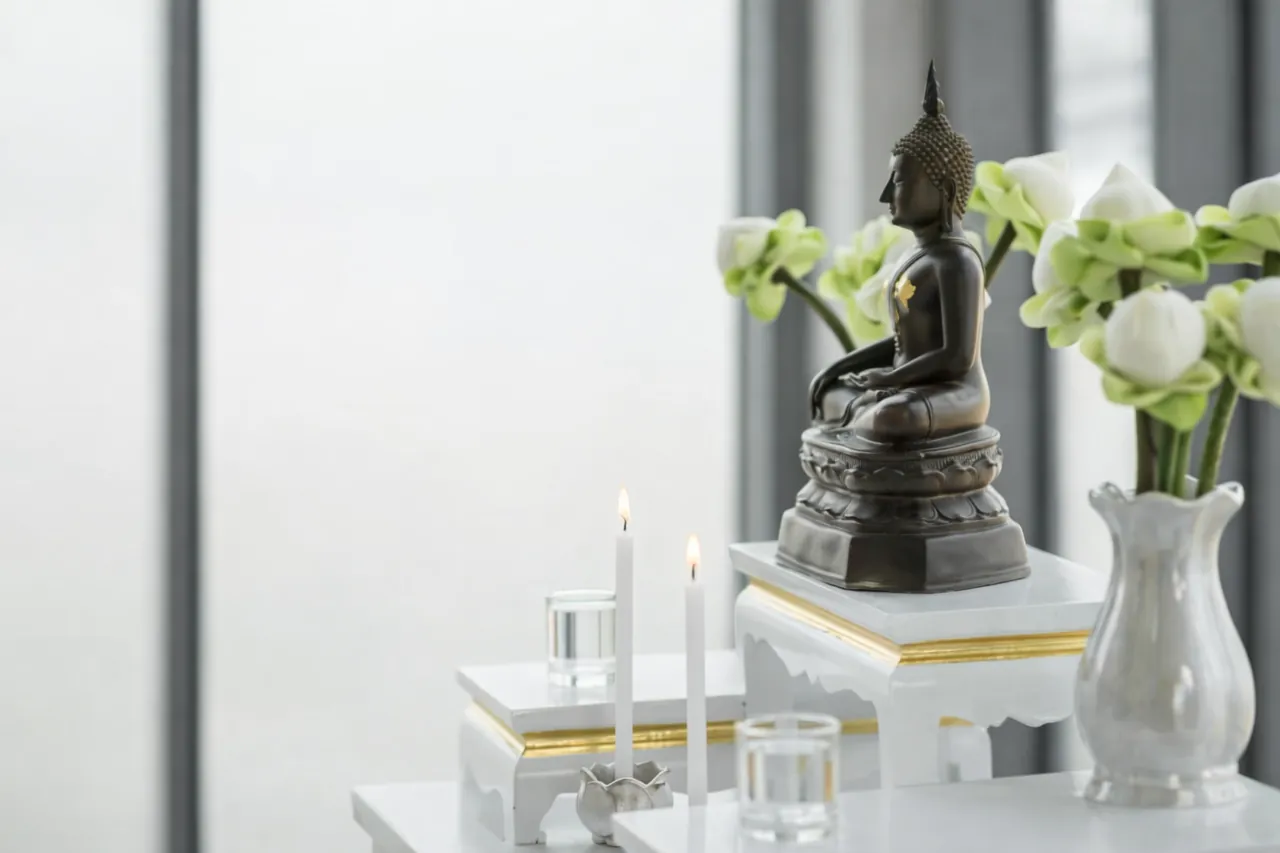




Wooden and marble mandir designs for homes can create a calm, practical, and elegant pooja space. However, you need to ensure that your mandir is built with durability, ease of cleaning, warmth, and storage in mind. Material selection, proper maintenance, and personalisation are all crucial to building an effective and long-lasting mandir for your home.
A pooja corner should be useful and calm, not just decorative. In tight Mumbai apartments and sunlit Bengaluru flats, decisions about materials, ventilation, and storage shape how the mandir functions every day.
If you’re looking at a marble mandir design for home, think about using marble where it’s practical (altar, plinth, backdrop) and wood where it makes the space feel lived in (doors, cabinets, trims). That balance keeps the mandir ready for daily prayers and festival hosting without becoming high-maintenance.
Wood and marble behave differently, and each has strengths. Marble reflects light, resists oil and soot, and brightens small corners. These qualities make marble mandir designs for homes a popular choice.
On the other hand, wood adds texture, warmth, and useful storage; think doors, cornices, and drawers. When you plan a house mandir design that combines both, you get a durable worship surface and a tactile, human-scale design that fits your everyday family life.
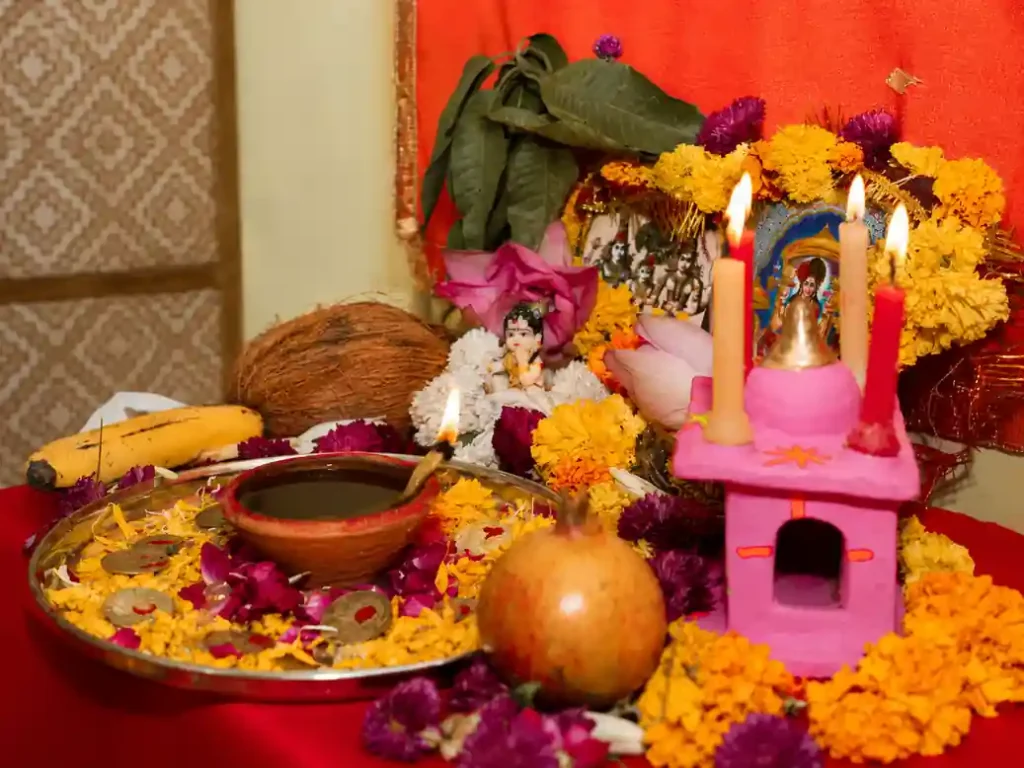
The mandir is more than an object; it’s where daily rituals begin, where guests form an impression, and often where festival activity concentrates. In a Mumbai 1BHK, the balcony niche or a hallway alcove might double as the pooja corner.
In Bengaluru, open-plan living calls for acoustic and light buffering so the aarti isn’t competing with the TV. Interior designers in Bangalore must pick the right marble mandir design for the home to ensure that ventilation, storage planning, and lighting are all practically integrated without disturbing the sanctity of the mandir.
Solid teak or rosewood with carved panels suit bungalow-style flats and homes that favour heritage detail. Pair carved wood with a marble base to protect against oil and soot.
Slim profiles in oak or engineered teak read contemporary and clean. Concealed strip lighting and a beadboard back make the mandir feel calm without heavy ornamentation.
Ideal for narrow corridors or bedroom corners. A wall-mounted design frees floor space and prevents clutter from collecting beneath the shelf, handy in compact Mumbai apartments.
Use white or off-white marble to brighten a small pooja niche; it stays cool under lamps and reads clean during festival season.
Black or grey marble lends drama and depth, but good accent lighting is essential to avoid a heavy look.
Brass, semi-precious stone or simple geometric inlays can personalise marble mandir designs for homes without excessive upkeep.
A wooden cabinet that frames a marble worship plane combines the tactile warmth of wood with the low-maintenance surface of stone.
Marble as the primary plane keeps cleaning simple, while wooden shelves and doors add texture and usable storage, a common approach in many pooja mandir designs.
Light marble bases with darker wooden elements balance reflection and intimacy, particularly useful in east-facing entries that receive strong morning light.

Small spaces benefit from practical moves more than dramatic gestures. Use vertical storage; cabinetry above the mandir for puja cloths and brassware. Fit sliding or bi-fold doors if your pooja shares space with the living room.
Layer lighting: task lights for the idol, ambient for meditation, and a dimmable sconce for evening aarti; this reduces glare on marble and highlights wood grain. For a compact pooja room marble mandir, add a discreet top vent or exhaust to manage incense smoke.
Place the idol at a comfortable eye level and keep one drawer reserved for matches, wicks, and oils. If kids study nearby, include a wooden acoustic panel to reduce distraction. Host festivals often? Add modular display shelves for diyas and garlands. Pets in the house mean raising the platform a bit and using child-safe latches. Keeping these factors in mind is crucial to designing an effective mandir in your home.
Marble needs quick spill cleanup and a mild pH neutral cleaner for stubborn oil marks; consider resealing polished marble every 1–2 years in heavy-use scenarios. For wood, dust weekly, avoid prolonged exposure to direct sunlight, and wipe with a damp cloth rather than soaking.
In coastal Mumbai, check finishes and joints annually to prevent swelling; in Bengaluru, focus on keeping surfaces dust-free and protected from harsh sunlight. Use brass or stainless hardware for longevity and service hinges and lighting before festival seasons.
Bonito Designs follows a LifeDesign philosophy: create spaces that match how people actually live. We handle design, build, ISO certified QC, and handover, all in-house. Our teams understand local flats, how glare affects an east-facing entry, where clutter tends to collect in a 2BHK, and what festival hosting requires.
Bonito Designs builds pooja mandir designs for everyday use. Book a consultation today!
Marble is better for durability, brightness, and easy cleaning, especially around oil lamps and incense. Wood is ideal for warmth, carved detailing, and storage. A combination of both often works best.
Use wall-mounted shelves, vertical storage, sliding or bi-fold doors, layered lighting, and a compact marble altar to save space while keeping the pooja area functional.
Wood adds warmth and a traditional feel, while marble provides a durable, low-maintenance surface. Together, they create a balanced mandir that is both elegant and practical.
Clean spills quickly, use a mild pH-neutral cleaner for oil marks, and reseal polished marble every 1–2 years if the mandir is used heavily.
Dust it weekly, avoid excess moisture and prolonged exposure to direct sunlight, and wipe it gently with a damp cloth rather than soaking the surface.