


Imagine you already have a gorgeous bedroom, with clean lines, a statement headboard, and perfectly curated and personalised décor. However, you still wake up tired each morning, a good night’s rest still eluding you despite your room’s beauty.
If you live in a busy city like Mumbai or Bangalore, you know how essential sleep is for your day-to-day routine and work-life balance. The truth is that modern bedroom interior design isn’t just about aesthetics. While beauty is important, your room’s functional design plays a powerful role in regulating your nervous system through light, layout, materials, and visual calm.
A modern bedroom should help your body switch off. When it doesn’t, sleep becomes shallow, restless, and fragmented. Let’s look at modern bedroom interior design ideas that can help you avoid this issue and find the restful sleep you deserve.
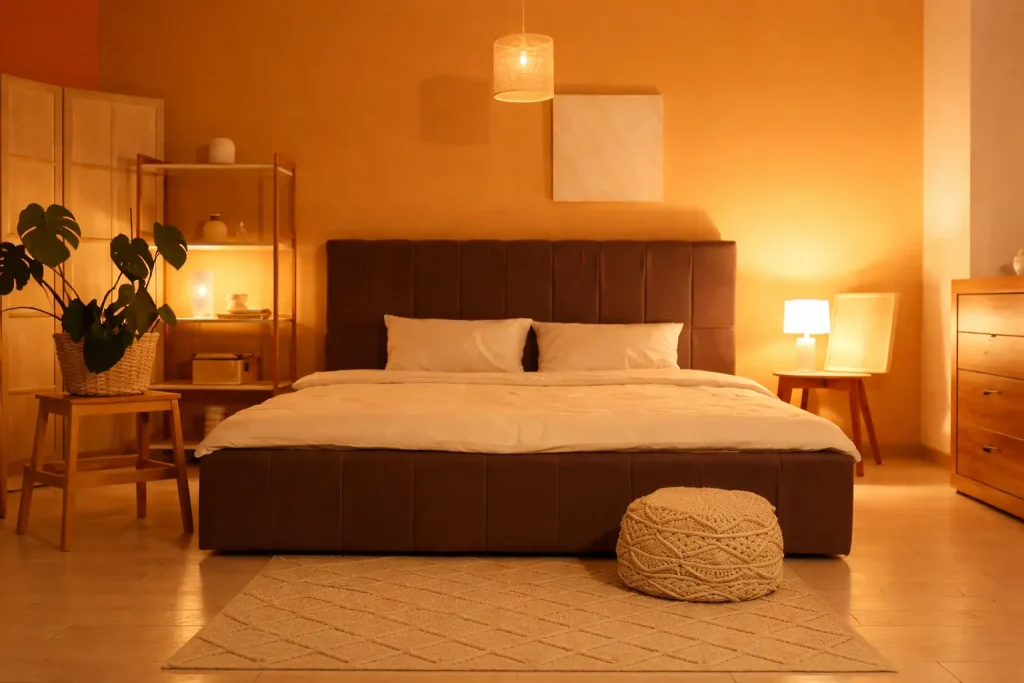
Throughout the day, your brain is bombarded with notifications, traffic noise, artificial lights, and constant work pressure. By the time you reach your bedroom, your body needs cues that signal safety and calmness.
If any of these factors are missing in your bedroom, it can lead to continued activity in your brain even when you desperately need to rest.
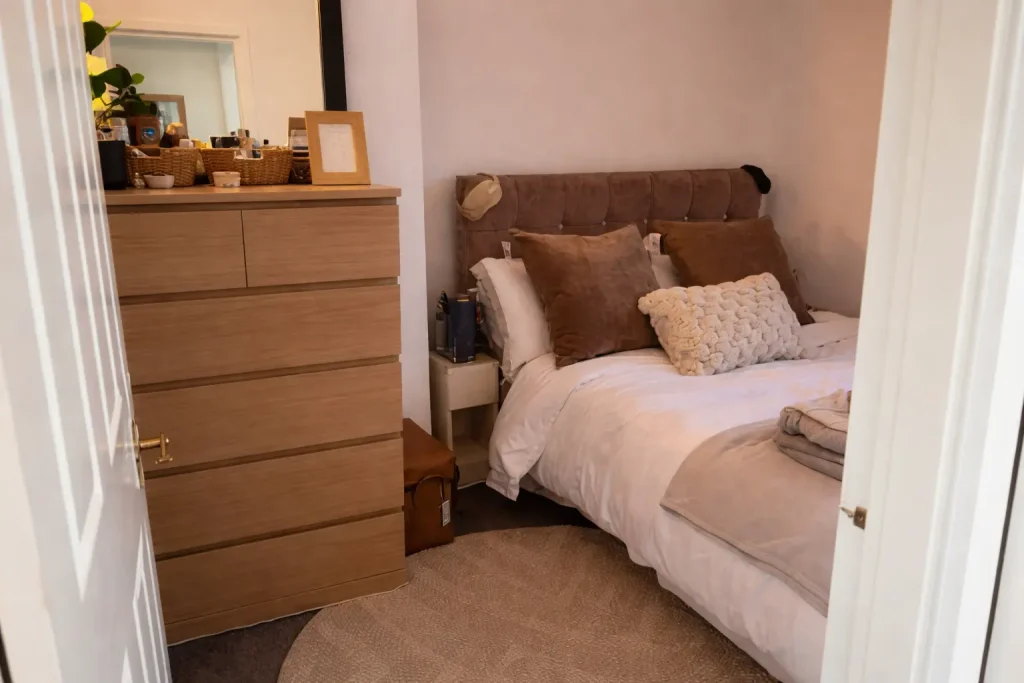
Many trendy bedroom layouts prioritise symmetry, feature walls, or large windows behind the bed. But layout isn’t just visual, it’s also psychological.
In well-planned modern master bedroom interior designs, bed placement is absolutely critical. Ideally, your bed should:
The best master bedroom designers understand how even slight disturbances can lead to tiresome work weeks due to a lack of sleep. When your bed sits in a direct line with the door, your subconscious remains slightly alert. And when circulation paths feel cramped, your body registers subtle tension. All these aspects must be addressed during the bedroom design process.
Interior designers in Mumbai often see this in high-rise apartments where beds are pushed into tight corners to accommodate wardrobes. In compact Bandra homes, for instance, repositioning the bed to create balanced walking space on both sides can noticeably improve your sleep quality.

If there’s one factor that most impacts rest, it’s lighting.
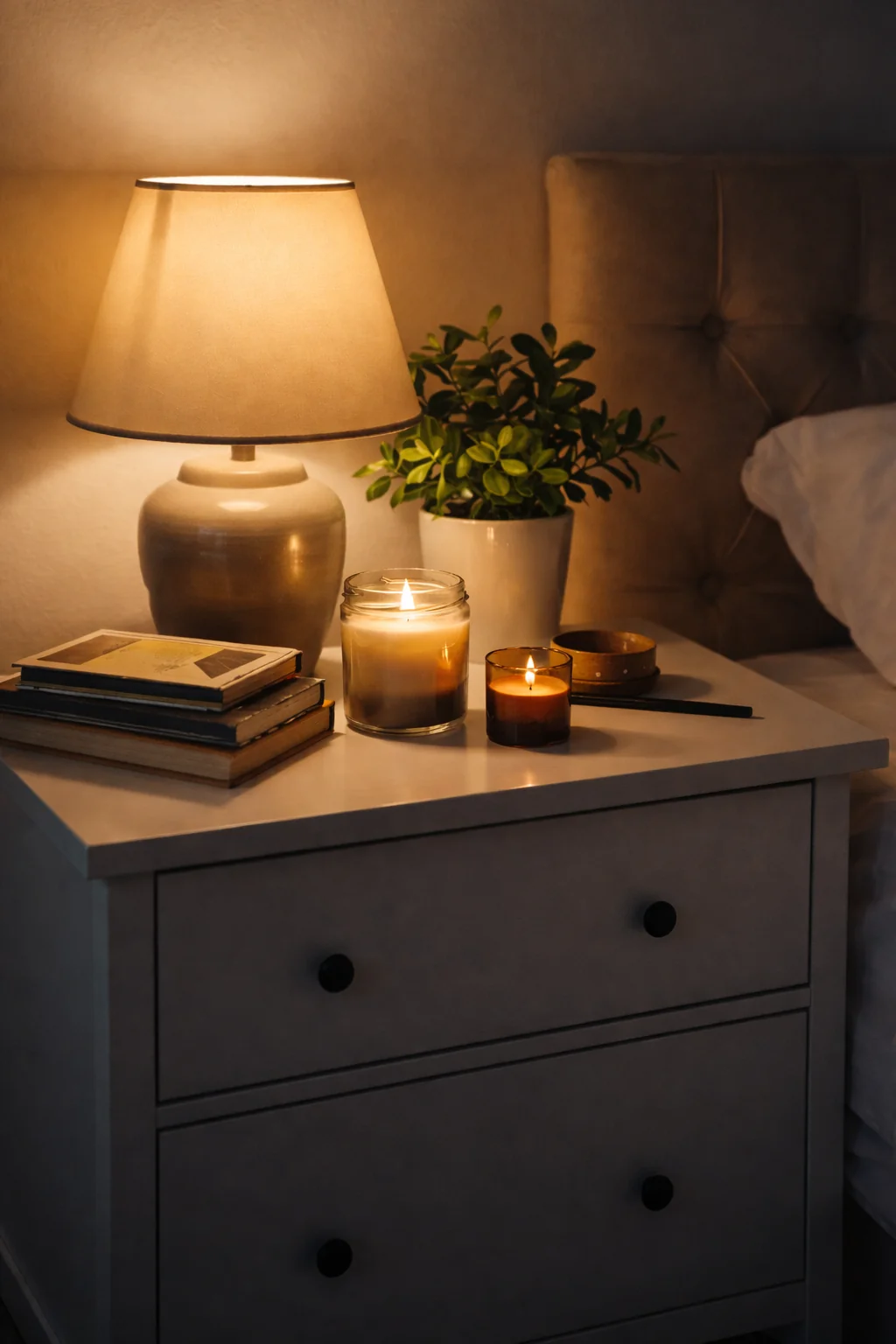
Many urban bedrooms rely on a single overhead fixture. While it may look crisp and modern, it interferes with melatonin production and signals “daytime” to your brain. In contrast, layered lighting transforms how a bedroom feels at night.
Interior designers in Bangalore often adjust lighting plans in tech professional households where screen exposure is already high. In Whitefield apartments, replacing bright panel lights with layered warm lighting and adding soft wall washers can help reduce that overstimulated feeling at bedtime.
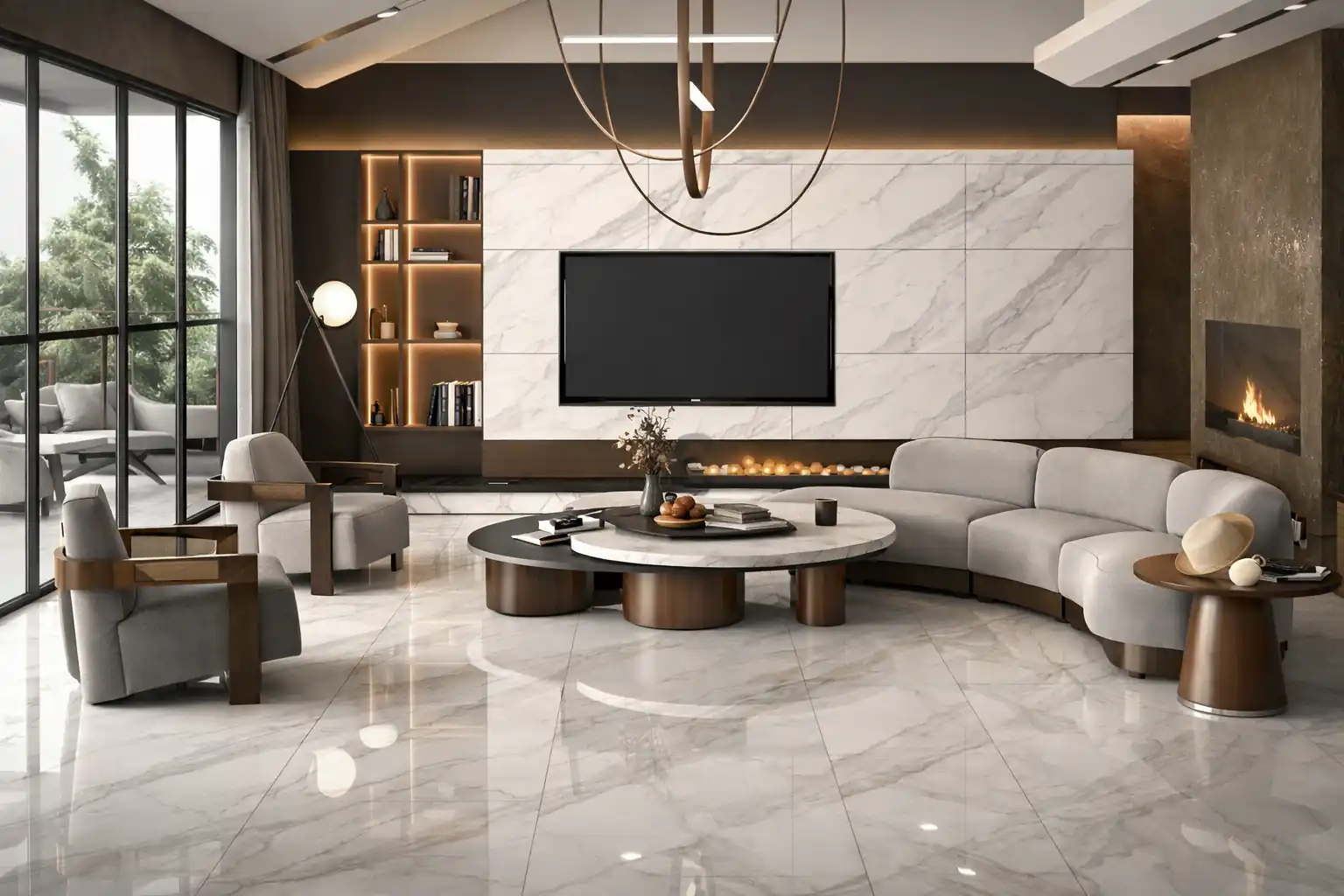
Modern design often celebrates polished surfaces such as lacquered wardrobes, marble floors, and mirrored panels. They photograph beautifully. But they also reflect light and sound.
Hard, reflective surfaces increase noise bounce and subtle echoes. Even small sounds, like footsteps, a drawer closing, distant traffic, etc., can feel sharper.
Soft finishes help negate this problem. Fabric headboards, upholstered benches, textured curtains, rugs, and matte finishes absorb sound and visually soften the space. In modern luxury bedroom interior design, comfort isn’t just about expensive materials; it’s about tactile warmth.
You may not consciously notice open shelves filled with books, accessories, and storage baskets, but your brain surely does. Every visible object demands your attention, at least subconsciously. That constant low-level scanning increases cognitive load, especially in compact urban homes. That’s why one of the most effective upgrades in any modern bedroom interior design is concealed storage.
Floor-to-ceiling wardrobes with clean shutters, hidden charging drawers, and bedside units that tuck away cables all help you create a bedroom that feels visually clean and calming.
Many homeowners exploring modern interior design bedroom ideas focus on statement décor, accent walls, or trendy lighting fixtures. But often, the biggest sleep improvement comes from reducing what’s visible instead of adding more.
Colour plays a subtle yet powerful role in sleep quality. Cool greys, stark whites, and high-contrast palettes may feel chic, but they can also feel cold or alerting at night. Warmer neutrals like muted taupes, earthy beiges, soft sage, dusty blues, etc., tend to calm the nervous system. In well-planned luxury bedroom interior designs, colour palettes are intentionally restrained.
You don’t need a full renovation to improve sleep quality. Small changes can make a meaningful difference:
Over time, these adjustments help your body associate your bedroom with calm instead of stimulation.
At Bonito Designs, bedrooms are not treated as just another styled room. They’re designed as recovery environments. Afterall, the main purpose of a bedroom is to sleep, relax, and enjoy some personal time. Our LifeDesign philosophy focuses on your lived-in experience, wants, and needs, rather than just hyper-focusing on aesthetics alone.
Our process includes:
This approach ensures that your modern bedroom interior design doesn’t just look elegant during the day, but it also supports deep, uninterrupted rest at night.
When your bedroom supports healthy sleep cycles, reduces cognitive load, and gently regulates your nervous system, it becomes more than a styled backdrop. It becomes a sanctuary. The best modern bedroom interior design isn’t the one with the boldest statement wall or the glossiest finish. It’s the one that allows you to wake up fully restored the next morning.
If you want a bedroom that supports your sleep cycle rather than hindering it, book a consultation with Bonito Designs to find an interior designer partner who understands the importance of rest as much as you do!