Books can quickly take over a home without a proper system, making it essential to design a functional and intentional personal library space. Use home library design ideas to make the most of available areas, such as corners, walls, and corridors, while prioritising efficient storage solutions. Comfort, lighting, and styling play a key role in making the space usable and inviting. Thoughtful planning, including dust management and future growth, ensures a practical and long-lasting home library.
Books have a way of taking over a home. It starts with a shelf, then a corner, and before you know it, there are stacks on bedside tables, window ledges, even that chair no one is allowed to sit on anymore.
If that sounds familiar, you don’t need more storage. You need a system, and more importantly, a space that actually celebrates your collection instead of hiding it.
This is where smart home library design ideas come in. A personal library is not just about keeping books in place. It changes how you use your home. It gives you a pause point; a corner that feels slower, calmer, and a little more intentional in the middle of everything else.
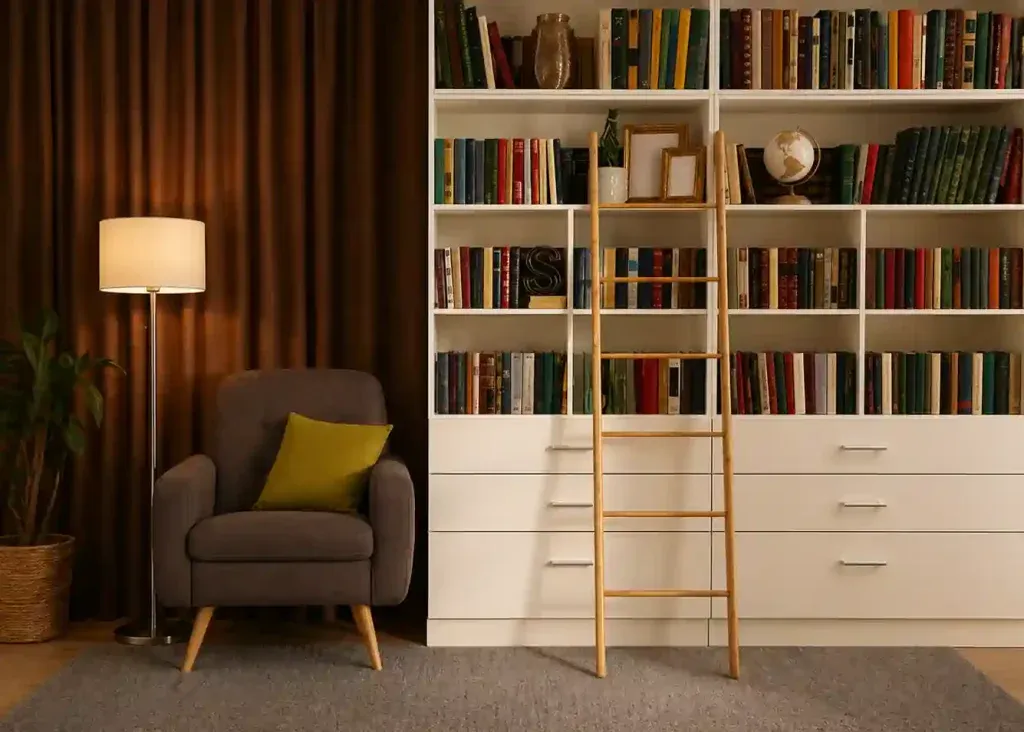
Most urban homes today, especially apartments in cities like Bangalore and Mumbai, are not exactly generous with space. You are working with compact layouts, multi-use rooms, and very real storage limitations. Home library design ideas should consider these constraints when creating a personal library.
Before you plan anything, look at where your books currently pile up.
This tells you how you naturally use your books. Your house's interior design ideas should accommodate your preexisting patterns rather than forcing a formal library room into your home. If you have a spare room, great. That can become a dedicated home library design. But most homes don’t. And that’s completely fine.
You can build a library into:
For example, in many Bangalore apartments, the long corridor is often dead space. Smart interior designers in Bangalore will use this space to create a floor-to-ceiling bookshelf, giving it a new purpose while maximising the use of free space.
Most people focus on aesthetics first. Storage should come first, always. If you’re wondering how to make a library at home, start with this question: how many books do you actually have, and how fast is that number growing?
Because your storage should not just fit your current collection. It should handle what’s coming next. Some options that work well in Indian homes:
Smart home library shelving also considers depth. Too deep, and books get lost; too shallow, and you waste space. Around 10–12 inches works well for most collections.
A library that looks good but is uncomfortable will not be used. Simple as that. Think about how you read. Morning coffee with a book? Late-night reading before bed? Weekend reading sessions that stretch for hours? Use home library design ideas that match that.
A few things that make a big difference:
In smaller Mumbai homes, even a window seat with storage underneath works beautifully. You get natural light during the day and a cosy reading spot without needing extra space.
When thinking about home library design ideas, most people underestimate lighting. It can make or break your library. Task lighting is non-negotiable. You need focused light for reading that does not strain your eyes. A wall-mounted reading lamp or an adjustable floor lamp works well.
Then comes ambient lighting. This is what makes the space feel warm and inviting. Warm white lights are usually better than cool tones for reading zones. They feel softer and less harsh. If your library is part of the living room, layered lighting helps. You can keep it subtle during the day and more intimate in the evening.
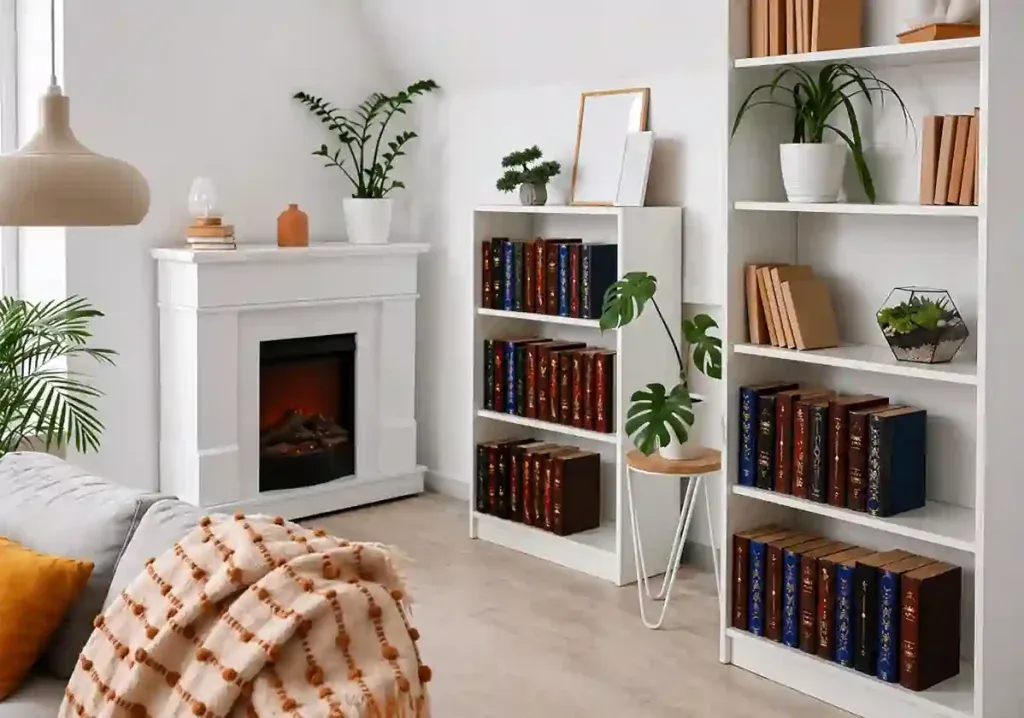
Books alone can look cluttered if not styled properly. Some easy library interior design ideas that work in real homes:
In Indian homes, where festivals and gatherings are common, your library often becomes part of the social space. Home library design ideas that focus on styling can help your library feel integrated rather than a separate entity.
Dust is a real issue, especially in cities. Open shelves look great, but need regular cleaning. If that feels like a chore, mix in closed storage. Glass shutters are a good middle ground. You can see your books, but protect them from dust.
Also, think ahead, as your collection will grow. Leave some empty sections, or design your storage so it can expand. House interior design ideas for a personal library need to consider expansion from the very beginning. The worst thing is building a library that feels full on day one.
Designing a library sounds simple until you try fitting it into an actual home layout with electrical points, wall constraints, and storage conflicts. This is where Bonito Designs steps in with a more grounded approach to house interior design ideas.
Their LifeDesign philosophy focuses on how you actually live. Not just how a space looks on day one, but how it works over time. Whether it is a compact 2BHK in Bangalore or a larger apartment in Mumbai, the designs are tailored to real layouts, not generic plans.
Everything is handled end-to-end. From design to build to quality checks and final handover. With in-house execution and ISO-certified processes, there is better control over materials, finishes, and timelines. So your home library design is not just visually appealing; it's also functional. It is practical, durable, and built to handle everyday life. Book your consultation today!
A well-planned dining area design should balance style with everyday function, comfort and circulation. The right approach considers how the space is used, its proportions and how it connects visually with adjoining rooms. From minimalist and modern to farmhouse, coastal and eclectic styles, each look can be adapted through thoughtful furniture, lighting, materials and colour.
07 Oct 2026|5 min readA well-planned 2 BHK flat interior design should make every room functional without making the home feel crowded. Smart space planning, built-in storage, appropriately sized furniture, cohesive colours, and layered lighting can improve comfort in compact city homes. For homeowners in Mumbai and Bangalore, the best designs also account for local space constraints, daylight, work-from-home needs, and flexible family routines.
07 Oct 2026|5 min readSmall pooja room designs in apartments work best when they balance spiritual purpose with practical space planning. Wall-mounted mandirs, niches, corner units, cabinets, and partitions can create a dedicated prayer area without taking up too much room. Thoughtful lighting, ventilation, storage, easy-to-clean materials, and comfortable clearance make the space easier to use every day. Matching the mandir’s materials and style with the rest of the home also helps it feel like an intentional part of the interior.
07 Oct 2026|5 min readConvertible furniture helps compact urban homes serve multiple functions without permanently sacrificing valuable floor space. From sofa-cum-beds and Murphy beds to foldable dining tables and hidden storage, the right choices can improve circulation, storage, and everyday flexibility. Effective space-saving furniture & interiors also depend on thoughtful lighting, material selection, electrical planning, and accurate measurements.
05 Oct 2026|5 min readDiscover clever space-saving interior design ideas to transform your compact city apartment. Get inspired with Bonito Designs’ top tips.
30 Dec 2025|5 min read


Your Home Makeover Starts Here.