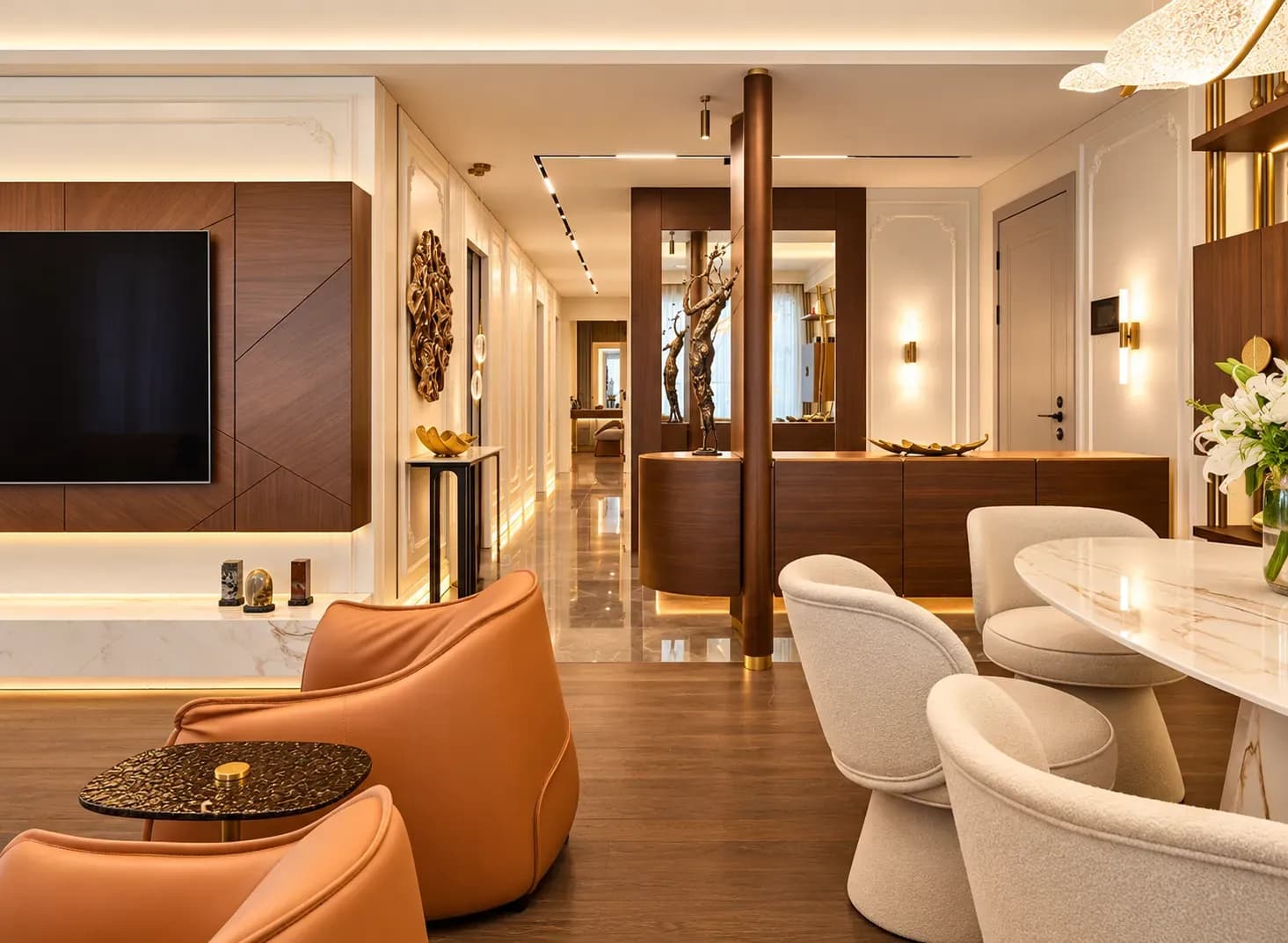
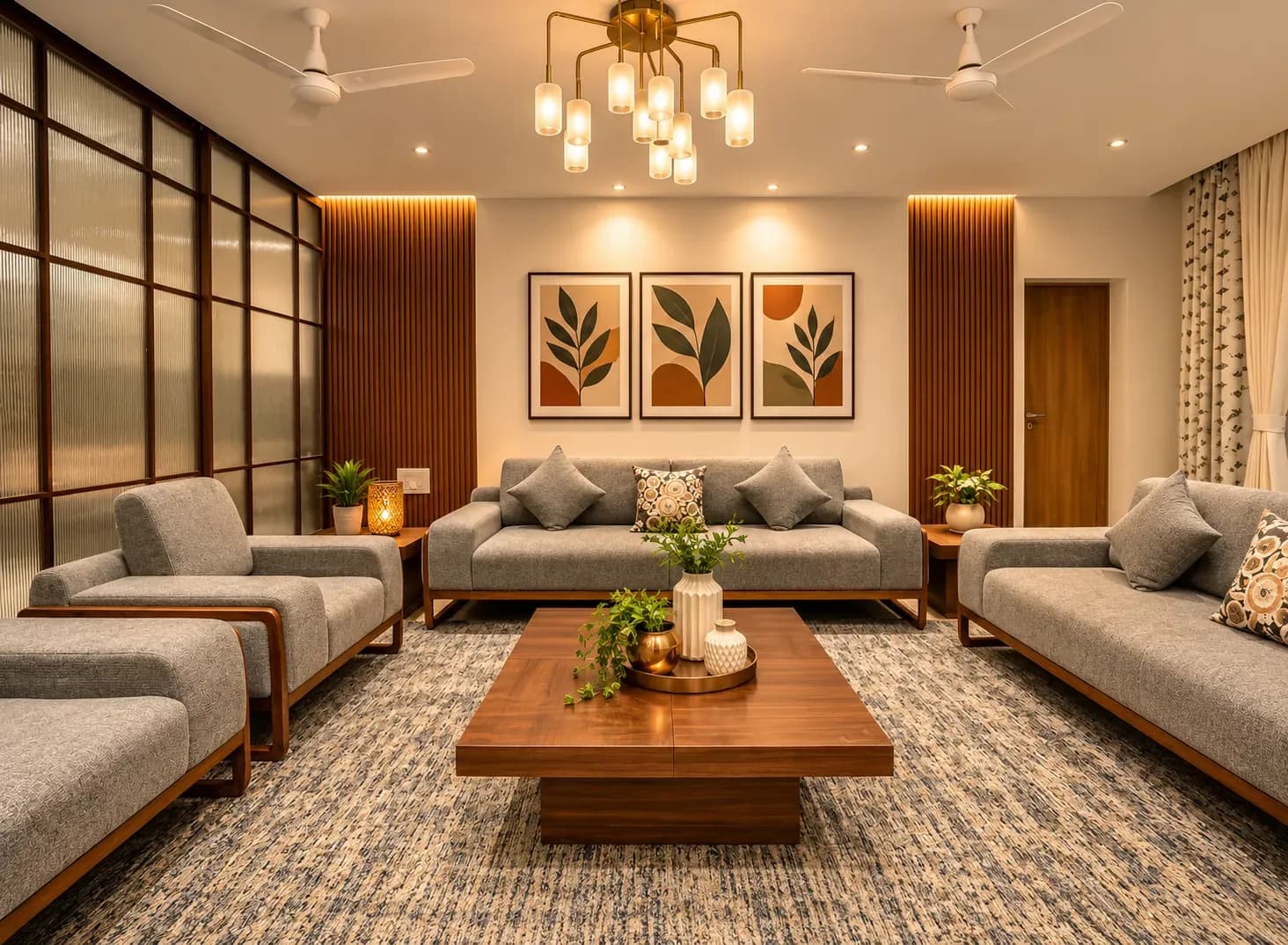
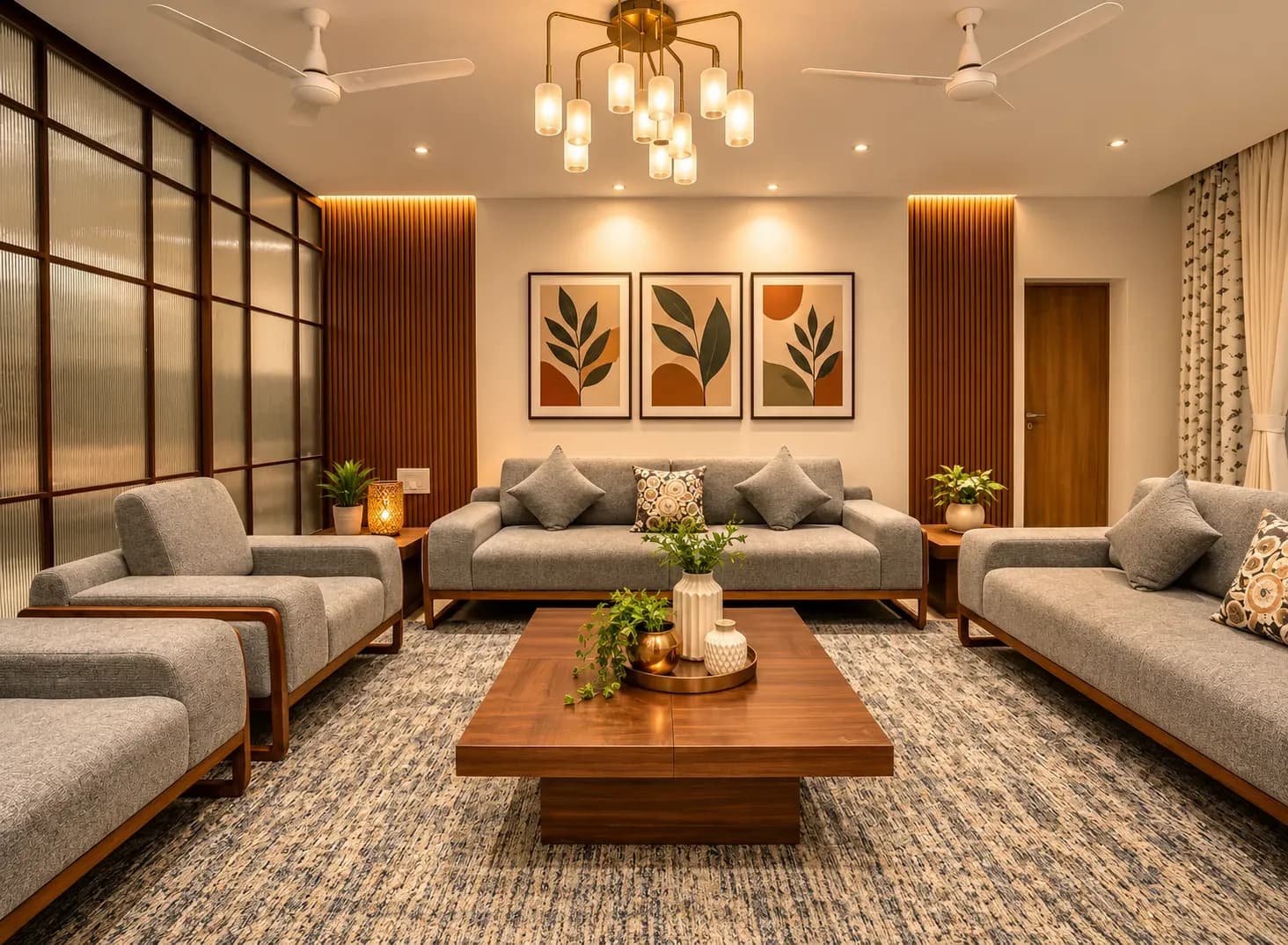
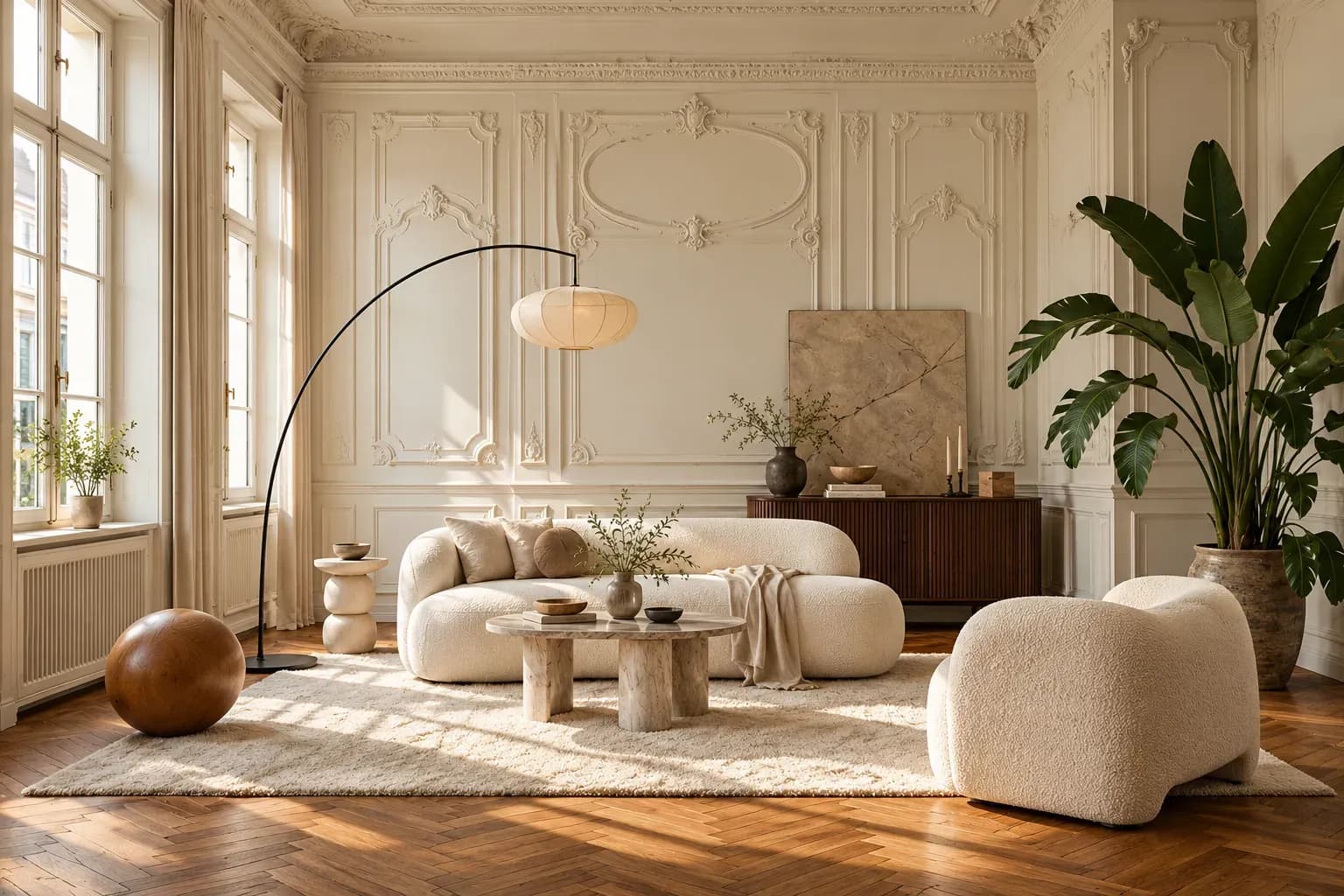
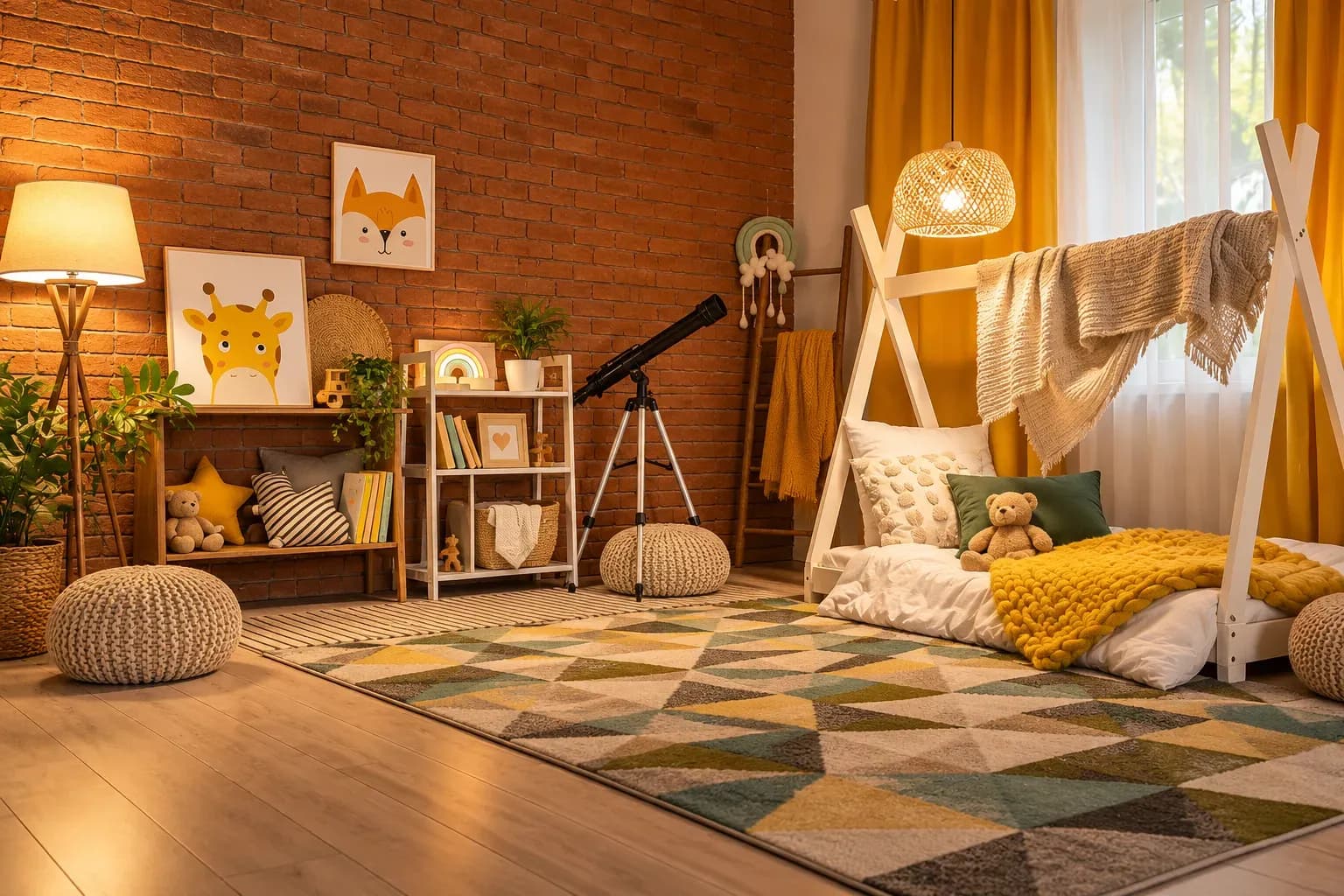
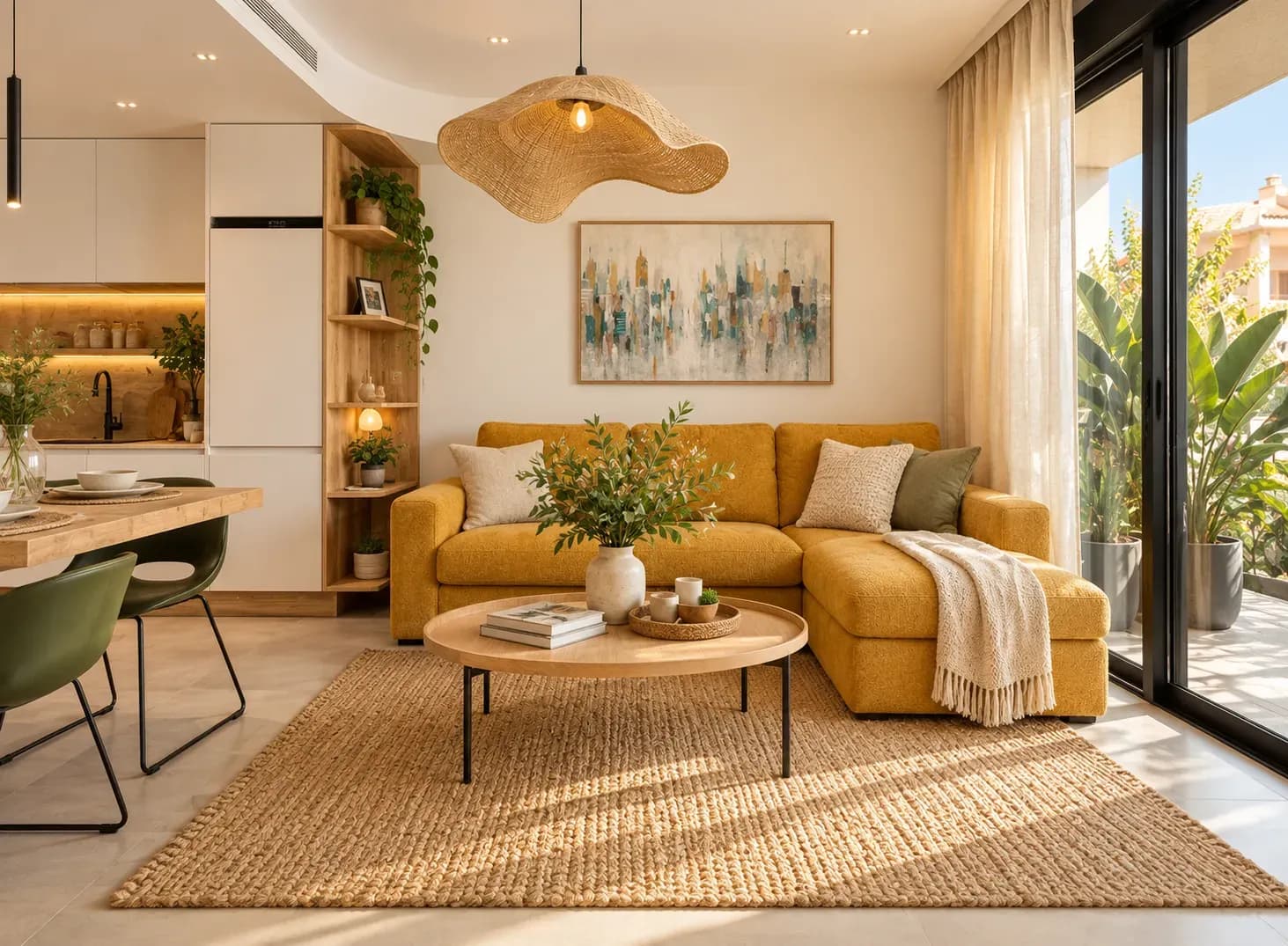
Choosing between transitional interior design and modern interior design can become confusing because both use uncluttered layouts, controlled colours and current furniture. Yet the finished homes feel different. One allows more warmth and familiar detailing, while the other depends on cleaner lines and stronger visual restraint.
The distinction matters when you are planning an entire 2 BHK, 3 BHK or villa. Cabinetry, flooring and fixed finishes will remain for years, so the style needs to be clear before materials are approved.
If you are asking what transitional interior design is, think of a measured combination of classic structure and contemporary simplicity. A room may have panelled walls, an upholstered headboard or curved furniture, with enough restraint to feel current.
Good transitional interior design relies on balance. Traditional influence appears through proportions, joinery or textiles, while clean furniture keeps it current. The style also gives carved furniture, artwork and heirloom pieces a current setting.
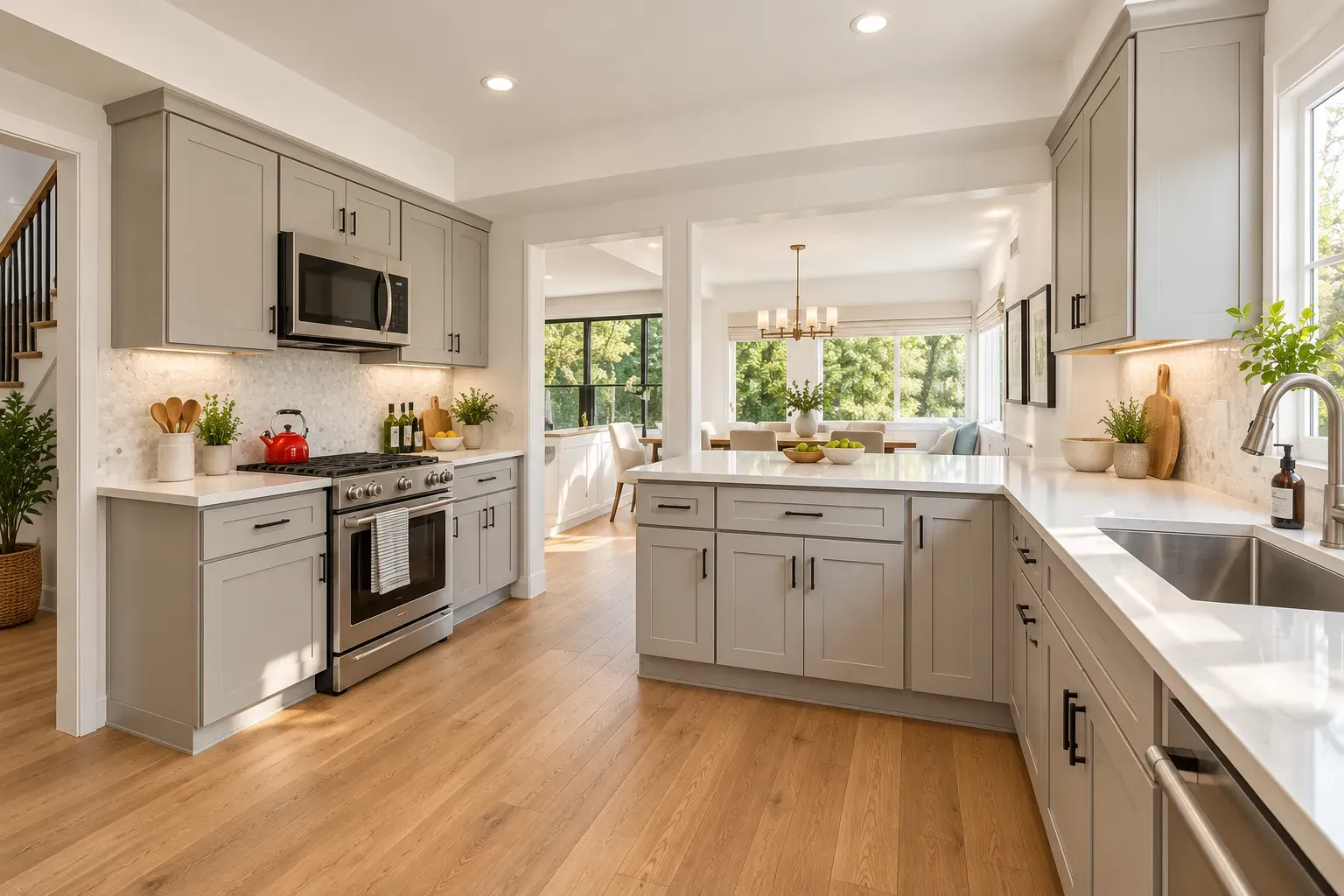
Modern interior design favours clear geometry, efficient layouts and limited ornamentation. Furniture has straight or sculpted lines, while cabinetry remains visually streamlined. Interior decoration stays selective, letting proportion and material contrast provide character.
Understanding what modern classic interior design is means knowing how a blend is created with greater symmetry and more refined classical detailing. It can resemble a transitional room in photographs, although its overall composition is usually more formal.
Warm whites, taupe, beige and muted earthy shades suit transitional interior design because they support wood, fabric and classic details. Deeper blue, olive or brown can appear through upholstery or one painted surface.
Modern homes also use neutrals, although the contrast is often firmer. White may meet charcoal, pale oak or black metal, with colour introduced as one solid block. In compact Mumbai flats, limiting strong contrast to one elevation helps the room remain visually continuous.
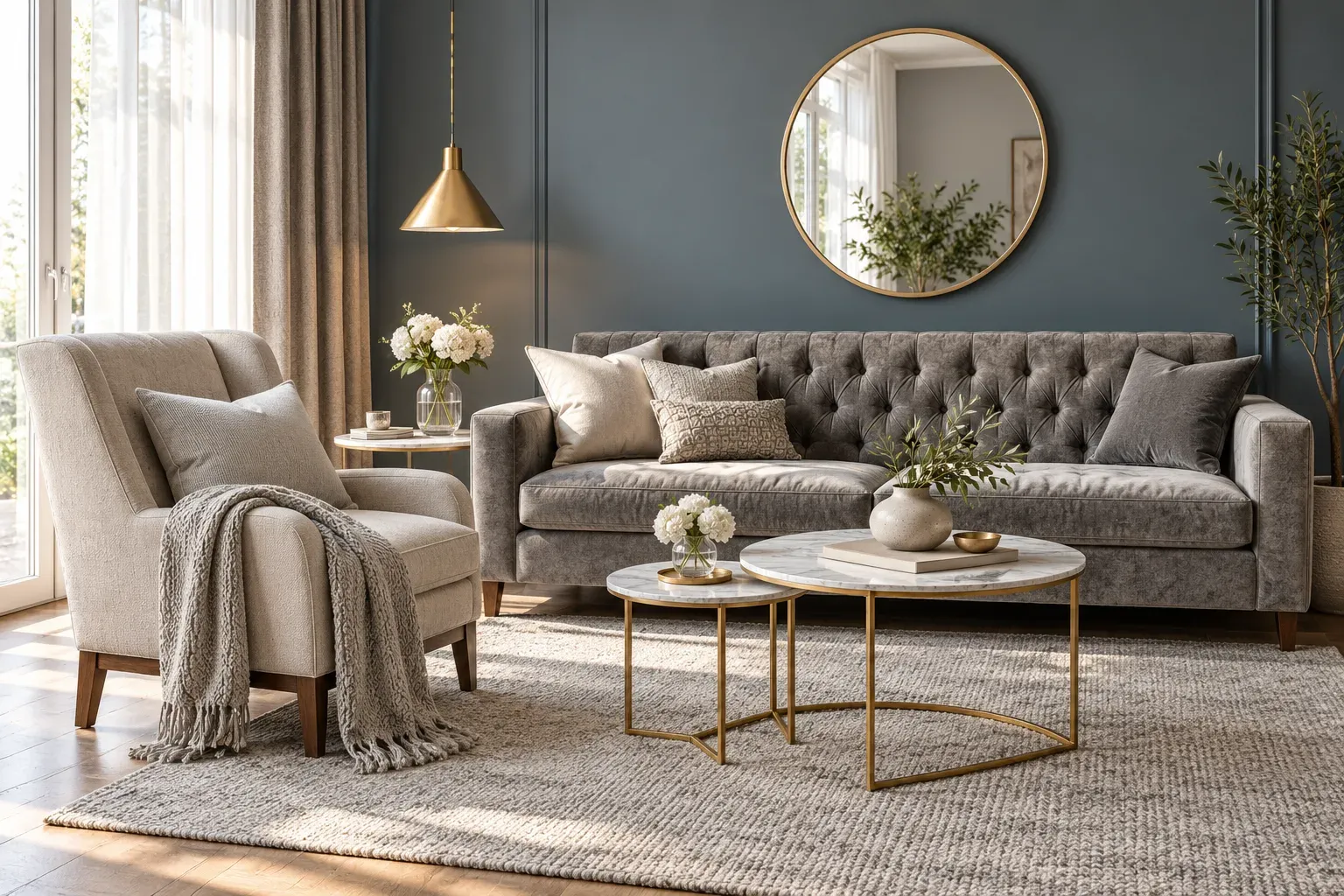
Furniture provides the clearest distinction. In transitional interior design, a sofa may have rounded arms or subtle piping, while tables simplify familiar forms. Pieces feel substantial without carrying heavy carving.
A modern interior design room favours slimmer profiles, exposed legs and cleaner junctions. This can improve movement in a compact living room, provided each piece suits the floor area. A large low sofa may still obstruct a balcony door in a 2 BHK home in Mumbai or Bangalore.
Mark the furniture dimensions on the floor before ordering. Check wardrobe openings, side-table access and the passage between the sofa and television unit.
Wood, stone, linen-look fabrics, brushed metal and restrained moulding suit transitional style interior design. Keep the mix controlled because a fluted cabinet, patterned rug and panelled wall can compete within one view.
A modern home interior design may use smooth laminates, veneer, glass and large-format surfaces with fewer visible breaks. Check matte finishes for fingerprints and cleaning requirements before approval.
In Bangalore homes, light may differ between a balcony-facing room and an internal bedroom. View samples in each space because grey, beige and wood tones shift under daylight and lamps.
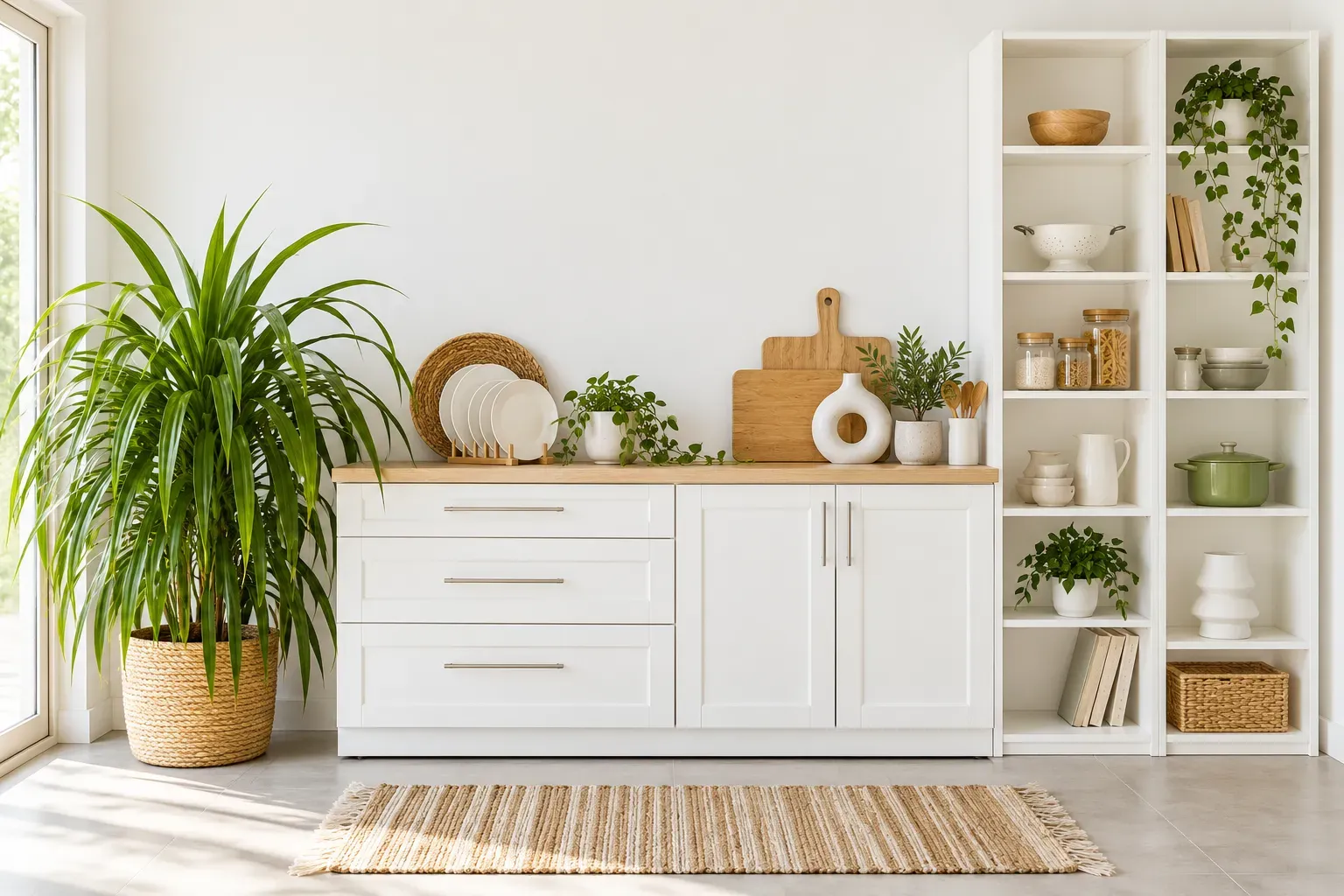
Storage affects both approaches. Transitional interior design can use framed shutters, discreet handles or display cabinets, provided the room can carry the added lines. Closed units should hold everyday clutter.
Modern storage is flatter and more continuous, with handleless or minimally detailed shutters. Its clean appearance requires assigned places for appliances, cables, toys and work materials.
Grooved panels, open ledges and fabric headboards collect more dust than plain shutters. Mumbai households near busy roads may prefer fewer grooves, while families with children can use durable laminates on frequently touched units.
Fixed elements should remain adaptable in either scheme. Choose flooring, large wardrobes and kitchen finishes that can accept future changes in paint, upholstery and artwork. Decorative moulding can be added selectively, while replaceable pieces carry stronger colour or pattern. This approach is useful when a child's room later becomes a study or when a guest bedroom must support work.
A compact apartment often benefits from modern visual continuity. Timber, textured upholstery and warm lighting can keep it comfortable without filling the room with accessories. Larger 3 BHK homes and villas can carry the layers of transitional interior design more comfortably. Details must still respect room size, since deep cornices and bulky furniture can overwhelm a modest bedroom.
Existing furniture deserves an honest assessment. This is where transitional interior design can be more accommodating. A solid-wood dining set may work after refinishing, while the same piece could appear disconnected from highly streamlined cabinetry.
Bonito Designs' LifeDesign approach starts with the household. A Bangalore family that hosts relatives may prefer warmer seating and adaptable dining furniture. A Mumbai couple working from home may prioritise continuous storage, easy-clean finishes and open circulation.
These routines determine whether transitional interior design or a modern approach will remain comfortable. Bonito Designs coordinates layouts, storage, lighting and custom furniture through end-to-end planning, in-house execution and ISO-certified systems.
Choose according to the home's proportions, existing possessions and maintenance needs. Decide how much detail you enjoy, which objects deserve prominence and how open the rooms need to feel. The resulting transitional interior design or modern scheme will then have a clear purpose.
And if you need professional help for a home that suits your family’s lifestyle and tastes, book a consultation with Bonito Designs today.
Well-planned modern home interiors in HSR Layout use clean layouts, integrated storage and coordinated finishes without following every short-lived trend. The best luxury home interiors also adapt each room to the household’s routines, available light and long-term needs. This article explains how to plan living rooms, kitchens, dining areas and bedrooms so the entire home feels modern, comfortable and easy to maintain.
03 Nov 2026|5 min readChoosing a full home interior designer in HRBR Layout requires careful review of the team’s site assessment, planning process, specifications and execution controls. Good house interior design should respond to the property’s actual structure as well as the family’s daily needs. This article explains how to compare portfolios, quotations, timelines, workmanship and after-sales support before appointing a firm.
02 Nov 2026|5 min readChoosing among the best interior designers in Thane requires looking beyond portfolios and reputation. Homeowners should compare design approach, project experience, execution support, pricing transparency, material specifications, and client feedback. The right designer should also match your budget, communication preferences, and your home's practical needs.
02 Nov 2026|5 min readBoth modern classic interior design and transitional design combine classical references with contemporary furniture, storage and lighting. However, modern classic rooms retain more symmetry and formality than transitional spaces. This article covers how transitional interior design differs across furniture, mouldings, colours, materials, lighting and maintenance, along with practical guidance for choosing between the two styles.
24 Oct 2026|5 min readBoth whimsical interior design and maximalist interior design use colour, pattern and personal objects, but they create visual interest differently. While the first focuses on imaginative surprises, the second builds richness through deliberate layering and abundance. This article covers their differences across colour, furniture, artwork, lighting and storage, along with practical ways to adapt either style to compact Indian homes.
22 Oct 2026|5 min readEclectic interior design brings together furniture, colours, materials, textures, and influences from different eras while maintaining a clear sense of cohesion. Rather than mixing elements randomly, the style relies on colour repetition, balanced proportions, thoughtful scale, and recurring finishes to connect contrasting pieces. When planned carefully, eclectic interiors feel layered, personal, and collected without becoming visually cluttered.
03 Oct 2026|5 min read


Your Home Makeover Starts Here.