For an east-facing house, staircase Vastu recommends placing the staircase in the south, west, or south-west, with the south-west considered the most stable option. Avoid the north-east, the centre of the home, and direct alignment with the main entrance. Proper placement supports balanced energy flow while also improving the home’s functional layout.
The staircase is one of the more consequential Vastu decisions in any home. It is permanent, structurally significant, and expensive to change. Getting the staircase Vastu right at the planning stage is considerably easier than correcting poor placement later on.
Here's a quick look at how staircase Vastu works, especially if you live in an east-facing house.
In Vastu Shastra, the staircase governs the movement of energy between floors. Its position within the home determines whether energy flows upward or drains away from zones that need to remain charged and active.
Staircase as per Vastu is also a structural consideration. A staircase placed near a sensitive zone (the north-east being the most significant example) introduces a heavy block in front of the home's energetic core. Placing the staircase correctly can drastically improve the energy flow within your home, ensuring that active zones remain active while passive zones aren't bombarded with unneeded energy.
East-facing homes present a specific layout challenge. The entrance is on the east, which is a favourable position, but it means the north-east corner is close to the entrance zone, while the south and west sides are at the rear. Staircase position as per Vastu for an east-facing home works best when the staircase is kept to the south, west, or south-west of the home.
This typically means that the staircase sits along the south or west wall, away from the entrance and at the north-east corner. The south-west placement is considered most stable, drawing on the earth element energy of that direction to support the weight and movement of the staircase.
Staircase direction as per Vastu identifies south and west as the most favourable directions. The stairs should begin from the north and move southward or begin from the east and move westward. In other words, the person climbing the steps should be moving toward the south or the west.
Here are the pros and cons for each direction:
This direction is the most stable. It is associated with earth energy, which can absorb the structural weight of the staircase and the constant movement it sees. It's the best overall choice for east-facing homes.
South is an acceptable direction as per staircase Vastu. It works well when south-west placement is not structurally possible due to the home's layout.
West is another secondary option that works well. The western wall in an east-facing home is at the rear, which keeps the staircase away from both the entrance zone and the north-east.
This direction should be used only when none of the above is possible. It is not ideal but can still be usable without causing too much disruption.
Staircase location as per Vastu consistently flags three zones as particularly problematic.
This direction has the most significant problems. The north-east governs spiritual energy and incoming prosperity. A staircase here can block the most energetically sensitive zone of the home. Avoid building a staircase here at all costs, as doing so can lead to significant issues in your home's day-to-day activities.
A staircase through the centre disrupts the home's energetic heart entirely. The Brahmasthan should remain open and unobstructed at all times.
In an east-facing home, a staircase that faces/begins immediately inside the main door creates a major blockage. The stairs can end up clogging the main entrance, which is not only bad in a design sense but also negatively affects the energy flow within your home.
This question is essential to ask if you are building a spiral staircase. Vastu for staircases inside the house gives one clear guideline: the staircase should turn clockwise as it ascends. Someone climbing the stairs should always be turning left.
Anticlockwise staircases move against the directional flow of good energy and can act as an obstacle for the household's prosperity. This is not applicable for straight staircases, but for any staircase with a turn, L-shaped, U-shaped, or spiral, the clockwise rule applies without exception.
Do note that spiral staircases are considered less favourable as per staircase Vastu, regardless of their turn direction. Their circular form can act as an energy drain rather than a funnel that channels the flow upward. If you already have a spiral staircase, keep it well-lit and uncluttered at all times.
The guidelines for designing a staircase as per Vastu recommend an odd number of steps. The reasoning is simple: when you begin climbing with the right foot, you should also complete the climb on the right foot. An odd step count ensures this.
Commonly cited totals include 9, 11, 15, 17, and 21.
In practice, the number of steps is determined largely by the floor-to-floor height and the requirements of the local building codes. An odd number should be targeted where the structural dimensions allow it, but this is not always possible in apartments with fixed heights. In such cases, the step count is a secondary concern compared to the direction of the staircase.
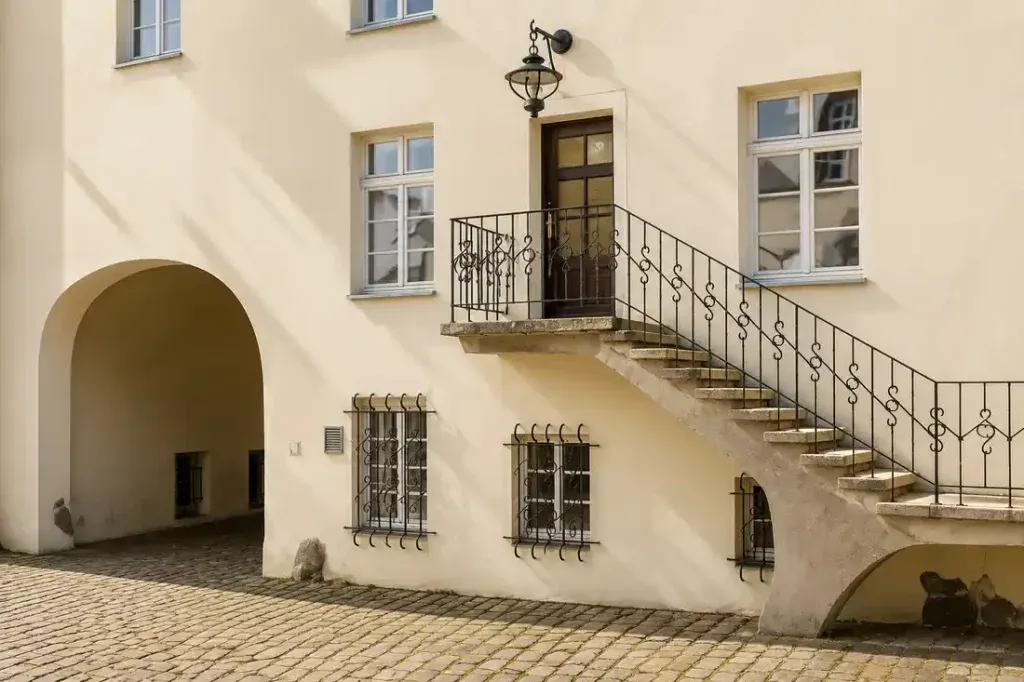
Staircase Vastu for east-facing house layouts differs slightly depending on whether the staircase is internal or external. Internal staircases are fully governed by the room placement above. South, west, and south-west placements all work, while north-east should be strictly avoided.
External staircases on east-facing homes follow the same directional preferences but have more flexibility. An external staircase on the south or west side of the house is considered favourable. The north or the east is less favourable; however, the negative impact is less severe because it is outside the home's primary energy field.
In east-facing homes, the relationship between the staircase and the main entrance requires specific attention. The main door on the east wall brings incoming energy into the home. A staircase positioned directly opposite or immediately visible from this entrance is considered to redirect that energy upward before it can circulate through the ground floor.
Staircase Vastu guidelines recommend that the staircase should not be visible from the main entrance on entry. A partial wall, a screen, or a turn in the layout is sufficient to break the direct sightline and address this concern without needing to renovate the entrance.
Interest in Vastu-compliant homes has grown sharply across Indian cities in recent years, with 51% of all online searches for Vastu-compliant homes from Bengaluru, Hyderabad and Mumbai in 2024. This reflects how seriously urban homeowners are taking these decisions, including for structural elements like staircases that most people finalise without much thought.
Bonito Designs approaches staircase vastu as an essential part of the home's layout, rather than treating it as a standalone decision. The process starts with the full floor plan: where the rooms are, how people will move between floors, where the structural walls sit, and which directional zones are already occupied by other functions.
Staircase Vastu is then applied within those constraints, finding the position that satisfies the Vastu guidelines as closely as the layout allows. If you want your home's layout planned with Vastu integrated from the start, book a consultation with Bonito Designs today.
Thoughtful villa interior design creates continuity across large homes without making every room look identical. Repeating select materials and colours, planning circulation, balancing social and private zones, and using lighting strategically can help each space feel connected. Also consider corridors, landings, storage, and room-specific needs as part of the overall plan.
16 Oct 2026|5 min readA child-friendly 2 BHK interior design must balance sleep, study, play, storage, and shared family activities in a limited space. Flexible furniture, clearly defined zones, practical storage, durable finishes, and safe circulation help the home adapt as children grow. Planning these elements early can reduce the need for frequent redesigns.
16 Oct 2026|5 min readBangalore’s climate directly affects villa interior design, from material selection and ventilation to daylight control and indoor-outdoor planning. Climate-responsive design can help reduce maintenance while improving comfort and durability. Bonito Designs’ LifeDesign process considers both the family’s lifestyle and local conditions to create villa interiors that are practical, personalised and built to perform over time.
15 Oct 2026|5 min readMain door Vastu focuses on creating an entrance that feels balanced, welcoming, and functional through direction, placement, materials, colours, lighting, and everyday organisation. Even when changing the doorway is not practical, homeowners can use simple Vastu-aligned remedies such as better lighting, clutter-free storage, suitable finishes, plants, and traditional accents. The key is to combine Vastu principles with practical interior design so the entrance works comfortably for everyday life.
30 Sep 2026|5 min readLearn everything about pooja room Vastu, including how to create a compliant space in houses facing different directions and constraints.
14 Aug 2026|5 min readThe best way to get restful sleep is to follow these sleeping position Vastu tips and avoid mistakes that most homeowners make.
07 Aug 2026|5 min read


Your Home Makeover Starts Here.