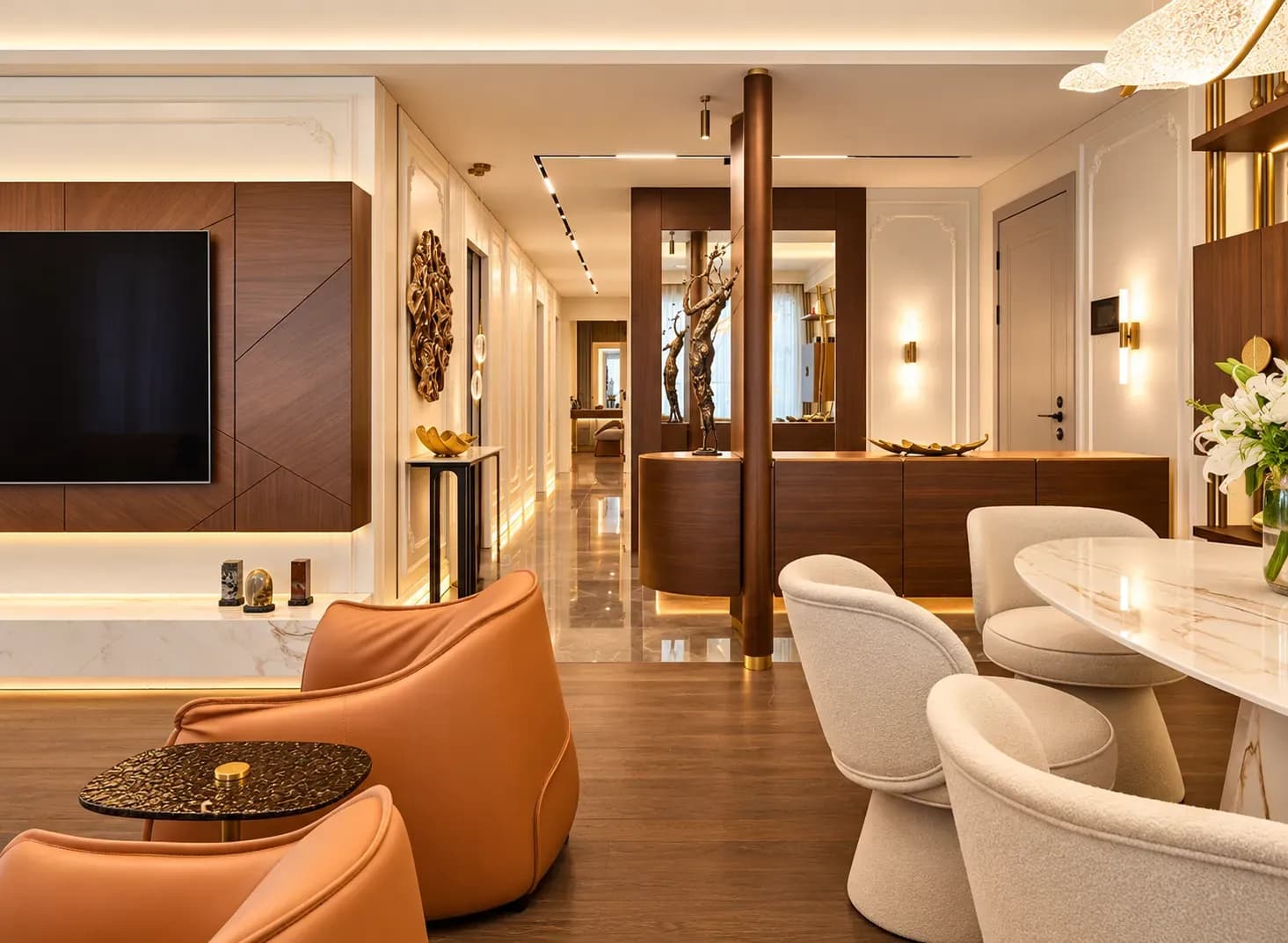
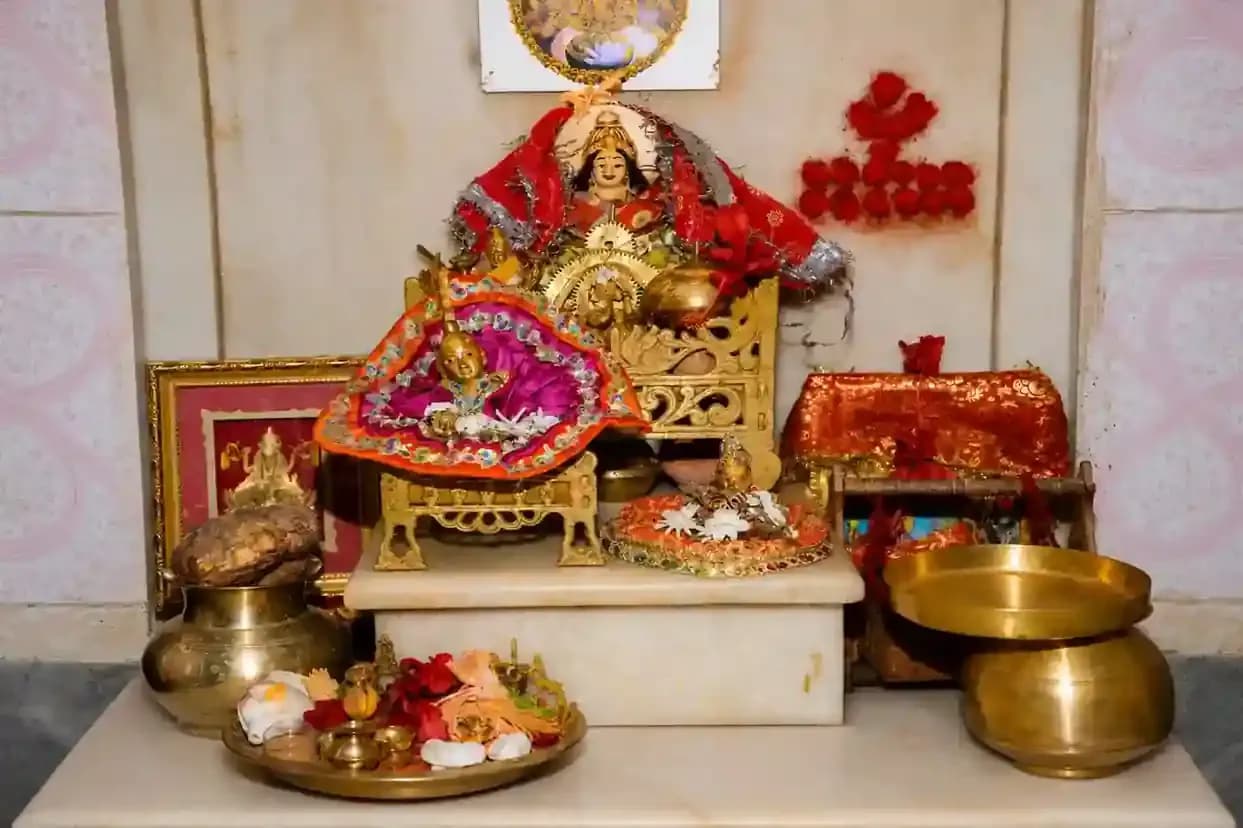
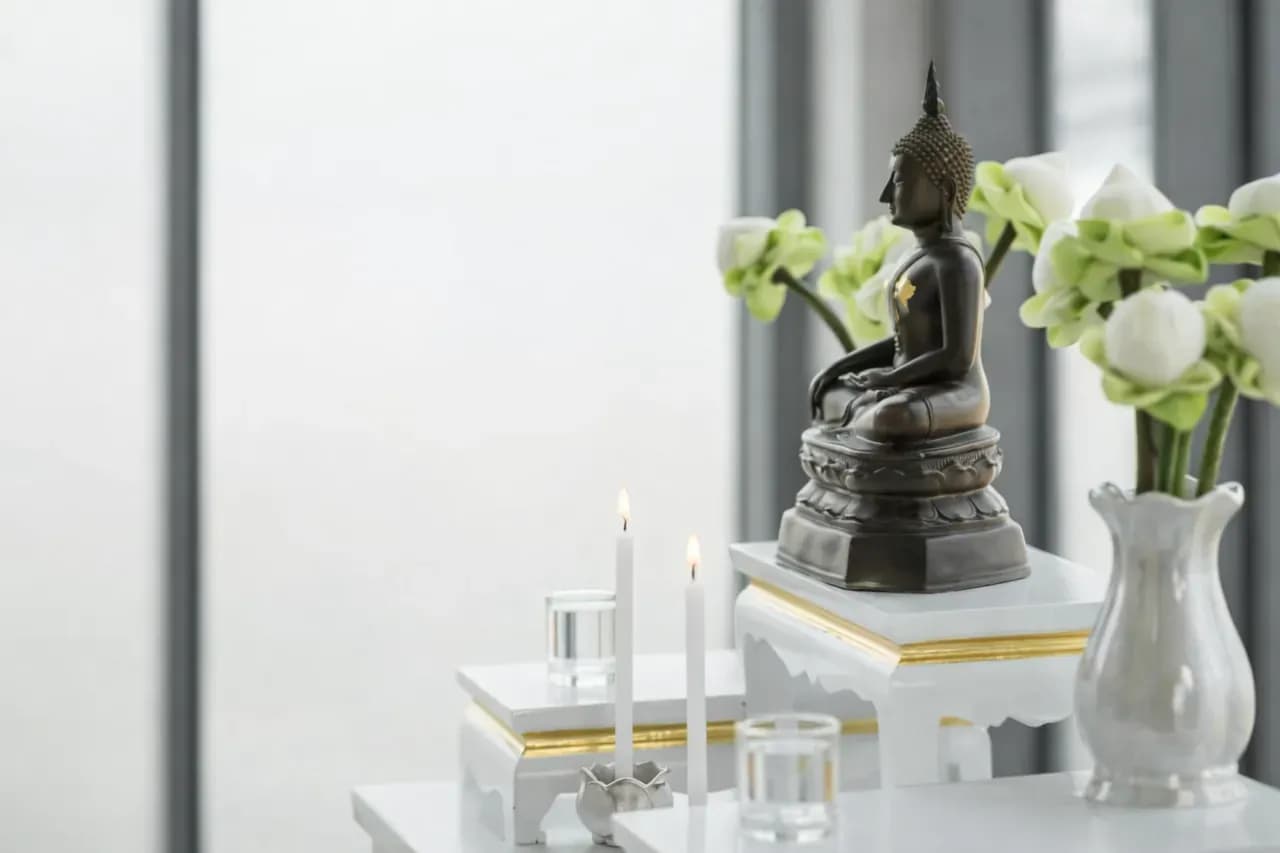
A dedicated puja room is a luxury most compact apartments can't spare. And yet, for many Indian households, a proper space for daily prayer isn't negotiable, no matter how small the home gets. This is exactly the dilemma more and more urban homeowners are solving with a TV unit with mandir design, combining the living room's most-used piece of furniture with a genuinely respectful space for worship.
Wall space in a compact living room is one of the most contested resources in the home. Fitting a full-sized entertainment unit and a separate mandir often means one of the two gets squeezed into an awkward corner, or skipped altogether.
A well-planned TV unit design with a mandir solves this without forcing either function to compromise:
The key condition for this to work is clear zoning. The mandir needs to read as its own distinct space within the unit, not an afterthought squeezed in beside the television.
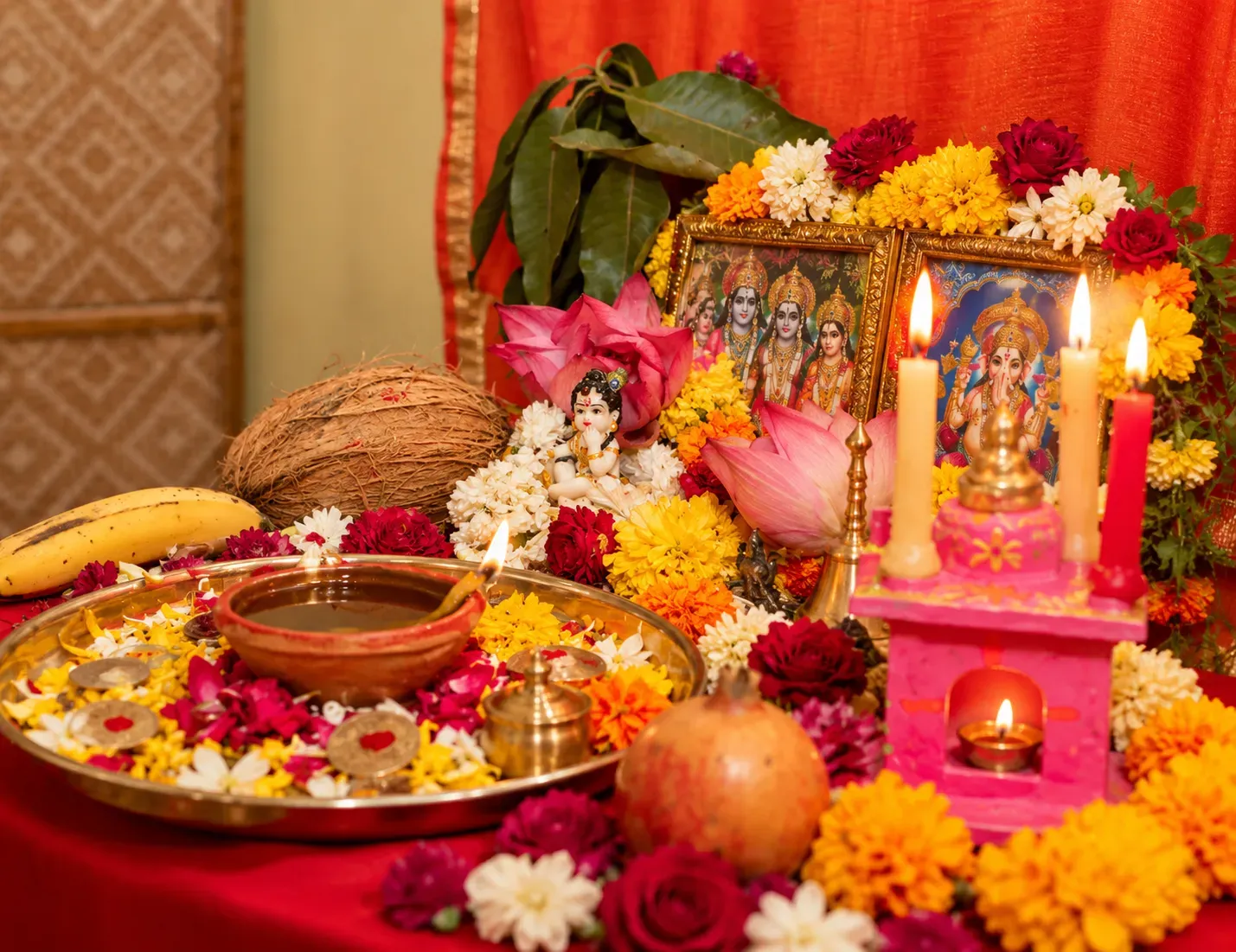
There's no single correct layout. The right one depends on the room's dimensions, the household's daily pooja habits, and how much visual separation the family wants between the two zones.
| Layout | How It Works |
|---|---|
| Side-by-side units | The TV and mandir sit in separate but connected sections of the same wall unit, divided by a visible partition or change in material |
| Corner mandir | The mandir occupies an adjacent corner of the room, connected to the TV unit but angled away for a natural sense of separation |
| Recessed niche | The mandir sits in a wall recess built into or beside the TV unit, creating depth and a defined boundary without extra floor space |
| Partitioned design | A jaali panel, half-wall, or decorative divider physically separates the two zones while keeping them part of one cohesive structure |
| Closed pooja cabinet | The mandir is enclosed behind shutters or doors that can be closed when not in use, keeping it visually distinct from the open TV area |
A closed cabinet design works particularly well for households that want the mandir to remain a quiet, sacred space rather than a constant visual presence in an otherwise casual living room.
A TV unit with mandir design needs to work as well functionally as it does visually. A few practical details make a real difference to how comfortable and appropriate the final setup feels.
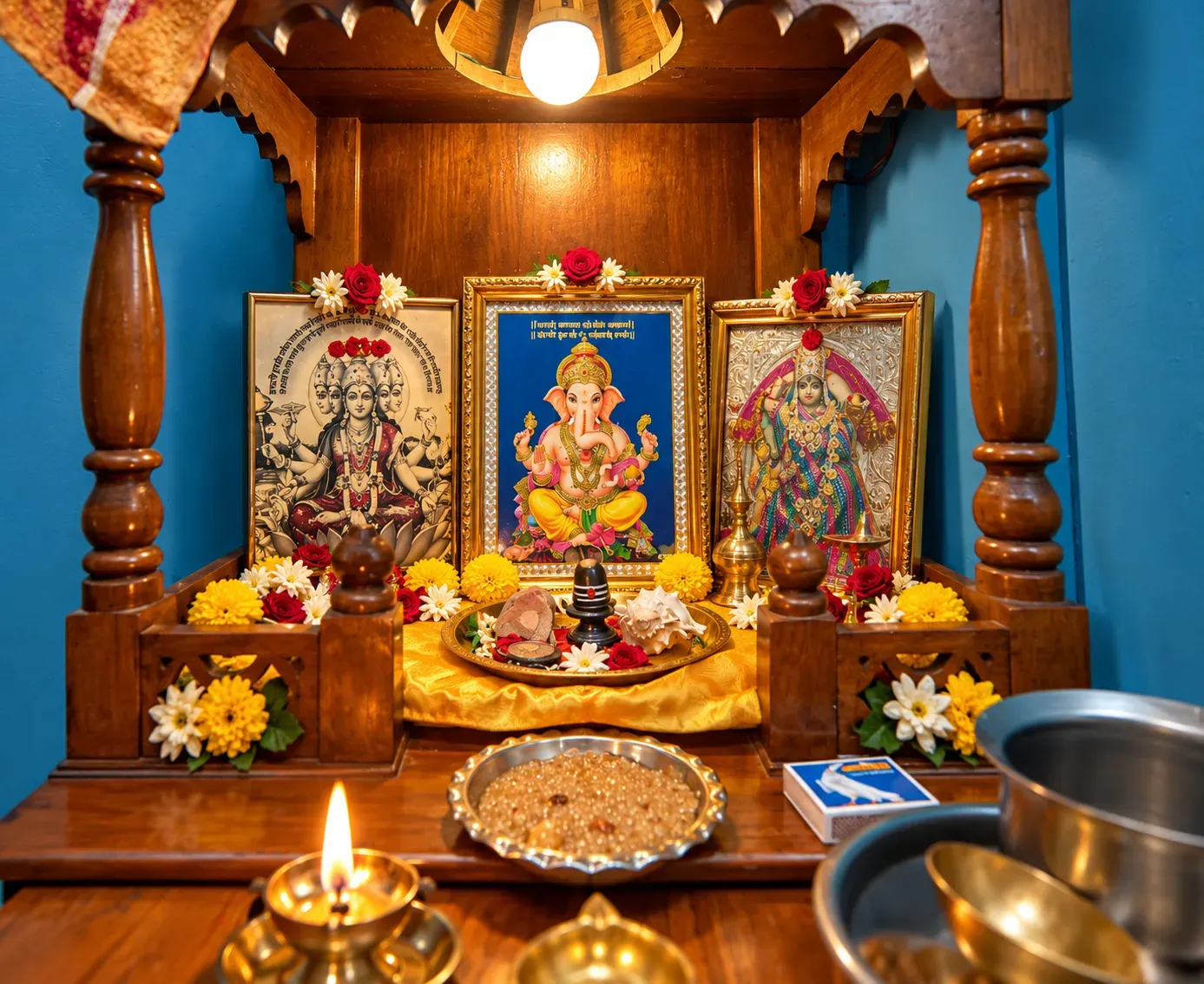
The best TV unit design with mandir setups uses specific design choices to make the mandir feel like its own considered space, even while remaining part of one larger structure.
Together, these elements let the mandir hold its own character without the overall unit feeling like two mismatched pieces stitched together.
TV unit with mandir design can be both space-efficient and aesthetically balanced when the two functions are clearly zoned and thoughtfully integrated. The best TV unit design with pooja mandir preserves the sanctity of the worship space while keeping the entertainment unit organised and visually cohesive, proving that a small apartment doesn't have to choose between tradition and everyday functionality.
At Bonito Designs, this balance is shaped by the LifeDesign approach, which begins with understanding how a family actually lives and connects with their home. Rather than treating the TV unit and mandir as separate design elements, the focus is on creating a cohesive solution around daily routines, cultural preferences, storage needs, and available space.
If you need a TV unit with mandir design that feels personal and naturally integrated into how the home is used, book a consultation with Bonito Designs today.
Well-planned modern home interiors in HSR Layout use clean layouts, integrated storage and coordinated finishes without following every short-lived trend. The best luxury home interiors also adapt each room to the household’s routines, available light and long-term needs. This article explains how to plan living rooms, kitchens, dining areas and bedrooms so the entire home feels modern, comfortable and easy to maintain.
03 Nov 2026|5 min readChoosing a full home interior designer in HRBR Layout requires careful review of the team’s site assessment, planning process, specifications and execution controls. Good house interior design should respond to the property’s actual structure as well as the family’s daily needs. This article explains how to compare portfolios, quotations, timelines, workmanship and after-sales support before appointing a firm.
02 Nov 2026|5 min readChoosing among the best interior designers in Thane requires looking beyond portfolios and reputation. Homeowners should compare design approach, project experience, execution support, pricing transparency, material specifications, and client feedback. The right designer should also match your budget, communication preferences, and your home's practical needs.
02 Nov 2026|5 min readSmall pooja room designs in apartments work best when they balance spiritual purpose with practical space planning. Wall-mounted mandirs, niches, corner units, cabinets, and partitions can create a dedicated prayer area without taking up too much room. Thoughtful lighting, ventilation, storage, easy-to-clean materials, and comfortable clearance make the space easier to use every day. Matching the mandir’s materials and style with the rest of the home also helps it feel like an intentional part of the interior.
07 Oct 2026|5 min readExplore harmonious wooden and marble mandir designs for homes that blend warmth, elegance, and spirituality to create a peaceful prayer space.
23 Jun 2026|5 min readFind out the most efficient and practical pooja room designs in walls that are built for daily use. Incorporate thoughtful pooja room interior design ideas for city homes.
12 Apr 2026|5 min read


Your Home Makeover Starts Here.