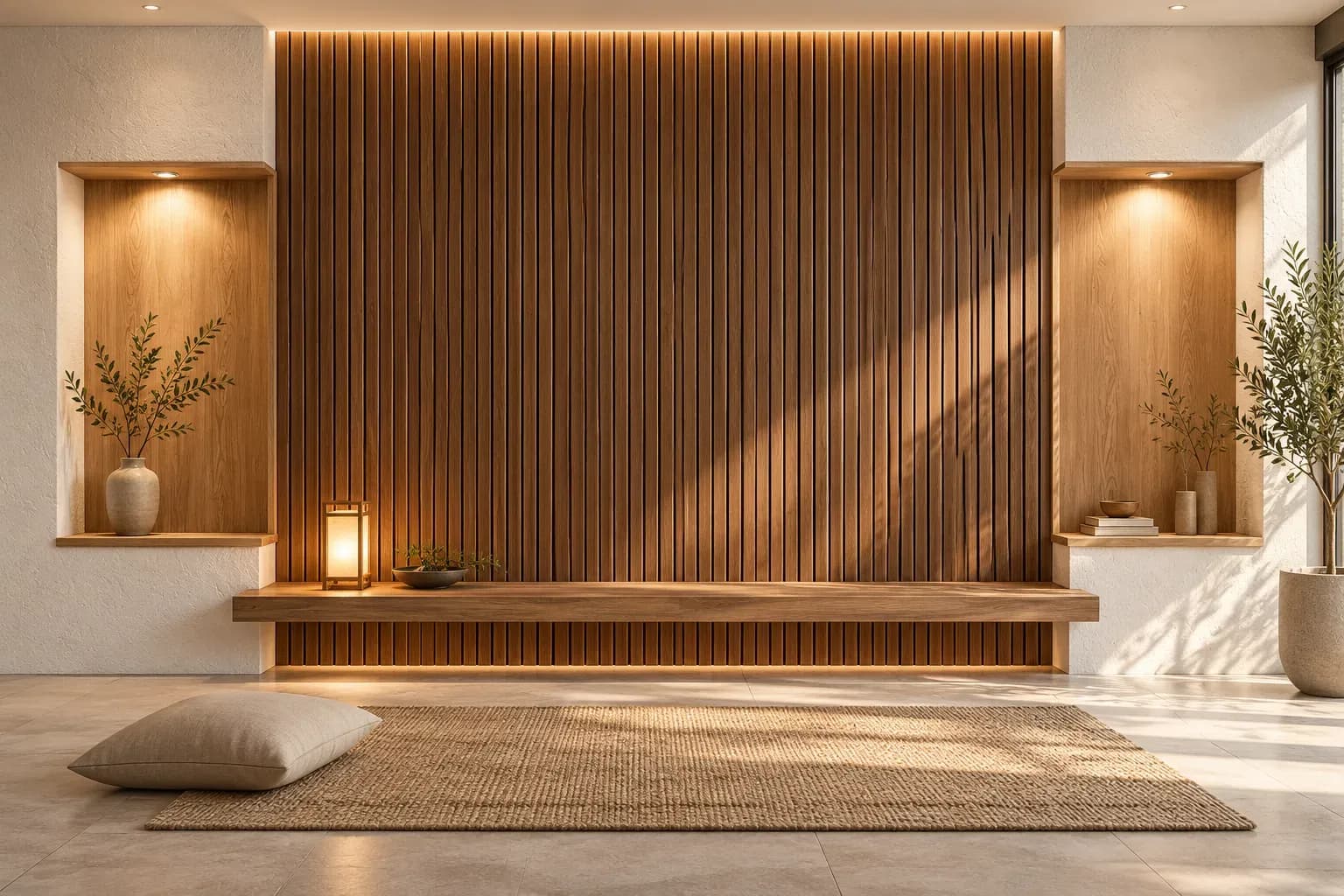
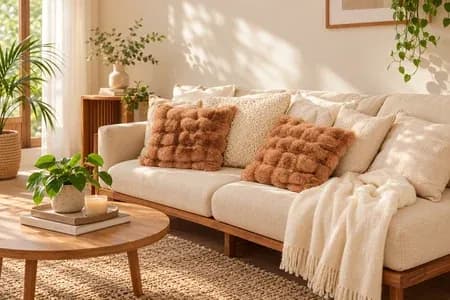
Open layouts make homes feel larger and brighter, but they need smart hall wall design to create structure without adding partitions. Interior wall design for halls can define zones, anchor the TV area, improve first impressions, and bring hierarchy to open-plan living. Materials like fluted wood, limewash, Venetian plaster, stone cladding, and thoughtful storage-led TV walls help balance aesthetics with function.
Most people choose open layouts so they can have a single continuous space that feels larger, allows better light distribution, and removes the claustrophobia of compartmentalised rooms. But what they usually do not realise (until much later) is the challenges with an open concept.
Without walls doing the work of separation, every zone bleeds into the next. Interior wall design for hall spaces is where this gets resolved, not through partition walls, but through surfaces that signal boundaries, create hierarchy, and give the open plan the structure it needs to function properly.
In a closed-layout home, every room has four walls that define it. In an open layout, the hall typically has one primary wall that faces the entrance or anchors the living area. That single surface carries a disproportionate amount of design responsibility.
It establishes the first impression when someone enters. It sets the tonal direction for the entire space. And in a Mumbai high-rise or a Bangalore apartment with an open kitchen-living-dining configuration, it is usually the surface that separates the social zone from everything else.
Getting interior wall designs for halls right is not just a matter of decoration. It is an exercise in intentional spatial awareness and considerations.
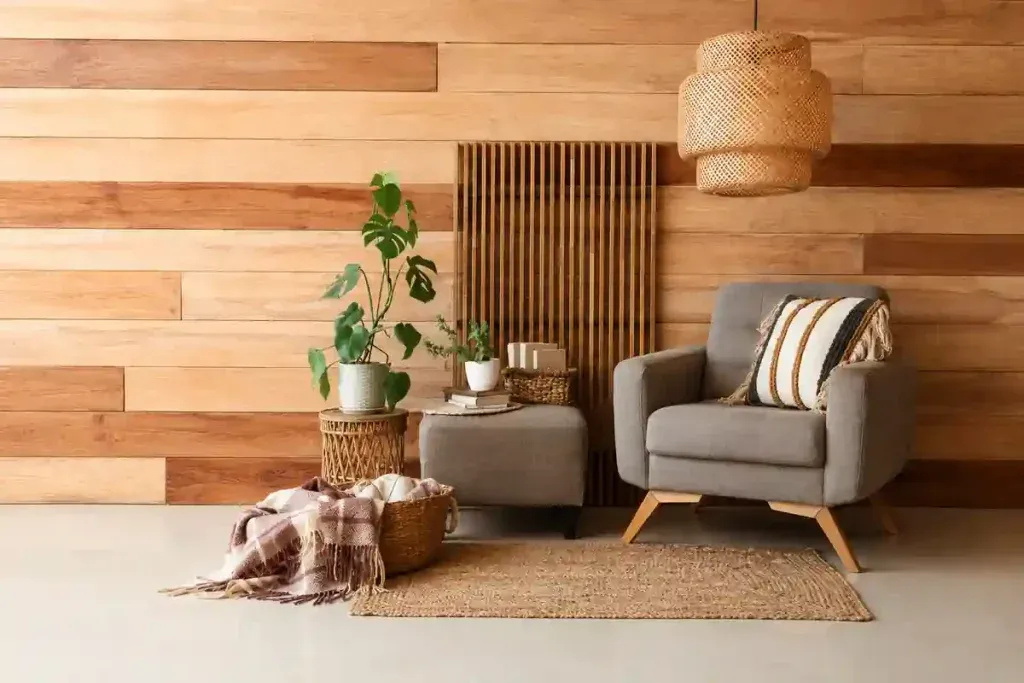
The most common approach to interior wall design for halls is the accent wall. However, it is also executed poorly most frequently.
An accent wall works when it is genuinely distinct from the surrounding surfaces, not just a slightly darker version of the same paint colour. The distinction needs to come from material, texture, or a significant tonal shift.
What lands well:
This is increasingly the finish of choice in premium Mumbai apartments, where the hall wall doubles as the TV backdrop, and reads as architectural rather than decorative.
The organic variation in the finish means the wall looks different across the day as light moves through the space.
These work particularly well in Bangalore homes with higher ceiling heights, where the wall has more surface area to justify the treatment.
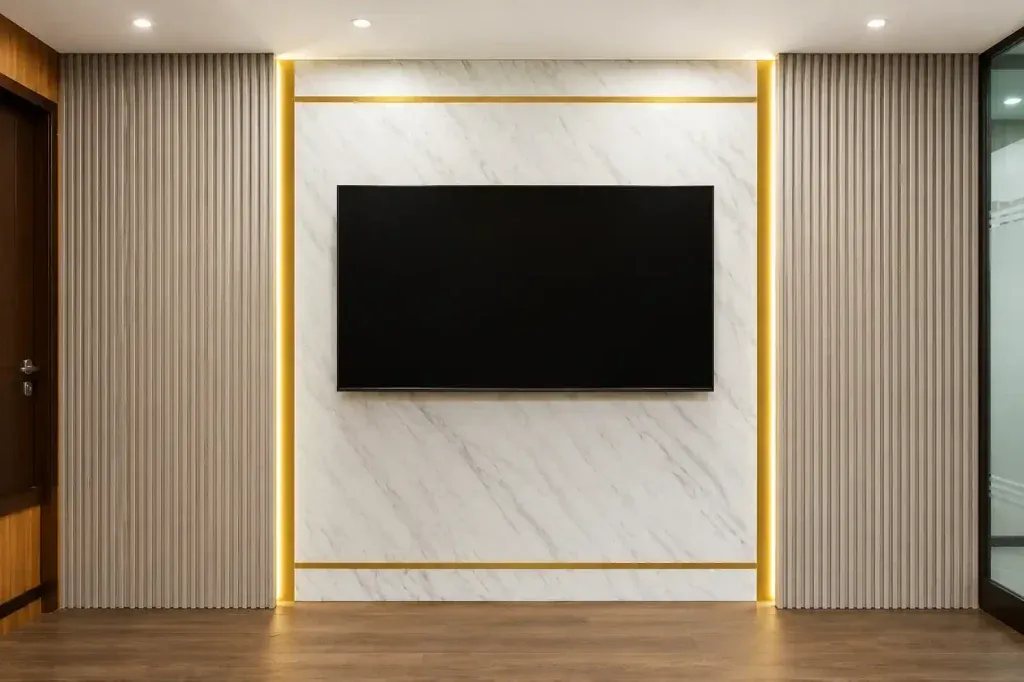
In most Indian living rooms, the television is a fixture. The question is whether the wall it sits on is designed around it or merely accommodates it.
A well-designed interior wall design for halls incorporates a TV by treating the screen as one element within a larger composition, rather than the centrepiece that detracts from the look of everything else.
The TV wall should anchor one end of the living area. In open-plan layouts, it also signals the boundary between the hall and whatever is behind the viewer, typically the dining or kitchen zone.
This is the specific challenge of open layouts: creating distinction among the hall, dining area, and kitchen without breaking the visual continuity of the space.
In some smaller Mumbai apartments, the living and dining areas share a single long wall. Interior designers in Mumbai often use the above ideas when creating distinct zones between the living space and dining area, as these designs are the only spatial definitions that work in such floor plans.
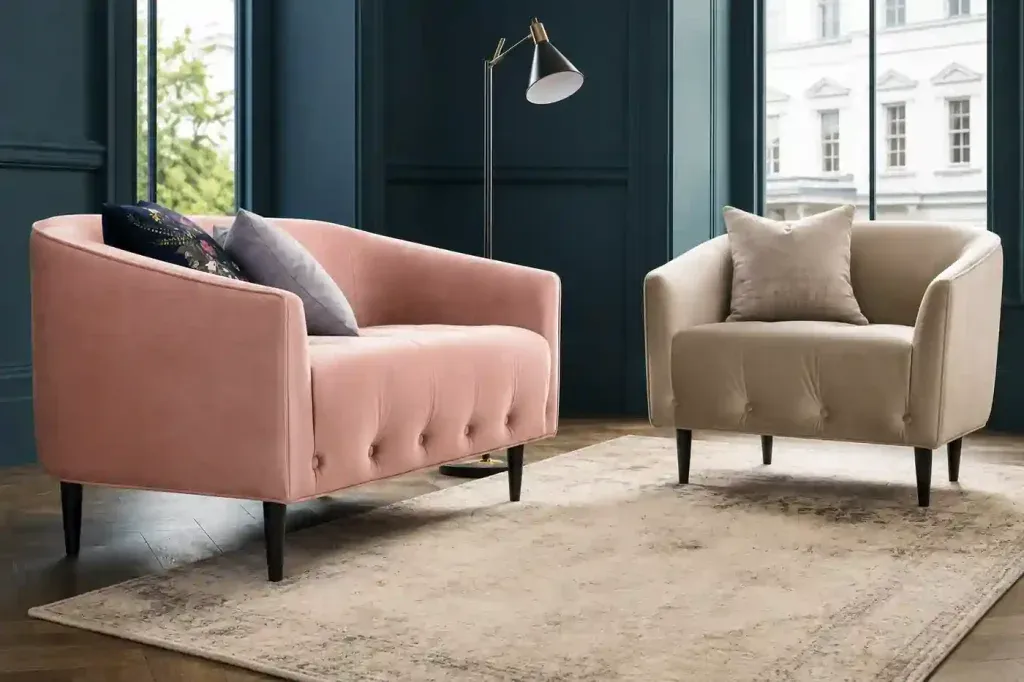
The right interior wall design for hall spaces depends on three variables: the amount of natural light the wall receives, the ceiling height, and what the wall needs to do beyond looking resolved.
A north-facing hall wall in a Mumbai apartment needs a finish that reflects rather than absorbs light. Pale limewash, warm-toned wood, or a textured off-white paint will perform better than deep, matte stone.
A Bangalore apartment with a 10-foot ceiling can carry a more substantial material treatment. Stone cladding, full-height fluted panels, or a dramatic wallpaper with a vertical pattern all benefit from the additional height.
If the wall needs to hold storage, start with the functional requirements and work the aesthetic around them. A wall that looks exceptional but forces clutter onto the floor has not solved the problem.
The best interior wall design for hall spaces is not chosen from a mood board. It is decided after understanding how the room is used, where the light falls, what the floor plan demands, and what the household needs the wall to actually do. That is the Life Design philosophy at the core of every Bonito Designs project: aesthetics follow function, and function follows a genuine understanding of the household.
With direct experience across open-plan layouts in Mumbai and Bangalore, our team understands the specific spatial challenges these homes present and designs around them rather than past them.
If your open-plan home needs walls that better uplift your hall, book a consultation with Bonito Designs today.
Wood and stone can both strengthen interior wall ideas by adding warmth, texture and depth, but their visual weight needs careful control. In a balanced wall design, one material can lead while the other supports it through smaller accents, matching undertones, and considered lighting.
22 Oct 2026|5 min readBoth whimsical interior design and maximalist interior design use colour, pattern and personal objects, but they create visual interest differently. While the first focuses on imaginative surprises, the second builds richness through deliberate layering and abundance. This article covers their differences across colour, furniture, artwork, lighting and storage, along with practical ways to adapt either style to compact Indian homes.
22 Oct 2026|5 min readVictorian house interior design can work well in compact Indian homes when you use decorative elements selectively. Lighter colours, restrained mouldings, slimmer furniture and controlled patterns help retain Victorian character without making rooms feel crowded. Modern storage, practical lighting and careful space planning can make the style more suitable for everyday living.
21 Oct 2026|5 min readPlan your living room furniture design with practical tips for choosing sofas, tables, rugs, storage and layouts that suit the way your household lives.
10 Sept 2026|5 min readDiscover how texture adds depth, warmth, and visual interest to interior design. Explore expert ideas to create stylish, layered spaces with Bonito Designs.
08 Sept 2026|5 min readDiscover 10 practical wall decoration ideas, from gallery walls and wallpaper to mirrors, panelling and greenery, that can completely transform a room.
27 Aug 2026|5 min read


Your Home Makeover Starts Here.