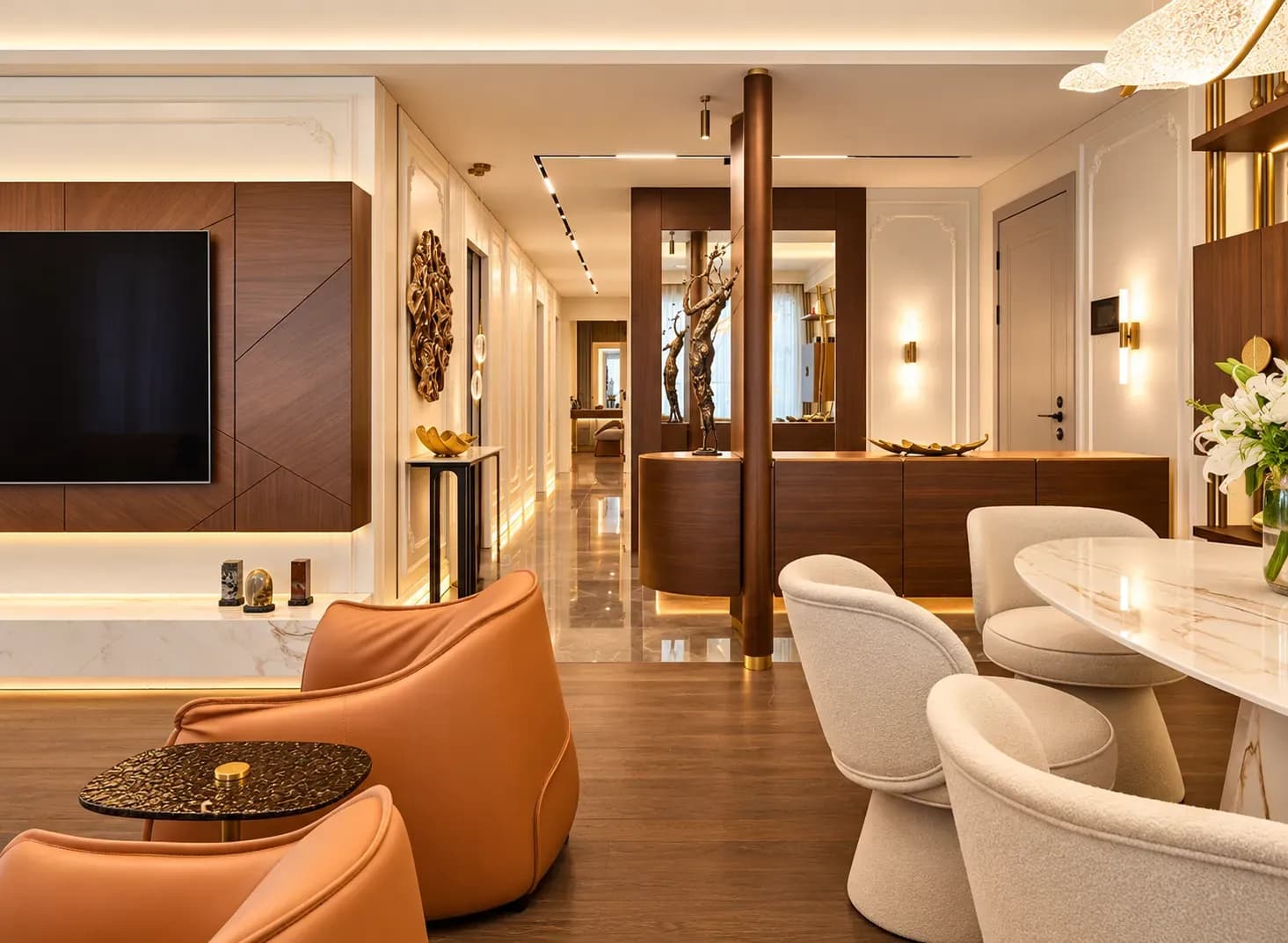
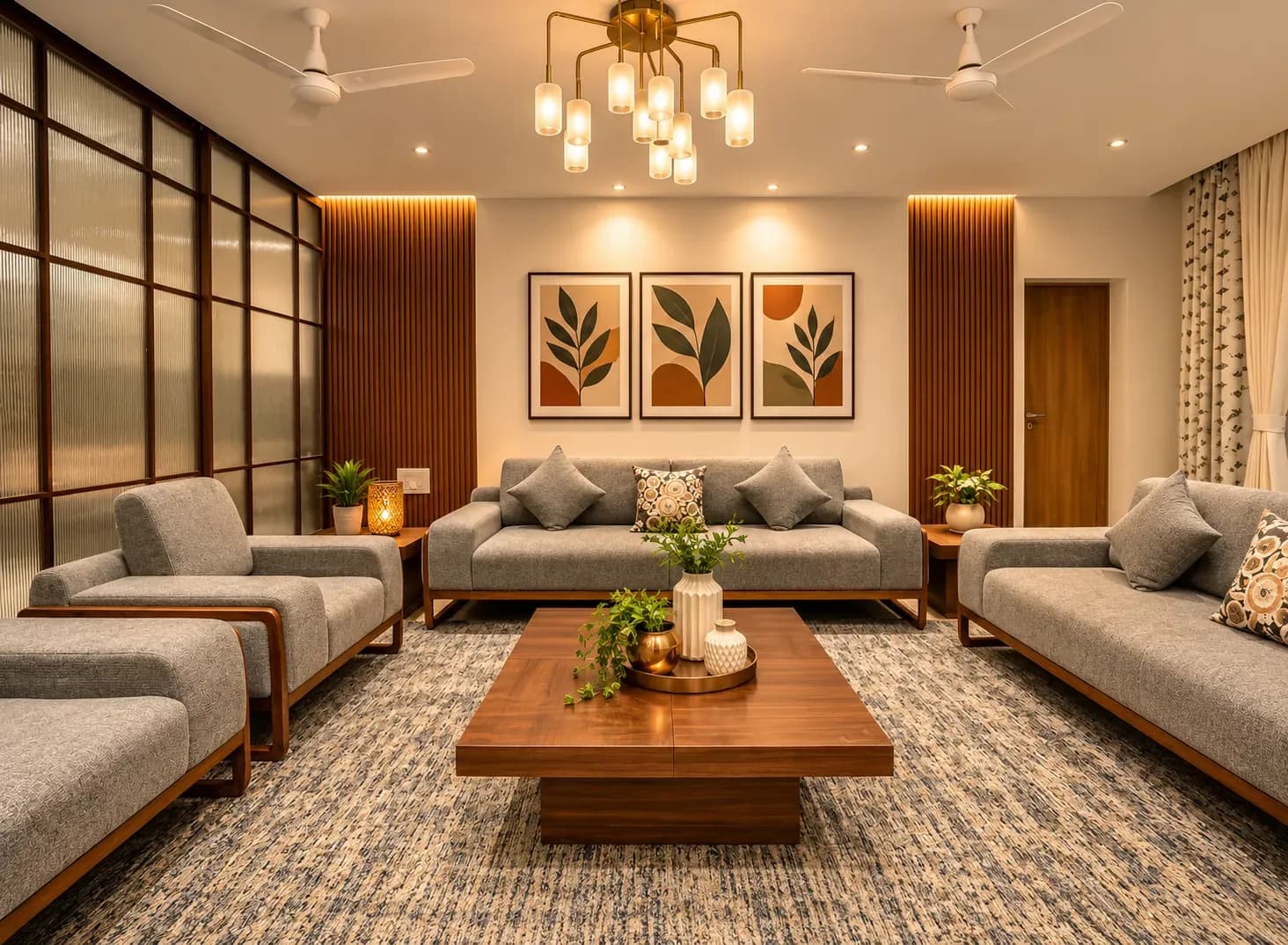
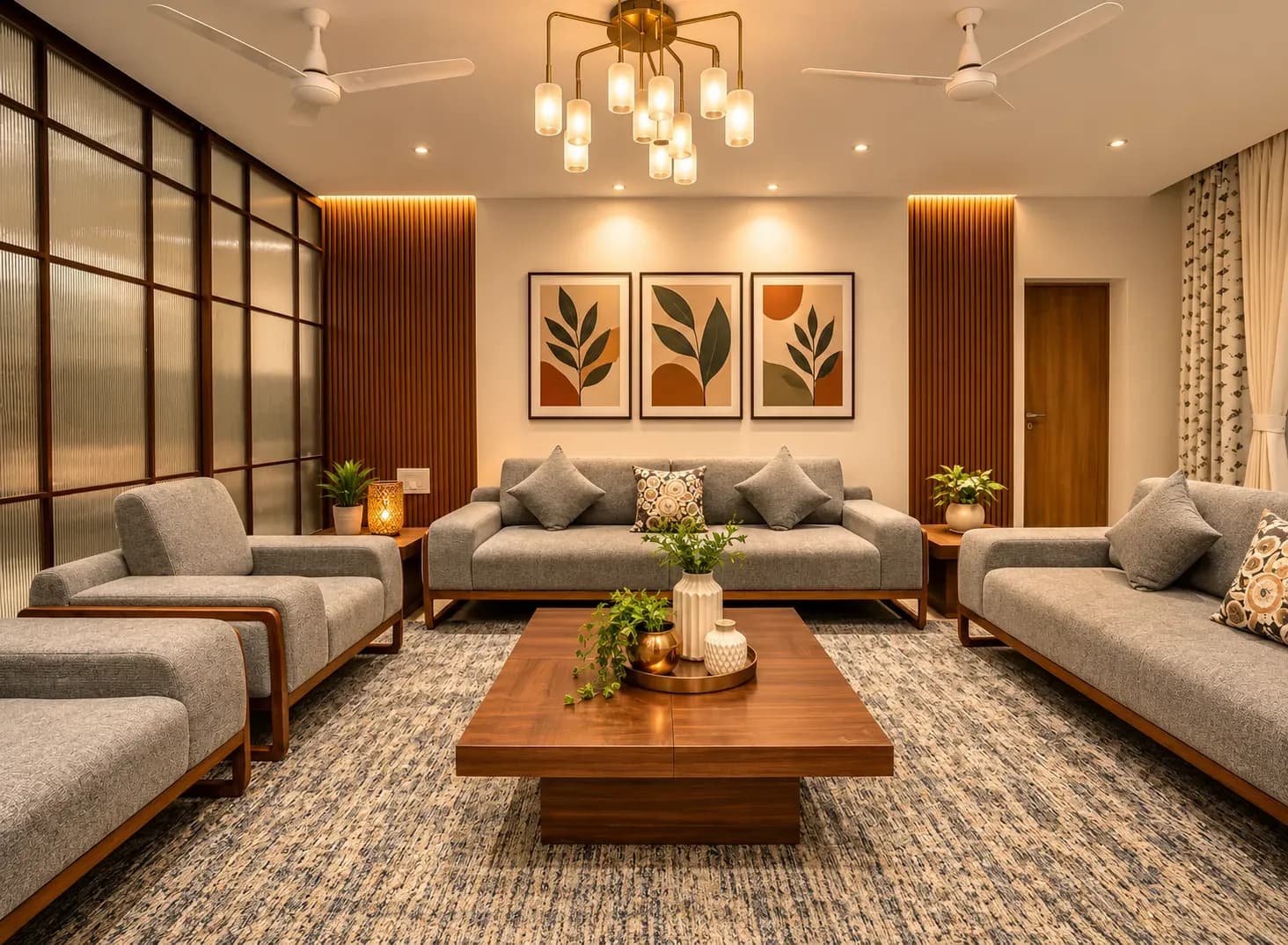
Paint shopping usually starts with confidence and ends in doubt. A shade that looked perfect on a small swatch suddenly feels wrong across an entire wall. A palette that worked beautifully in a friend's sunlit Bangalore living room may look flat and grey in a Mumbai apartment with a single small window.
This happens because choosing the right interior colour combination was never really about picking a favourite shade. It's about how that shade behaves in a specific room, with its specific light, furniture, and flooring. This guide covers everything worth knowing, from basic colour theory to room-by-room recommendations, so you can choose a home interior colour combination that works in your home, not just on a paint chart.
Before looking at any specific palette, it helps to get clear on a few practical factors that should shape the decision:
Getting these basics right before falling in love with a specific shade saves a lot of repainting down the line.
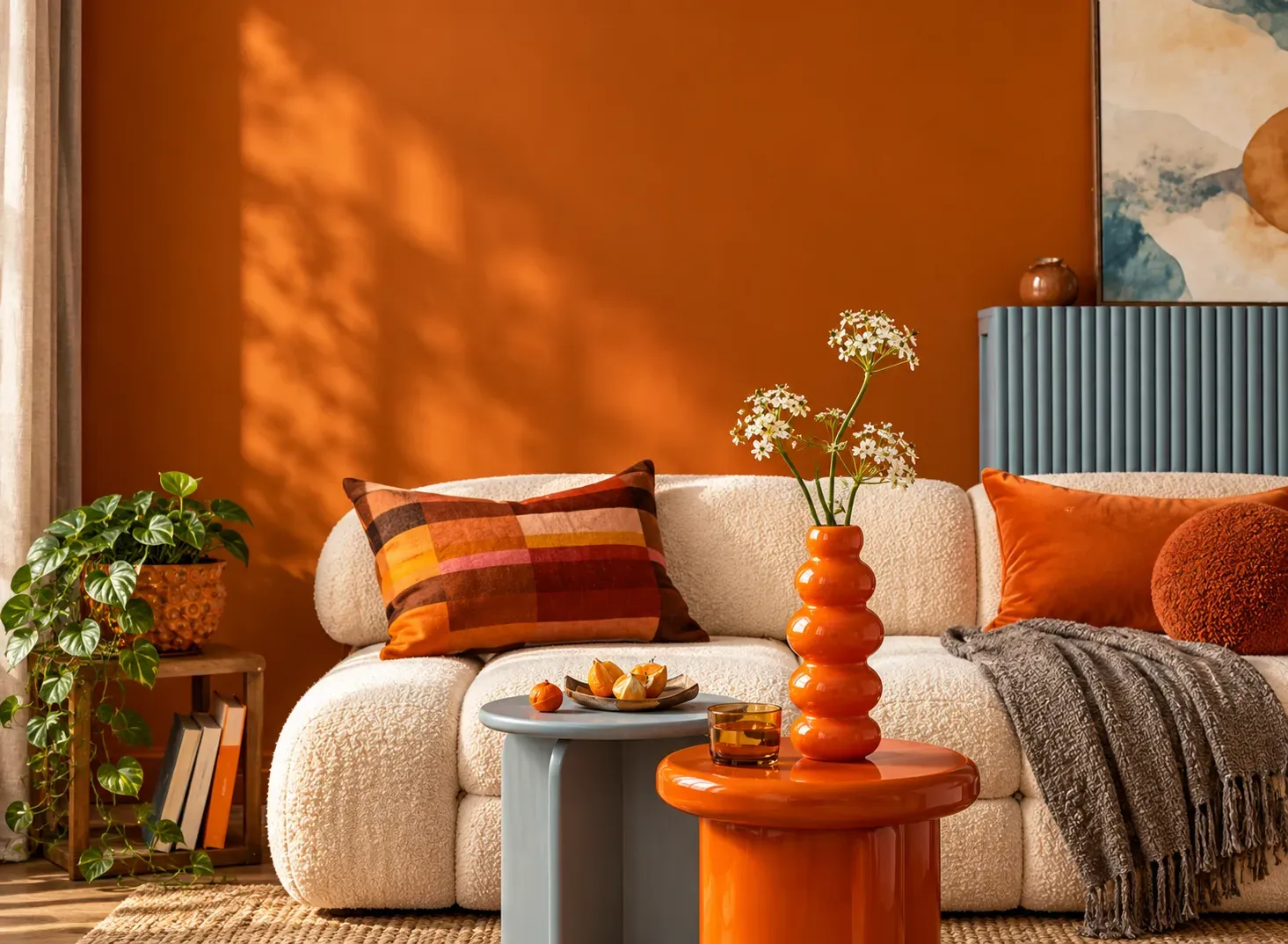
You don't need a design degree to get interior colour design right. A few simple principles cover most of what matters.
Warm tones, reds, oranges, yellows, browns, tend to feel cosy and energising. Cool tones, blues, greens, greys, feel calm and spacious. Most successful house interior colour combination choices lean primarily one way, using the opposite tone sparingly as an accent rather than mixing both equally.
Every well-balanced room has one dominant colour that covers most of the visible surface, and one or two accent colours used in smaller doses, such as cushions, art, a feature wall, or an upholstered chair. Without this hierarchy, a room can feel like a random collection of colours rather than a considered palette.
This is one of the simplest frameworks for a balanced room:
| Proportion | Role | Example |
|---|---|---|
| 60% | Dominant colour | Walls, large furniture pieces |
| 30% | Secondary colour | Curtains, rugs, upholstery |
| 10% | Accent colour | Cushions, art, decorative objects |
Following this rough split keeps a room feeling intentional rather than overwhelming, even when the palette includes two or three colours.
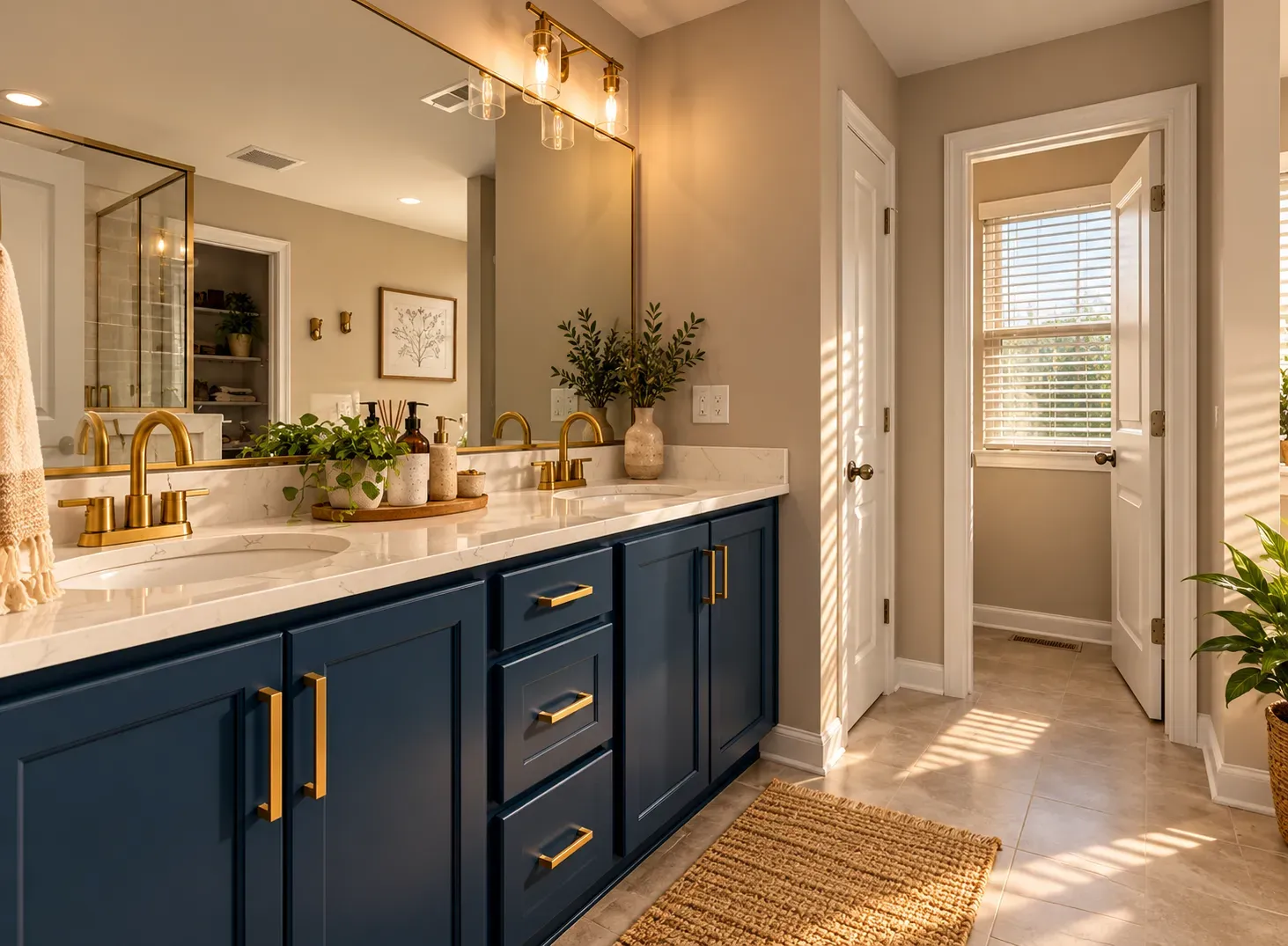
A few good colour combinations for home interiors have proven themselves across different room types and light conditions in Indian homes.
| Combination | Mood | Works Best In |
|---|---|---|
| Beige and brown | Warm, grounded, classic | Living rooms, homes with wood furniture |
| White and blue | Fresh, airy, coastal | Bedrooms, bathrooms, bright rooms |
| Sage green and cream | Calm, earthy, contemporary | Bedrooms, living rooms with greenery |
| Terracotta and neutrals | Warm, textured, rooted in Indian aesthetics | Living rooms, dining areas, entryways |
| Grey and wood tones | Modern, understated, versatile | Living rooms, home offices |
| Muted pastels | Soft, gentle, contemporary | Bedrooms, kids' rooms, nurseries |
These combinations work well precisely because they follow the dominant-and-accent principle above. Beige carries the room while brown grounds it; sage green sets the tone while cream keeps it from feeling too heavy.
Different rooms serve different purposes, and the best colour combinations for home interiors reflect that rather than applying one palette everywhere.
This is usually the most social space in the home, so it can handle a slightly bolder palette. Beige and brown, terracotta and neutrals, or grey and wood tones all work well here, especially paired with natural light and a few textured accents.
Calm should take priority over visual chaos. Sage green and cream, white and blue, or muted pastels all support rest without feeling flat or clinical.
Durability and light both matter here. Warm whites, soft greys, and muted yellows tend to work well, since they stay visually clean even with everyday wear and reflect kitchen lighting effectively.
A slightly richer tone than the surrounding space can help define a dining zone, especially in open-plan homes. Terracotta, deep beige, or a warm grey all work well as a dining-specific interior wall colour combination that stands apart just enough from an adjoining living room.
Lighter, more reflective tones are almost always the safer choice. White and blue, sage green and cream, or simple soft neutrals help a small room feel larger, especially when the same palette continues across connected areas rather than changing abruptly from room to room.
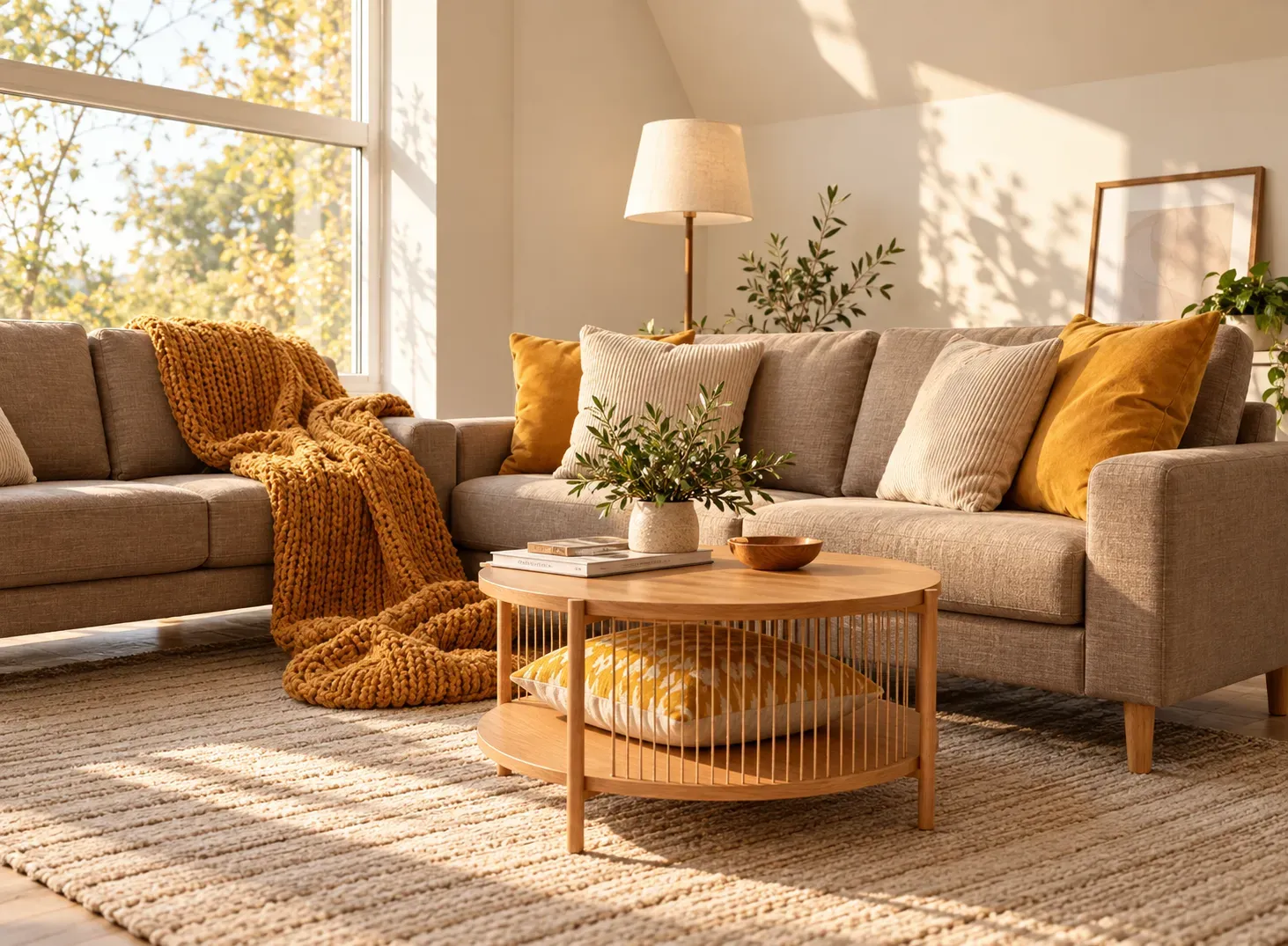
The same paint colour can look like two entirely different shades depending on the room, and this is one of the most common reasons homeowners end up disappointed after painting. A bright, well-ventilated Bangalore home with large windows will show a colour closer to how it appears on the swatch, since ample natural light keeps the true pigment visible throughout the day.
A compact Mumbai apartment with limited daylight, on the other hand, often makes the same shade look cooler, duller, or more muted than expected, since artificial lighting and reduced sunlight both shift how colour reads.
Interior designers in Mumbai follow the below practical tips to account for this:
The best interior colour ideas are not simply the most fashionable ones. They balance personal taste with natural light, room proportions, existing materials, and the actual function of each space. Bonito Designs plans your home’s inside colour palette based on the ground realities of your house’s layout and your personal preferences.
This interior design service follows the LifeDesign philosophy, which focuses on creating a home that perfectly supports your day-to-day routine. Bonito Designs understands that each house is unique, and so is the family living within its walls. That’s why they test your home’s lighting and consider your family’s wants/needs before selecting any home interior colour combination.
Book a consultation with Bonito Designs today to get a home interior colour combination that perfectly matches your home’s layout as well as your family’s aesthetic preferences.
Well-planned modern home interiors in HSR Layout use clean layouts, integrated storage and coordinated finishes without following every short-lived trend. The best luxury home interiors also adapt each room to the household’s routines, available light and long-term needs. This article explains how to plan living rooms, kitchens, dining areas and bedrooms so the entire home feels modern, comfortable and easy to maintain.
03 Nov 2026|5 min readChoosing a full home interior designer in HRBR Layout requires careful review of the team’s site assessment, planning process, specifications and execution controls. Good house interior design should respond to the property’s actual structure as well as the family’s daily needs. This article explains how to compare portfolios, quotations, timelines, workmanship and after-sales support before appointing a firm.
02 Nov 2026|5 min readChoosing among the best interior designers in Thane requires looking beyond portfolios and reputation. Homeowners should compare design approach, project experience, execution support, pricing transparency, material specifications, and client feedback. The right designer should also match your budget, communication preferences, and your home's practical needs.
02 Nov 2026|5 min readWell-planned modern home interiors in HSR Layout use clean layouts, integrated storage and coordinated finishes without following every short-lived trend. The best luxury home interiors also adapt each room to the household’s routines, available light and long-term needs. This article explains how to plan living rooms, kitchens, dining areas and bedrooms so the entire home feels modern, comfortable and easy to maintain.
03 Nov 2026|5 min readChoosing a full home interior designer in HRBR Layout requires careful review of the team’s site assessment, planning process, specifications and execution controls. Good house interior design should respond to the property’s actual structure as well as the family’s daily needs. This article explains how to compare portfolios, quotations, timelines, workmanship and after-sales support before appointing a firm.
02 Nov 2026|5 min readChoosing among the best interior designers in Thane requires looking beyond portfolios and reputation. Homeowners should compare design approach, project experience, execution support, pricing transparency, material specifications, and client feedback. The right designer should also match your budget, communication preferences, and your home's practical needs.
02 Nov 2026|5 min read


Your Home Makeover Starts Here.