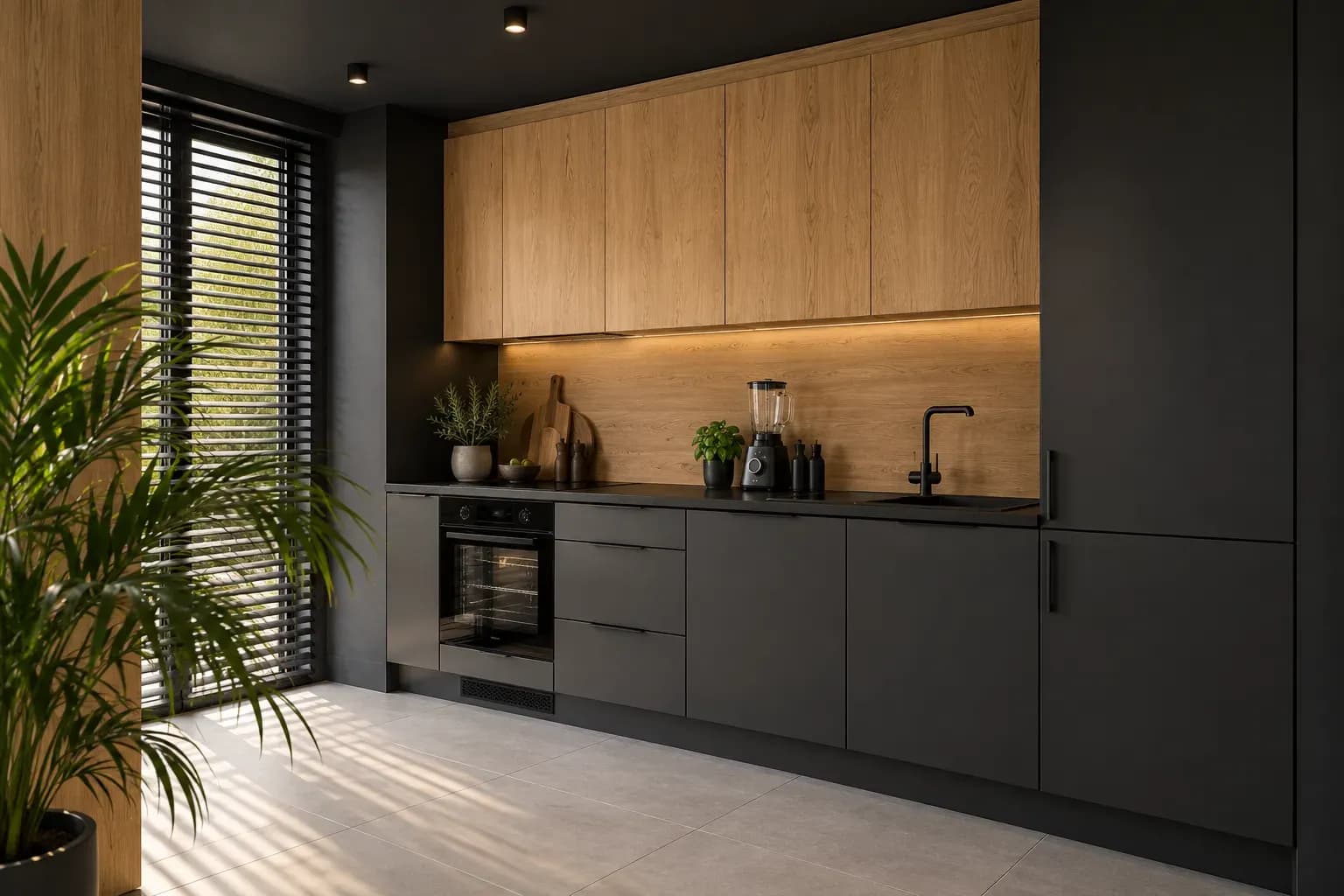
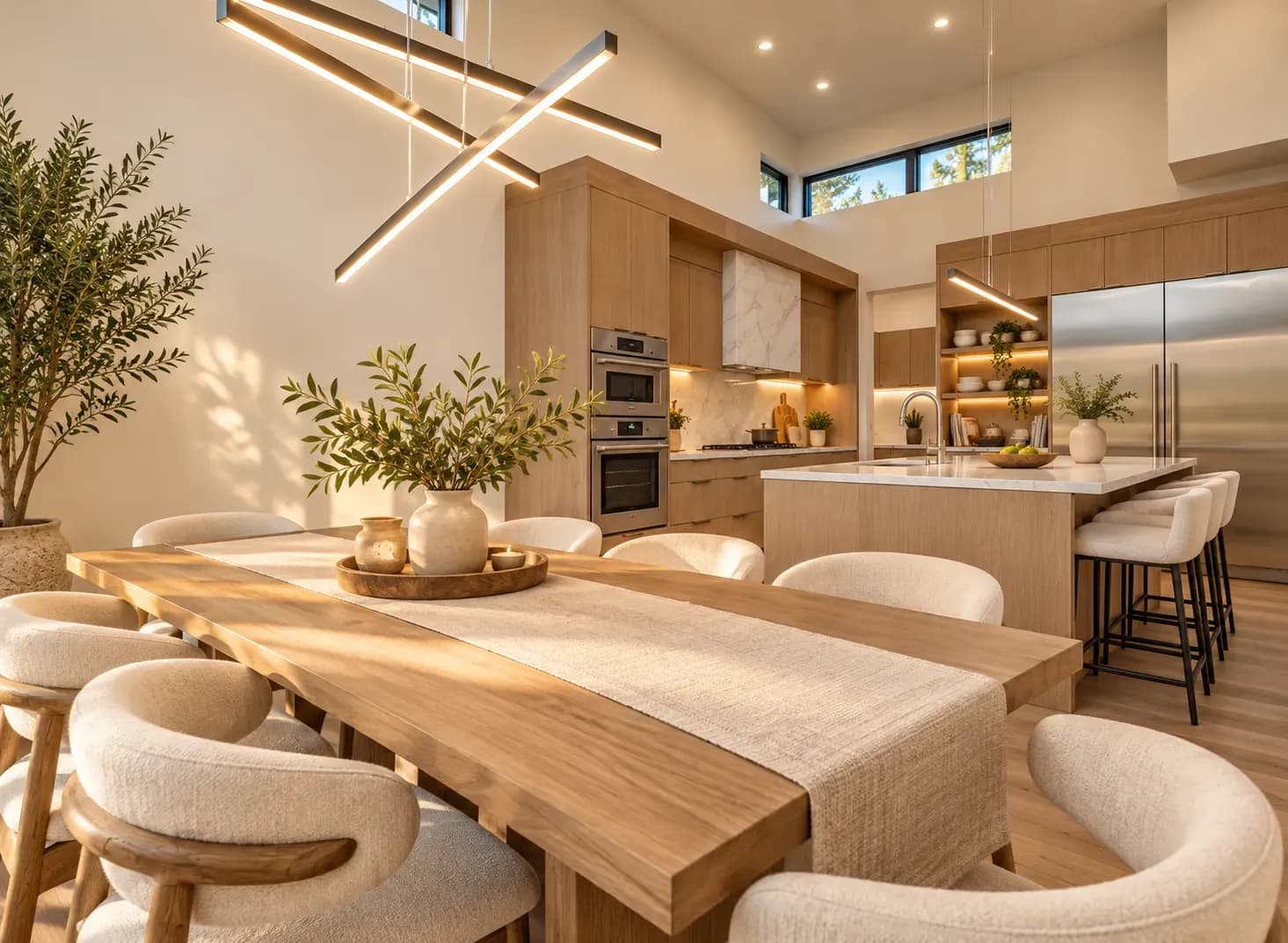
Every kitchen conversation eventually comes down to the same question: should you go custom or modular? It sounds like a simple choice between two price points, but it isn't, since the cheaper upfront quote doesn't always offer better value once you factor in durability, future flexibility, and how well the kitchen holds up to years of daily use.
Comparing modular kitchen costs against a custom, carpenter-built alternative means looking well beyond the initial number on a quote. Here's how the two compare, and how to figure out which genuinely suits your budget and needs.
The core difference comes down to how each kitchen is designed, made, and installed.
Often carpenter-built on site, it is constructed specifically for your space, cut and assembled by hand according to your exact dimensions and requirements. Every cabinet, shelf, and drawer is built to order, which gives it real flexibility but also makes the process more dependent on the individual carpenter's skill and consistency.
A modular kitchen is built from factory-manufactured, standardised components, cabinet boxes, shutters, and hardware that are assembled and fitted into your kitchen space. Manufacturing happens off-site under controlled conditions, and installation largely involves fitting pre-made modules together rather than building each piece from scratch.
This difference in process drives most of the differences in cost, quality consistency, and timeline between the two approaches.
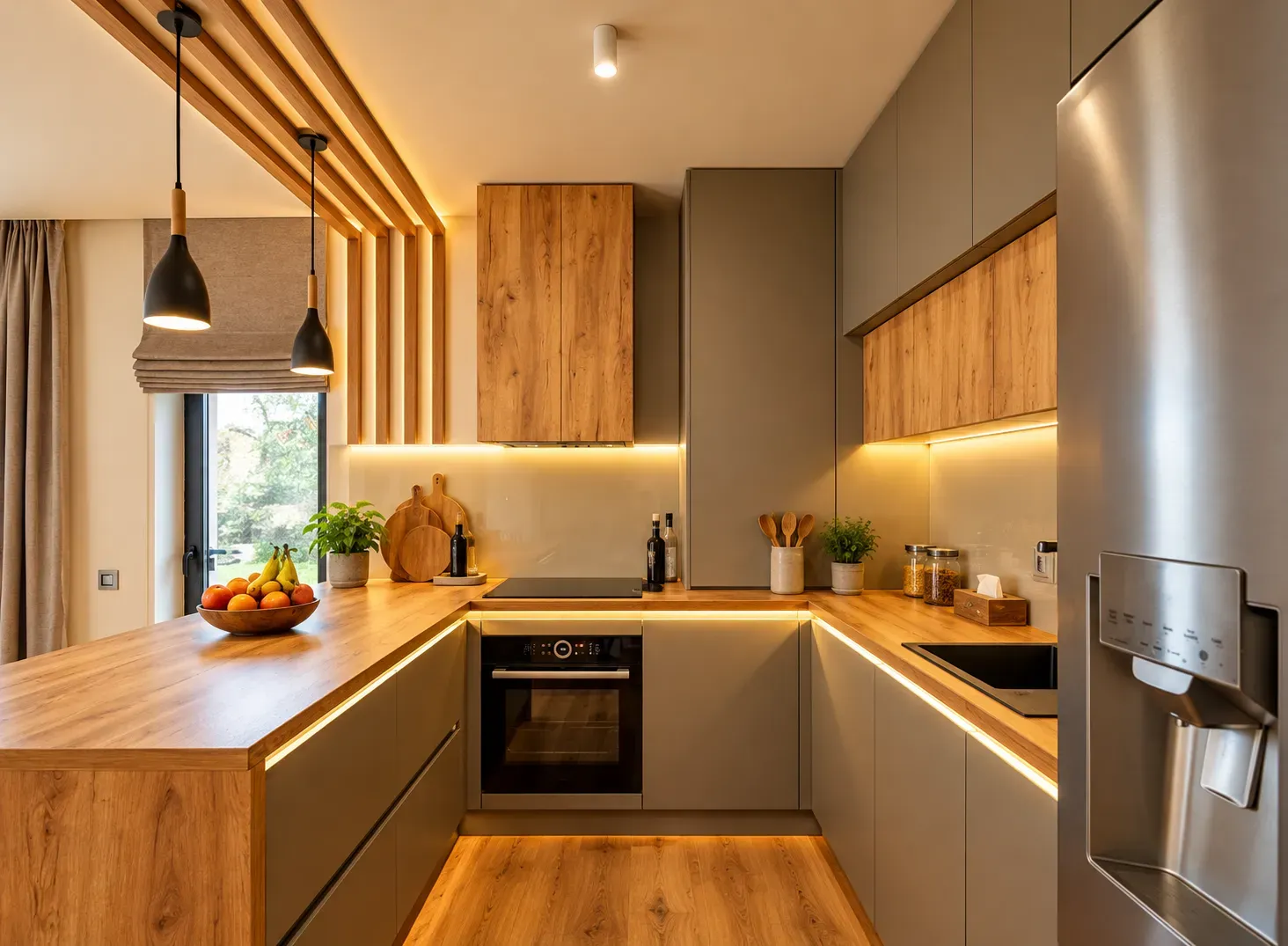
Both kitchen types share similar cost factors, but each plays out differently depending on the approach you choose.
| Cost Driver | Custom Kitchen | Modular Kitchen |
|---|---|---|
| Materials | Sourced individually, quality varies by carpenter and supplier | Factory-sourced, generally consistent quality within a chosen material grade |
| Hardware | Selected separately, quality depends on what's specified | Often bundled with the manufacturer's standard or premium hardware lines |
| Labour | On-site carpentry labour, can vary widely in cost and skill | Primarily installation labour, since components arrive largely finished |
| Customisation | High, built to any dimension or configuration | Moderate, works within modular sizing but offers configuration flexibility |
| Storage accessories | Added individually, cost depends on what's sourced | Often available as pre-designed accessory packages |
| Finishes | Wide range, dependent on what materials are sourced locally | Standardised finish options from the manufacturer's catalogue |
| Installation | Typically slower, built and assembled on site over several weeks | Faster, since factory-made modules are fitted together on site |
Neither approach is inherently cheaper across the board. A simple custom kitchen with modest finishes can cost less than a heavily accessorised modular one, while a straightforward modular kitchen can easily undercut an elaborate custom build.
Custom kitchens genuinely earn their place in certain situations, particularly where standardisation becomes a limitation rather than a convenience.
The trade-off is that quality and finish consistency depend heavily on the individual carpenter's skill, and timelines can be less predictable than a modular installation.
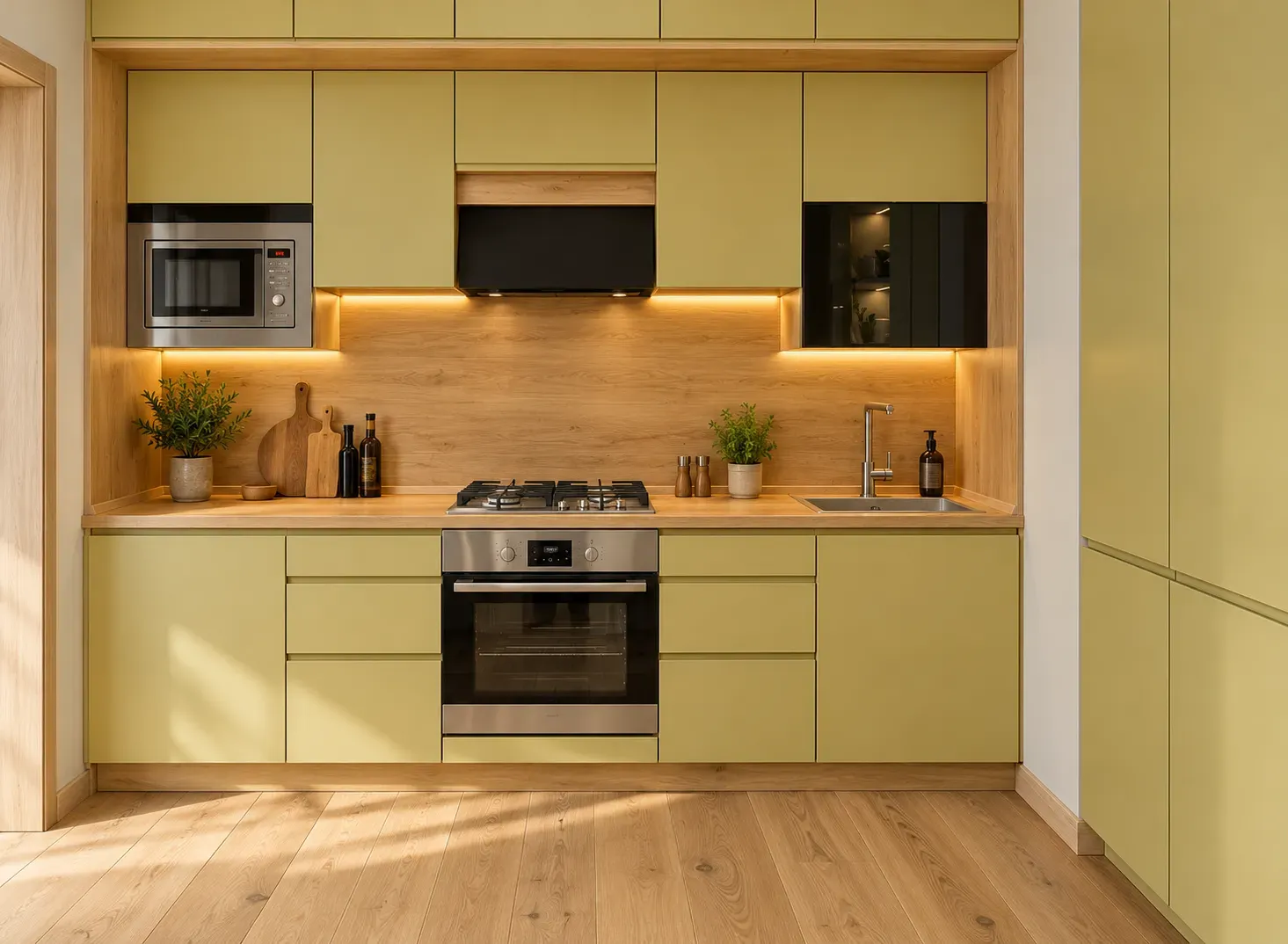
Modular kitchen cost tends to win out if budget is your main concern; however, the cost can increase if you’re looking for premium modular furniture. Moreover, modular kitchens also offer advantages, particularly consistency and organisation.
For most standard kitchen layouts, this combination of consistency and organised storage is what makes modular the more practical default choice.
The upfront custom or modular kitchen cost is only part of the picture. A few long-term factors matter just as much when weighing real value.
These factors often matter more over a ten-year horizon than the initial installation cost, particularly for households planning to stay in the same home for a while.
A few practical questions help clarify which direction makes more sense for a specific household:
Looking through a range of kitchen interior design ideas for both custom and modular builds before deciding can also help clarify which finishes and storage configurations actually matter to your household. Compare the modular kitchen cost with the quote for a custom build, and evaluate which option best fits your home and lifestyle.
The better-value option depends on more than the initial modular kitchen cost or a custom kitchen cabinets quote. Compare total scope, material quality, installation reliability, maintenance, and future flexibility before deciding which approach works best for your family. With Bonito Designs, your kitchen is planned around your space, storage needs, cooking habits, and overall home aesthetic rather than a standard template.
Bonito Designs helps you understand what influences the modular kitchen cost, from layout and cabinetry materials to finishes, hardware, storage accessories, and installation, so you can make informed choices within your budget.
Book a consultation with Bonito Designs today to start planning a modular kitchen that actually suits your home.
A well-planned 3 BHK flat interior design should create clear boundaries between private bedrooms and shared living areas without making the home feel closed. Smart zoning, controlled sightlines, furniture placement, screens, partitions, lighting, and acoustic planning can all improve privacy. Planning these elements early also helps maintain smooth circulation and visual openness.
31 Oct 2026|5 min readChoosing a full home interior designer in HSR Layout requires more than comparing attractive portfolios. A capable home interior designer should connect layouts, storage, materials, services and execution while providing clear quotations, payment stages and after-sales support.
30 Oct 2026|5 min readChoosing an interior designer for a 2BHK in Andheri requires the same close attention to layout, storage and execution that reliable interior design for 2BHK flat projects demands. A suitable designer should present relevant work, transparent specifications, realistic timelines and a clear system for supervising the site.
30 Oct 2026|5 min readA 4BHK interior design cost depends on the home’s size, storage requirements, materials, hardware, furniture, lighting, and extent of civil work. A detailed estimate should clearly separate modular kitchens, wardrobes, fixed interiors, finishes, furniture, and additional site expenses. Comparing scope, quantities, materials, warranties, and exclusions can help homeowners avoid unexpected costs.
28 Oct 2026|5 min readKitchen interior design cost depends heavily on cabinet materials, core boards, hardware, storage accessories, and the level of customisation. Materials such as laminate, acrylic, veneer, membrane, and PU vary considerably in price, durability, appearance, and maintenance. A well-planned kitchen budget should therefore balance upfront cost with long-term performance and everyday use.
24 Oct 2026|5 min readHome interior design cost depends on far more than the size of the property. Scope, materials, customisation, site conditions and execution requirements can significantly change the final quotation. Budget, mid-range and premium interiors mainly reflect different specification levels, while smart budgeting means spending more on high-use elements and simplifying finishes or décor where possible.
15 Oct 2026|5 min read


Your Home Makeover Starts Here.