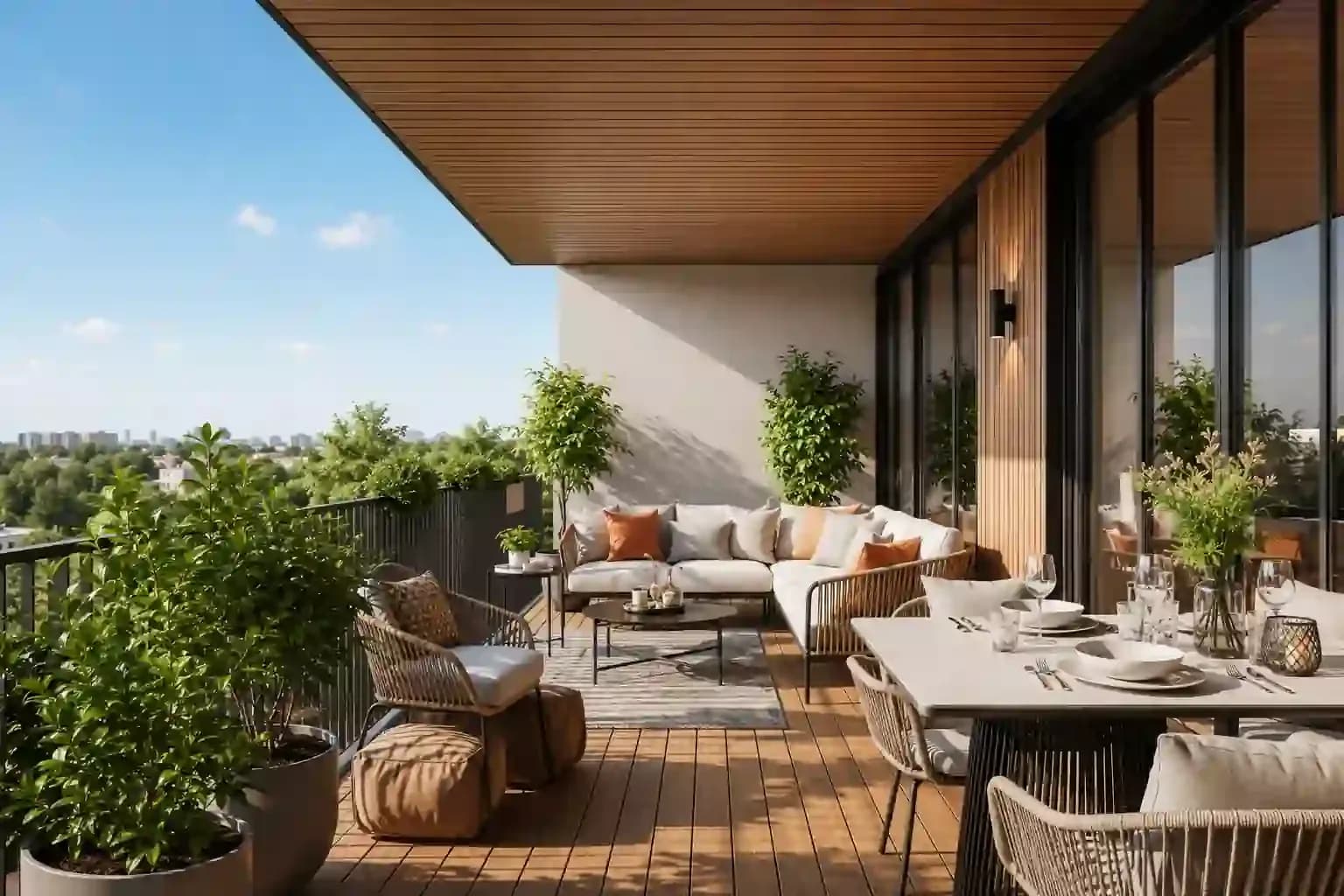
An open balcony becomes difficult to use when strong sun, rain, dust, or neighbouring views come into play. A covering can improve comfort, but a poorly chosen system may trap heat, obstruct drainage or make the apartment façade look inconsistent.
The most useful balcony covering ideas start with the problem the balcony needs to solve and how much openness the household wants to retain. When assessing balcony covering ideas in India, seasonal rain, high-rise wind, and apartment rules matter as much as appearance.
Observe where rain enters, when the floor receives direct sun, and which neighbouring windows affect privacy. Mumbai balconies may need stronger rain management and corrosion-resistant hardware, while exposed Bangalore apartments may face sudden, wind-driven showers.
A successful balcony design should protect the activities that happen there while preserving ventilation. The chosen balcony covering ideas must also leave drains, railings, outdoor air-conditioning units, and maintenance points accessible.
A retractable awning provides shade during hot hours and an open sky at other times. These balcony covering ideas suit households that value flexibility, but the fabric, brackets, and operating mechanism must be intended for outdoor use.
Treat an awning primarily as a shade system. Generally, retract it before strong wind or heavy rain, because pooled water and wind pressure can strain the fabric and arms.
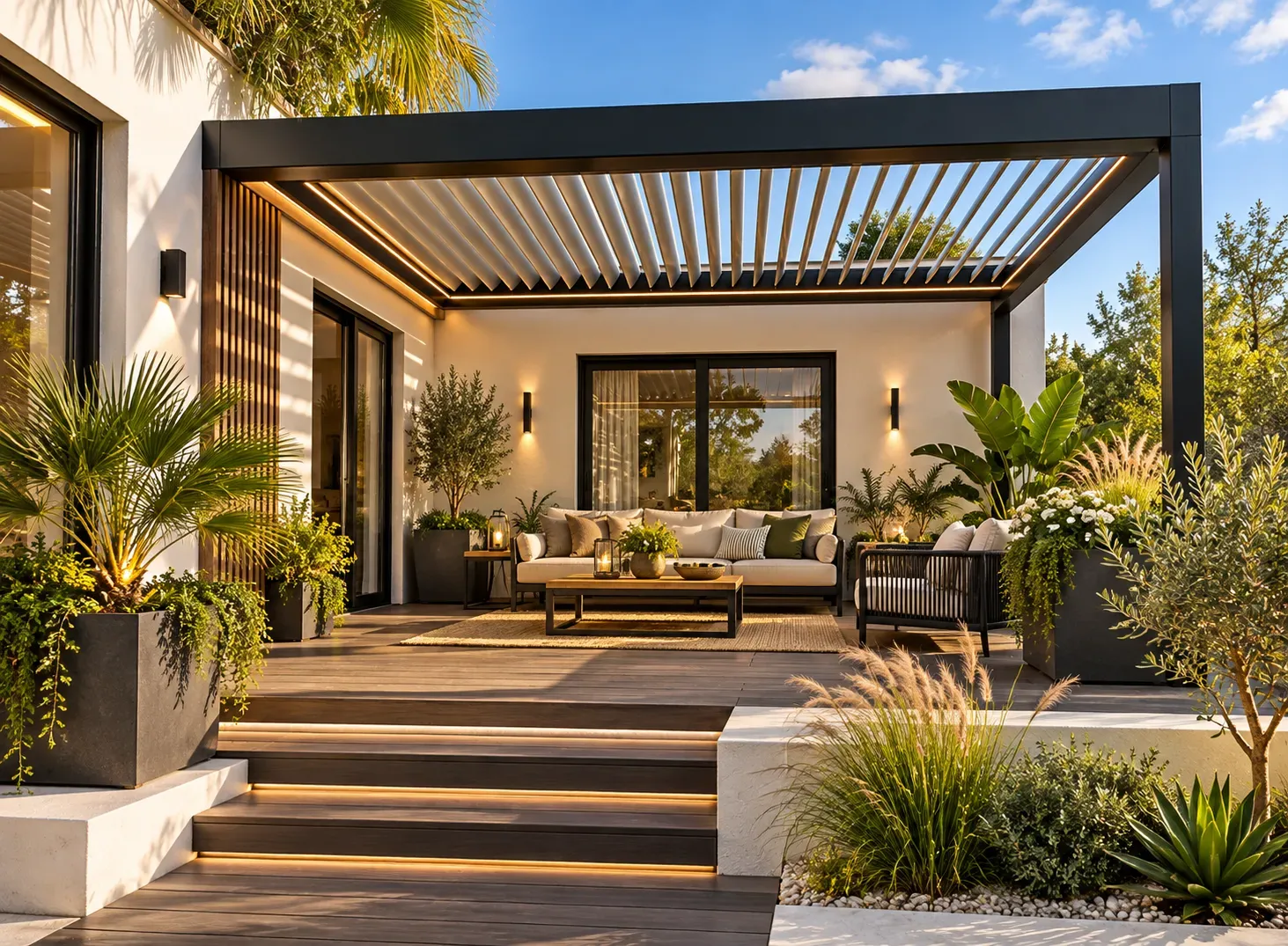
A pergola gives the balcony an overhead frame while retaining airflow. Aluminium, powder-coated steel, and wood-look composite suit contemporary buildings and require less care than untreated timber.
Among balcony roof covering ideas, pergolas offer different levels of protection. Fixed slats provide partial shade, while adjustable louvres offer more control but add moving parts, drainage channels, and extra maintenance.
Polycarbonate sheets admit daylight while shielding the balcony from direct rain. Clear panels preserve brightness, whereas frosted or tinted sheets can reduce glare and soften views from nearby buildings.
For this balcony covering idea, the installation needs adequate slope, sealed joints, and a planned discharge point. Ask how the panel will handle heat, thermal movement, and the sound of heavy rain instead of selecting it by appearance alone.
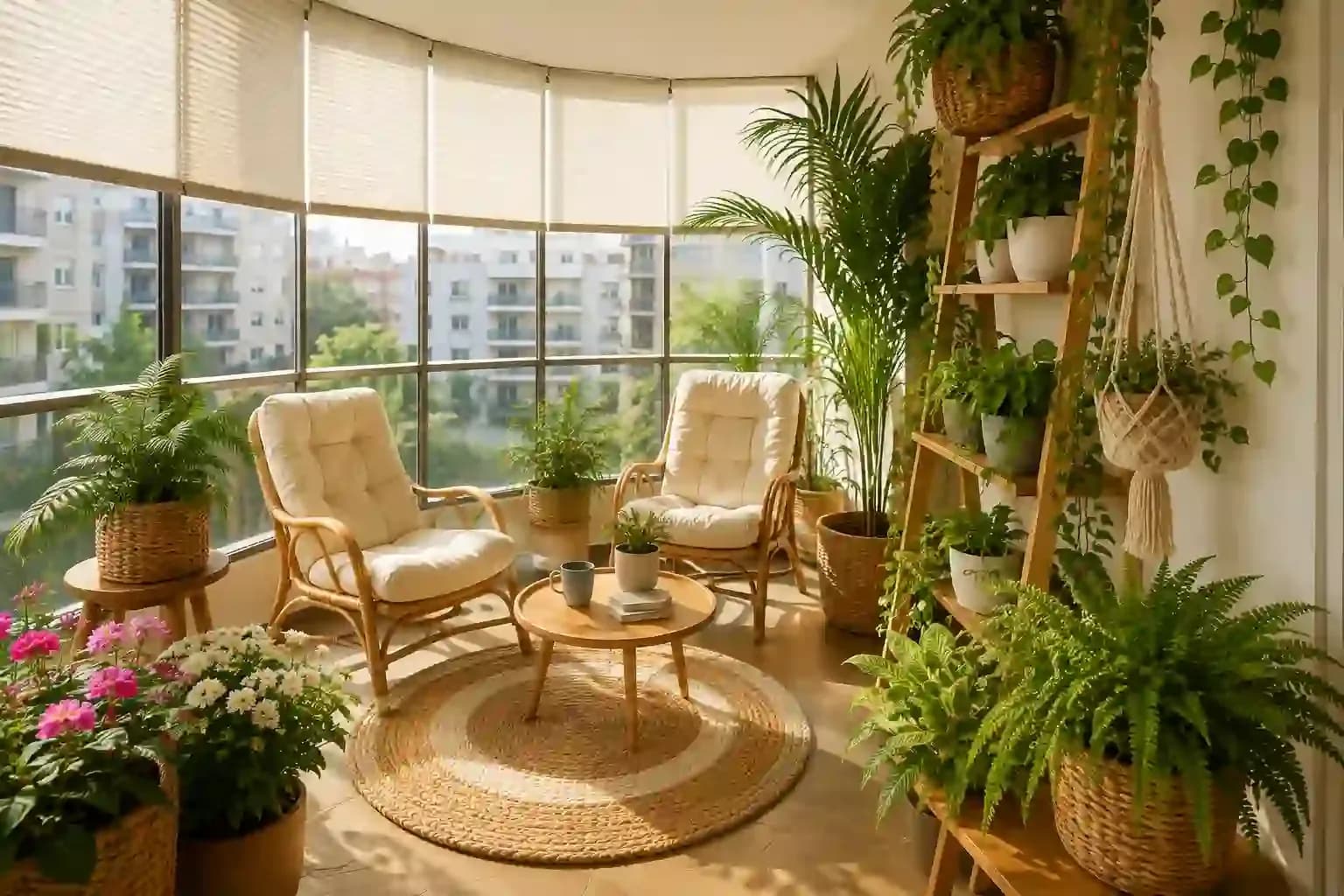
Sliding or folding glass panels reduce wind, rain, and dust while keeping the outward view relatively open. Glass-based balcony covering ideas can support a breakfast or reading area, although a closed balcony may heat up quickly.
Check ventilation, panel weight, track drainage, cleaning access, and emergency movement. Full-height enclosures can also alter the building elevation, so settle permissions before fabrication.
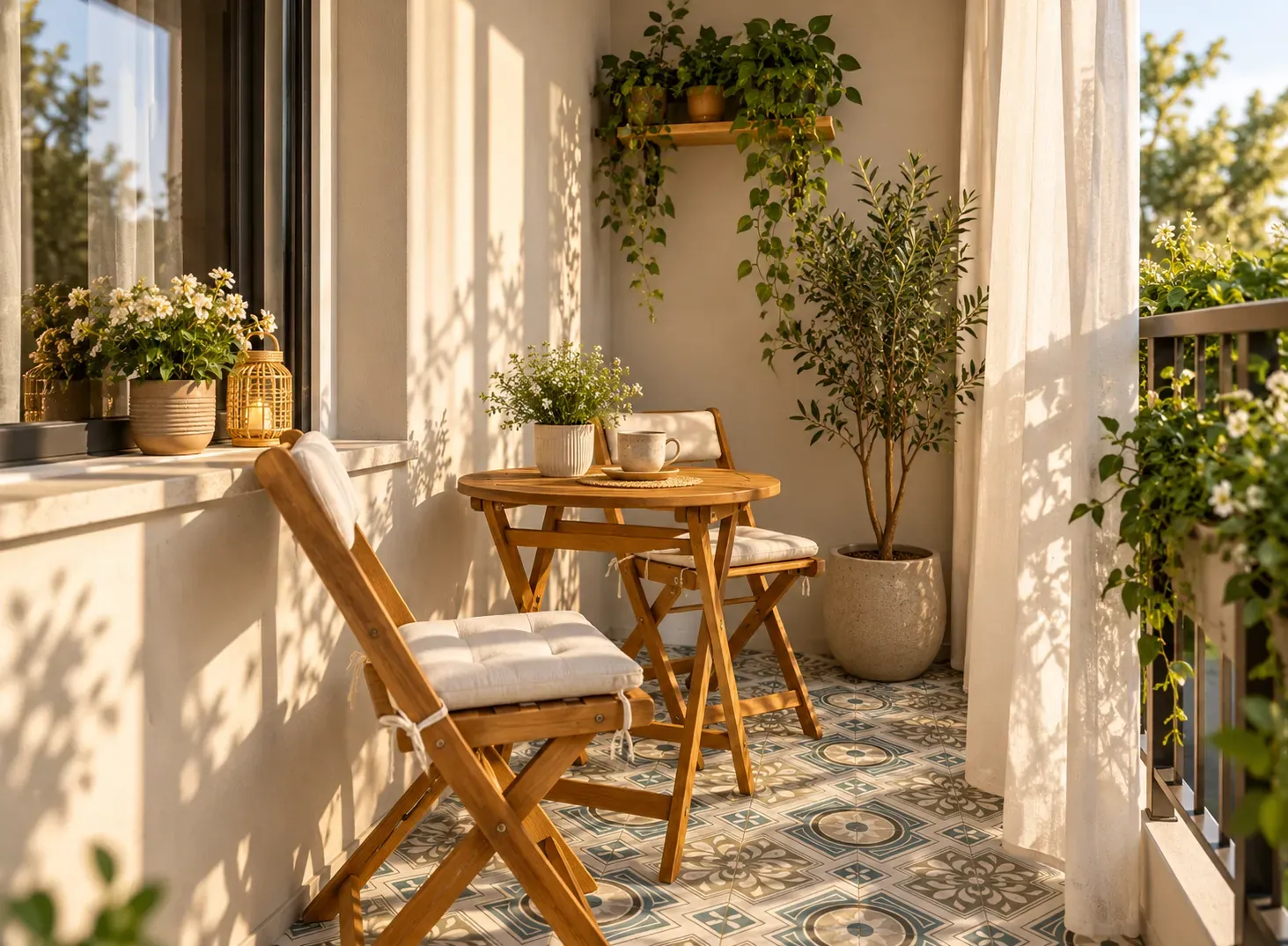
Outdoor roller or guided blinds work well where low sun and neighbouring views are the main concerns. Fabric-based balcony covering ideas can be lowered only when needed, allowing the balcony to remain open at other times.
Choose outdoor-grade material and secure side guidance for windy locations. Confirm that the fabric and operating mechanism can be cleaned or replaced without dismantling nearby finishes.
Vertical or horizontal slats screen an exposed side while allowing air to pass through. Powder-coated aluminium and wood-look composite provide a cleaner, lower-maintenance finish than temporary mats.
Well-spaced slats can support balcony interior ideas such as a bench, slim planter ledge, or wall light. Their angle should respond to the actual sightline rather than a catalogue image.
Permanent systems such as fixed roofs and glass panels provide consistent protection but require greater attention to structure, drainage, approvals, and cleaning. Flexible awnings and blinds retain more openness and usually require a smaller installation, although fabrics, motors and moving parts create future maintenance costs.
A pergola or slatted screen sits between these approaches. It creates a defined framework with airflow, then allows blinds, plants or adjustable louvres to be added later.
The best balcony covering ideas repeat the finish already used on the windows, railings, or exterior details. Powder-coated aluminium works well with modern frames, wood-look composite introduces warmth, and glass limits visual interruption.
The house balcony design from the outside should remain coherent across the building elevation. Colour, frame thickness, and panel alignment are therefore important, particularly when the covering is visible from the street.
Plan furniture after measuring the area left by tracks, posts, and handles. Apply balcony decoration ideas selectively through weather-resistant plants, one useful light source, and washable furnishings, while keeping heavy pots away from drainage routes.
Before fixing anything to the slab, wall, or railing, obtain the required housing-society approvals and confirm whether local permission is necessary. Permanent roofs, glass enclosures and visible screens may change the façade or add structural load.
The installer should assess wind exposure, fixing points, waterproofing, drainage, ventilation and access for repairs. Do not drill structural members or waterproofed surfaces without an appropriate technical review.
Interior designers in Mumbai focus more on free airflow, drainage, and a drying rail for clothes, as that is what most Mumbai apartments demand. But a Bangalore homeowner working on the balcony in the afternoons may need glare control, a protected plug point, and blinds instead. The choice depends entirely on the home’s layout and the family’s needs.
Bonito Designs’ Life Design process begins with these routines before deciding how much of the balcony to cover. Our experience with Mumbai and Bangalore homes helps us account for local layouts, exposure, society requirements, and the relationship between the balcony and adjoining room.
The right balcony covering ideas should make the space usable more often while preserving ventilation and visual connection. Book a consultation with Bonito Designs to plan a balcony around the way your household uses it.
A well-planned small 2 BHK flat interior design should prioritise clear walkways before placing furniture or adding décor. Mapping natural movement paths, choosing appropriately scaled furniture, and using space-saving storage can make compact homes feel more comfortable and spacious. Consider daily routines, circulation, storage, and lifestyle needs together to create a home that works.
19 Oct 2026|5 min readA second bedroom in a 2 BHK can become far more useful when you plan it around everyday routines rather than keeping it only for occasional guests. Convertible furniture, smart storage, layered lighting, and flexible layouts can help the room support work, hobbies, fitness, or relaxation. By planning for both present needs and future changes, couples can create a multipurpose space that remains practical over time.
19 Oct 2026|5 min readA successful 2 BHK flat interior design project depends on clear scope, timely approvals, accurate measurements and proper sequencing of work. Plan procurement, modular production, and site execution around key dependencies to avoid delays. Regular reviews and systematic snag checks help keep the interior design project timeline on track.
17 Oct 2026|5 min readDiscover 7 practical balcony interior design ideas, from space-saving furniture and greenery to lighting and flooring.
13 Aug 2026|5 min readExplore smart balcony interior design solutions, durable materials, and modern balcony design ideas perfect for Mumbai homes.
11 Jun 2026|5 min read


Your Home Makeover Starts Here.