Every parent knows the scene. After a smooth start, homework can take a detour, simply because your kids get distracted by something in the room. A lot of this comes down to one simple design gap. A youngster will get up and find it hard to regain attention if their pencils, notebooks, and daily supplies aren't within easy reach of where they are sitting to study. That's the real argument for built-in storage in kids' study table design. It's about keeping a child anchored to the desk long enough actually to finish what they started.
Instead of being dispersed across the space, storage that lives with the workstation serves two purposes at once.
| Without Built-In Storage | With Built-In Storage |
|---|---|
| Supplies scattered across shelves, bags, drawers elsewhere in the room | Everything needed sits within arm's reach of the desk |
| Frequent breaks to search for missing items | Fewer interruptions, longer stretches of focus |
| Desk surface gets cluttered with loose items | Surface stays clear, since items have a defined home |
| Room looks untidy even after a quick clean-up | Room stays organised with minimal daily effort |
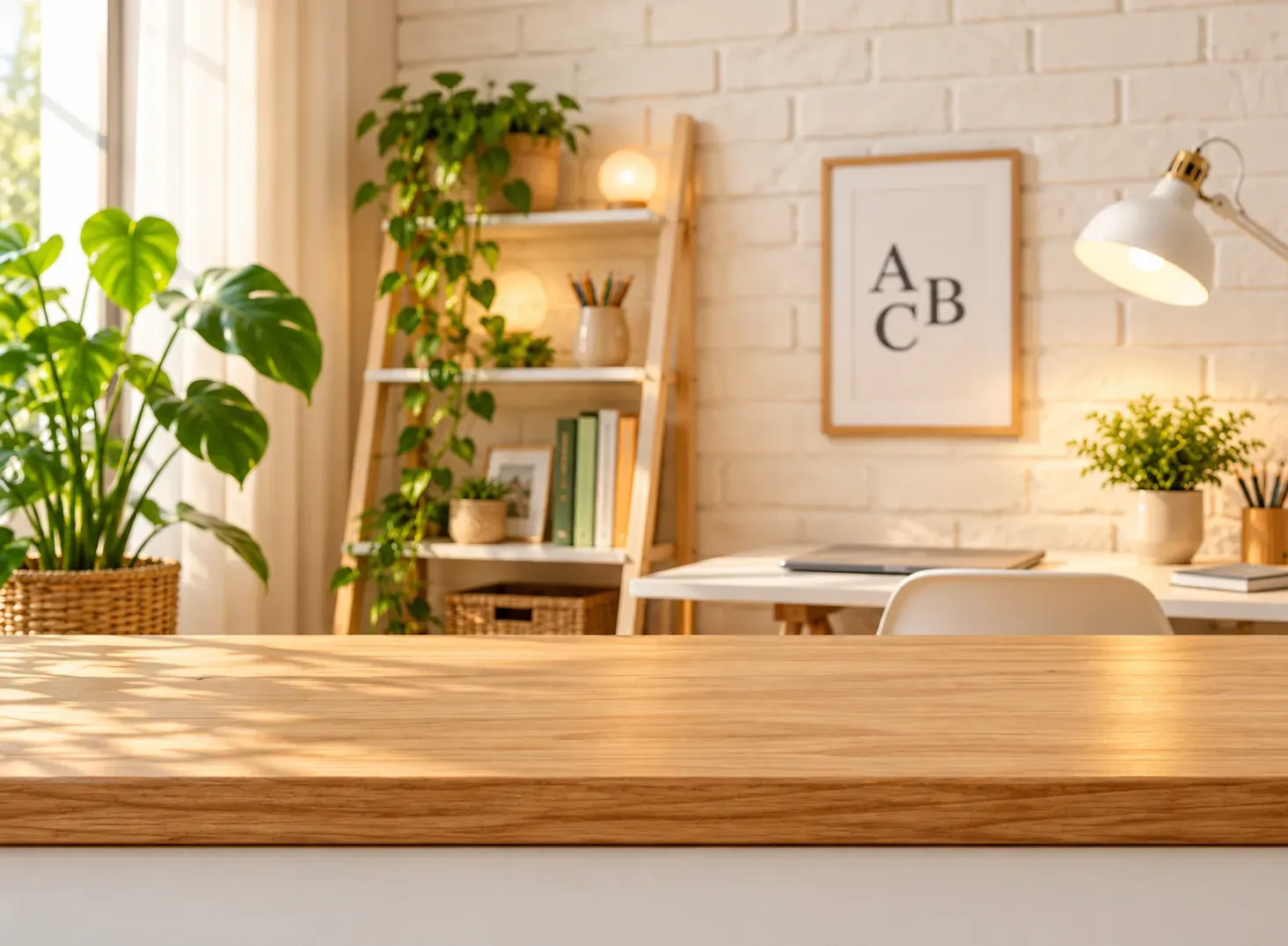
There isn't one right way to add storage to a children's study table. The best option usually depends on the room's layout, the child's age, and how much they already own.
Not every home has room for a full-sized desk and a separate storage unit. For smaller bedrooms, a small study table design that folds storage into the structure itself makes a real difference.
These layouts suit a unique study table design that needs to do more with less, without making the room feel cramped.
A kids’ study table design that works for a six-year-old rarely works the same way for a twelve-year-old, and planning for this upfront saves a full redesign a few years down the line.
| Age Group | Storage Priorities |
|---|---|
| Younger children (5-8 years) | Easy-access, low-height compartments; nothing that requires reaching or complex latches |
| Middle years (9-12 years) | A mix of drawers and shelves for books, stationery, and early school projects |
| Older kids and teens (13+) | More surface area and storage for thicker textbooks, reference material, and devices |
Designing with some flexibility in mind, adjustable shelves, modular drawer units, means the same modern study table can genuinely grow with the child rather than needing to be replaced every couple of years.
Comfort shouldn't be sacrificed for storage. Even a desk with several drawers and shelves isn't a good study table if the youngster can't sit comfortably at it.
A few fundamentals to verify:
A well-planned modern study table design treats storage and ergonomics as equally important, not storage first and comfort as an afterthought.
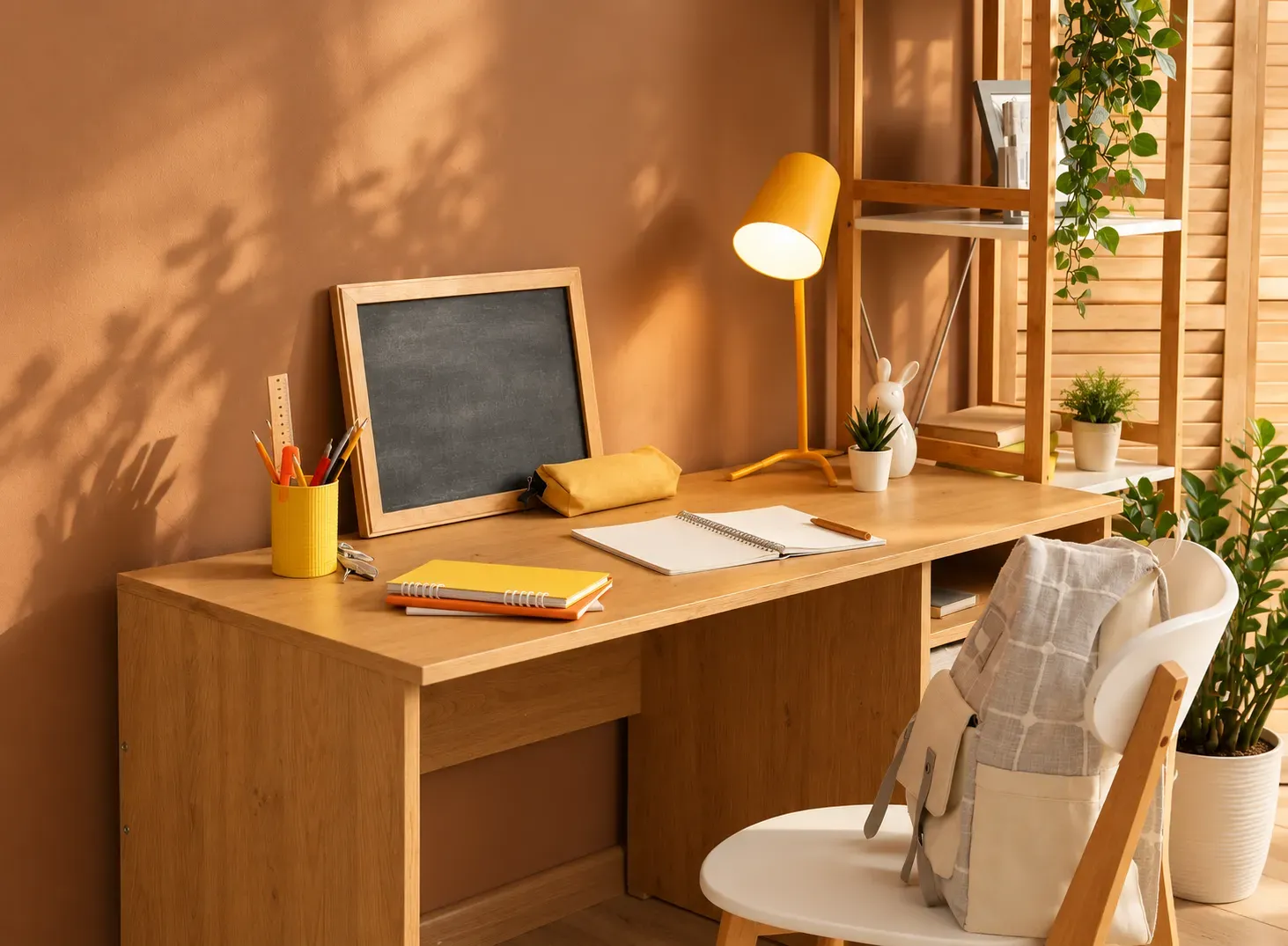
A few popular formats are consistently effective for a variety of age groups and room sizes:
| Design | Why It Works |
|---|---|
| Wardrobe-cum-study table | Combines storage and desk in one unit, ideal for compact rooms |
| Partitioned wall desk with drawers | Creates a defined "study zone" that helps a child mentally switch into focus mode |
| Floating wall-mounted table | Keeps the floor clear and can be paired with wall shelving above |
| Study table with pegboard | Uses vertical space for supplies and display, keeping the desktop clear |
| Twin desk setup for two children | Placed apart for individual focus, or together depending on how well siblings work side by side |
Every child studies differently, and a generic desk-with-drawers setup rarely accounts for that. This is where Bonito Designs’ LifeDesign process can help with kids’ study table design. Bonito Designs is an interior design service that begins every design process by understanding how your family really works. Is your kid distracted by visual clutter? Or do they require a lot of open shelving because they prefer everything to be visible?
The final design supports the child's current learning style and can be modified as their needs evolve over the years. If this is how you want your kids’ study room to look, then book a consultation with Bonito Designs today!
Accessories, textures and finishes are all essential to modern bathroom decor, especially when smaller details need to feel connected. However, useful modern bathroom decor ideas also account for moisture, cleaning and storage so the room remains practical every day.
23 Oct 2026|5 min readA well-planned basement can become a practical extension of the home when moisture, ventilation, lighting and access are addressed first. From home theatres and gyms to guest rooms, offices and organised storage, basement interior design should reflect how the space will actually be used. Thoughtful layouts, moisture-resistant finishes and layered lighting can also make lower-ground spaces feel brighter, safer and more comfortable.
23 Oct 2026|5 min readWood and stone can both strengthen interior wall ideas by adding warmth, texture and depth, but their visual weight needs careful control. In a balanced wall design, one material can lead while the other supports it through smaller accents, matching undertones, and considered lighting.
22 Oct 2026|5 min read


Your Home Makeover Starts Here.