Victorian rooms are easy to admire in photographs. Deep colours, carved furniture, patterned fabrics and decorative lighting create strong character. Used together in a compact apartment, however, they can make the room dark, difficult to clean and awkward to move through.
Identify the details you genuinely enjoy and give them enough space to be seen. In successful Victorian house interior design, one panelled wall or well-proportioned armchair can establish the style more effectively than ornament across every surface.
A traditional Victorian-style house combines mouldings, dark timber, patterned fabrics, framed art, decorative lamps and detailed furniture. Its layered character comes from combining colour, pattern, and objects.
Small Indian homes need a selective approach. Victorian house interior design can retain familiar proportions and details while reducing their visual weight. Choose two or three leading features and let the remaining surfaces support them.
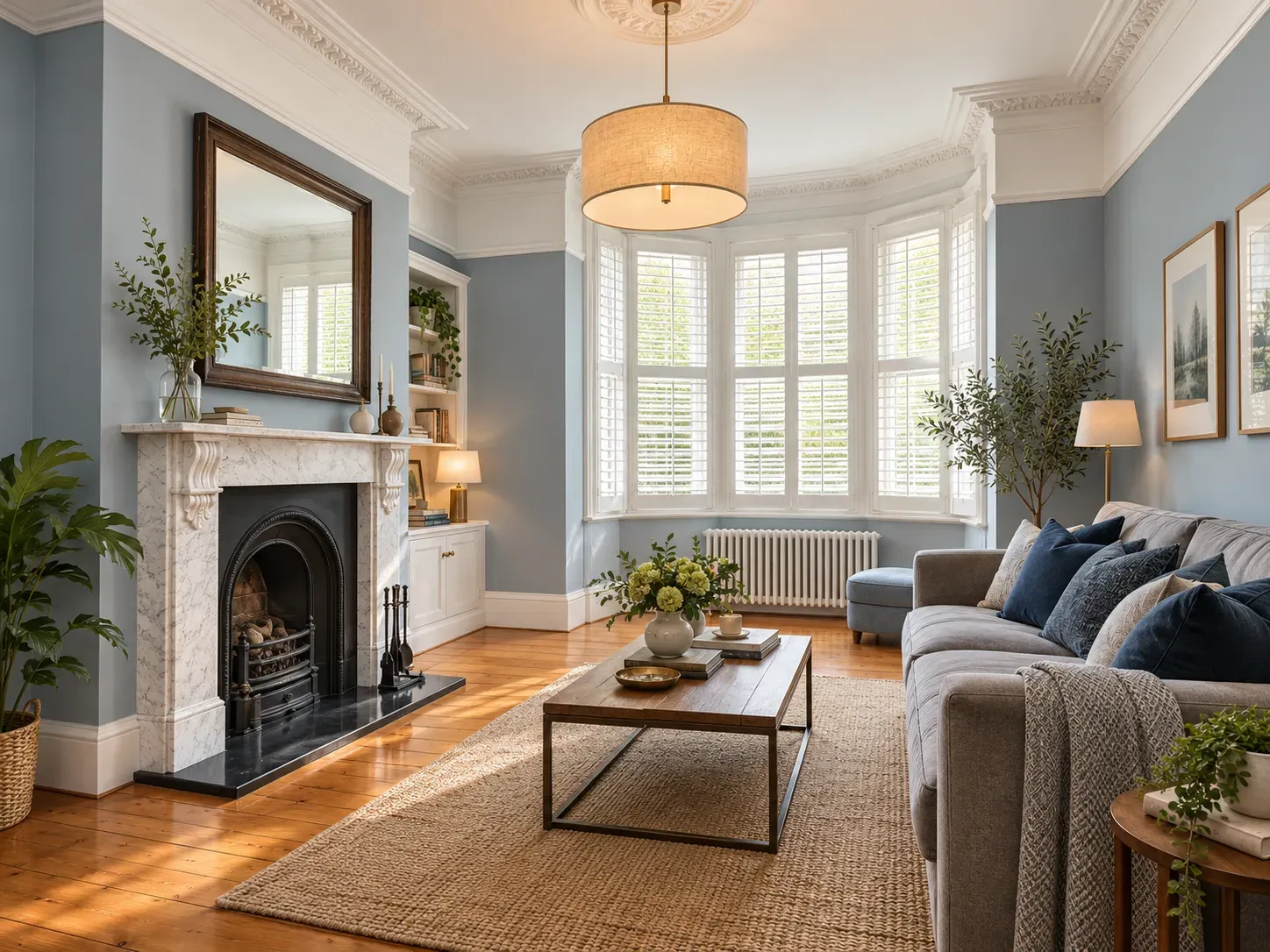
Dark green, burgundy, navy and brown can absorb too much light across a compact room. Warm white, pale taupe, light greige or muted cream gives Victorian house interior design a brighter foundation.
Use deeper colour on half a wall, inside a niche or through one upholstered piece. Test it beside the flooring and under permanent lights because showroom burgundy may turn brown in a shaded Mumbai living room.
Wall mouldings add Victorian-style interior design without taking up floor space. Keep profiles shallow and align panels with doors, furniture and wall lights. Several narrow panels can crowd a short wall. One broad frame behind the sofa or bed works better. Matching the moulding to the wall adds depth without strong contrast.
Account for switchboards, air-conditioning pipes and existing beams. Add these interruptions to the elevation drawings before work begins, especially when electrical points cannot move.
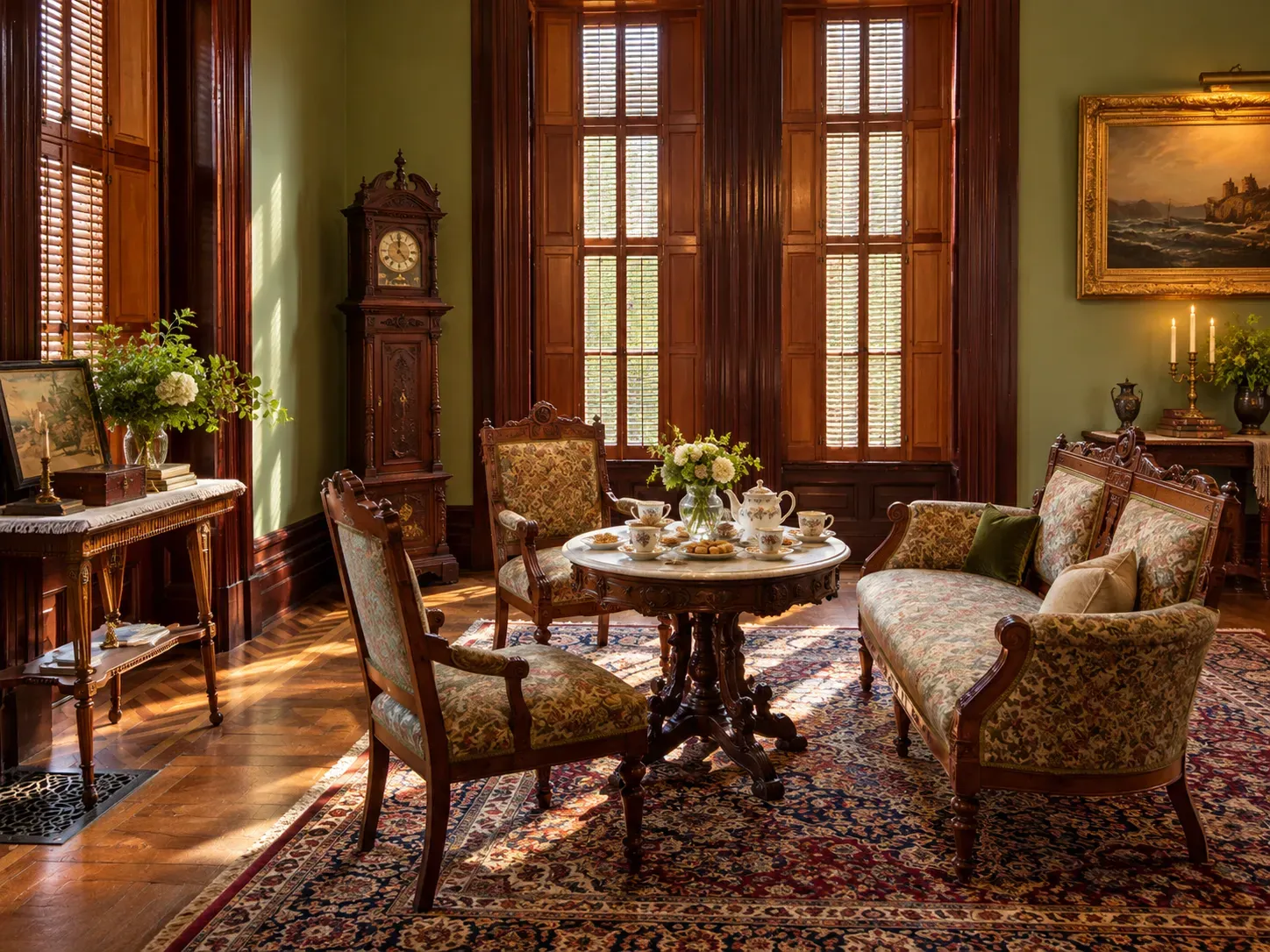
Bulky sofas, deep wing chairs and heavy cabinets consume circulation in a Mumbai 2 BHK. For compact Victorian house interior design, choose slimmer arms, raised legs and controlled curves. Interior designers in Mumbai often use a one-button-tufted chair, a turned-leg console, or a dark-wood table to carry the Victorian theme.
Measure furniture in its usable state. Allow pulling space for dining chairs, door clearance for cabinets and a practical route between the bed and wardrobe. Tape dimensions on the floor before ordering.
Pattern gives Victorian house interior design much of its identity, although placement matters. Use a floral print on an armchair, curtains or cushions instead of all three. Keep the largest sofa plain beside a detailed rug. Pair prominent wallpaper with simpler curtains and bedding. Repeat one colour across the room to connect different patterns.
Velvet can suit the style, but it holds dust and needs more care than a tightly woven performance fabric. Removable covers and washable curtains help in homes with children, pets or road-facing windows.
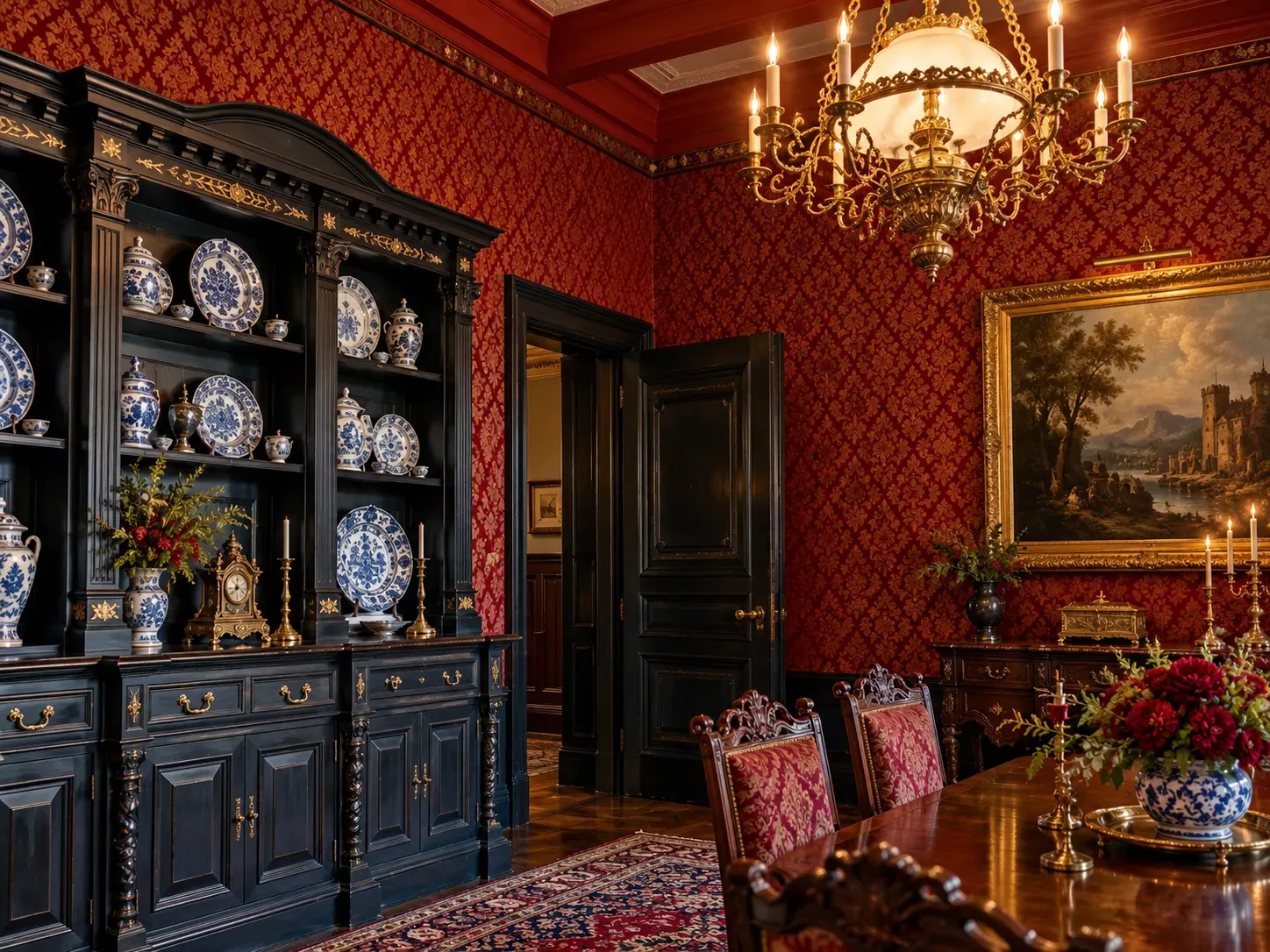
Victorian rooms often layer portraits, botanical prints, clocks and collected objects. In a small home, group frames on one wall instead of scattering pieces throughout the room. Keep the display within the width of the furniture below it, and leave nearby surfaces clear. An ornate frame can provide enough detail on its own. Use closed cabinets for less decorative possessions so the display remains intentional and easier to dust.
Decorative chandeliers, shaded wall lights and table lamps support Victorian house interior design, but each fitting needs a purpose. One statement light can work with practical ambient and task lighting.
Check a chandelier against ceiling height, fan movement and sightlines. Align wall lights with furniture or artwork. Separate lighting controls let you use bright light for cleaning and softer light in the evening.
Mirrors distribute light when placed opposite a window or near a lamp. Choose one useful framed mirror because several small pieces can fragment the wall.
A modern Victorian home needs space for routers, chargers, toys, luggage and paperwork. Store these items in closed storage and reserve open shelves for selected books or artwork. For practical Victorian house interior design, framed shutters can provide classic detail around modern fittings. Plan drawers, adjustable shelves and cable routes around the household's belongings.
Keep tall furniture away from windows, leave space around air-conditioning units, and avoid dust-collecting ledges. Resolve Mumbai dampness before installing wallpaper or timber moulding. In Bangalore, inspect balcony-adjoining walls for seasonal seepage.
Bonito Designs' LifeDesign approach begins with how each room is used. A family that entertains may need a detailed cabinet for serving ware. A Bangalore couple may prefer a panelled study wall concealing files and chargers.
These choices help Victorian house interior design support daily routines. Bonito Designs coordinates layouts, custom storage, lighting, materials and furniture through end-to-end planning, in-house execution and ISO-certified systems.
Book a consultation with Bonito Designs to adapt Victorian interior design to your space, possessions and everyday life.
Transitional interior design blends classic detailing with contemporary simplicity, while modern interior design relies on cleaner lines, streamlined storage and stronger visual restraint. The right choice depends on the home’s size, existing furniture, maintenance needs and daily routines. Materials, furniture scale, storage and lighting should all support the chosen style.
21 Oct 2026|5 min readA well-planned small 2 BHK flat interior design should prioritise clear walkways before placing furniture or adding décor. Mapping natural movement paths, choosing appropriately scaled furniture, and using space-saving storage can make compact homes feel more comfortable and spacious. Consider daily routines, circulation, storage, and lifestyle needs together to create a home that works.
19 Oct 2026|5 min readA second bedroom in a 2 BHK can become far more useful when you plan it around everyday routines rather than keeping it only for occasional guests. Convertible furniture, smart storage, layered lighting, and flexible layouts can help the room support work, hobbies, fitness, or relaxation. By planning for both present needs and future changes, couples can create a multipurpose space that remains practical over time.
19 Oct 2026|5 min readThoughtful villa interior design creates continuity across large homes without making every room look identical. Repeating select materials and colours, planning circulation, balancing social and private zones, and using lighting strategically can help each space feel connected. Also consider corridors, landings, storage, and room-specific needs as part of the overall plan.
16 Oct 2026|5 min readTop interior design for homes in Mumbai and Bangalore needs to respond to different space, lifestyle, and layout requirements. Mumbai homes often benefit from compact furniture, smart storage and lighter palettes, while Bangalore homes may allow greater flexibility with traditional, contemporary and luxury elements. Across both cities, good design comes down to planning each room around daily routines, circulation, storage and comfort.
06 Oct 2026|5 min readDIY interior design projects can give children a hands-on way to experiment, solve problems and make creative choices. Simple activities such as bird feeders, painted rocks, fairy gardens, desk organisers and bedroom bunting can support kids’ creativity without requiring expensive materials. Creating a safe, flexible workspace and displaying finished projects can make children feel more involved in shaping their surroundings.
06 Oct 2026|5 min read


Your Home Makeover Starts Here.