There is no single best type of interior design style for Indian homes. The right choice depends on your home’s layout, local climate, existing furniture, and your family’s everyday routine. Popular styles such as modern, minimalist, Scandinavian, traditional Indian, and luxury can also be blended to create a practical and personalised space.
Walk into ten homes across Mumbai or Bangalore, and you'll see ten different approaches to the same 2BHK layout. One family has gone all-white and minimal. The next has cane furniture, brass rings, and a gallery wall of family photos. There isn't a single best type of interior design for an Indian home. Your choice must be based on the limits of your home layout, your city's climate, and your family's needs.
The best-looking home design isn't always the most "on-trend" one. Before picking one of the many interior design styles on offer, it helps to be honest about how your household actually functions day-to-day, not just how it looks in a photo.
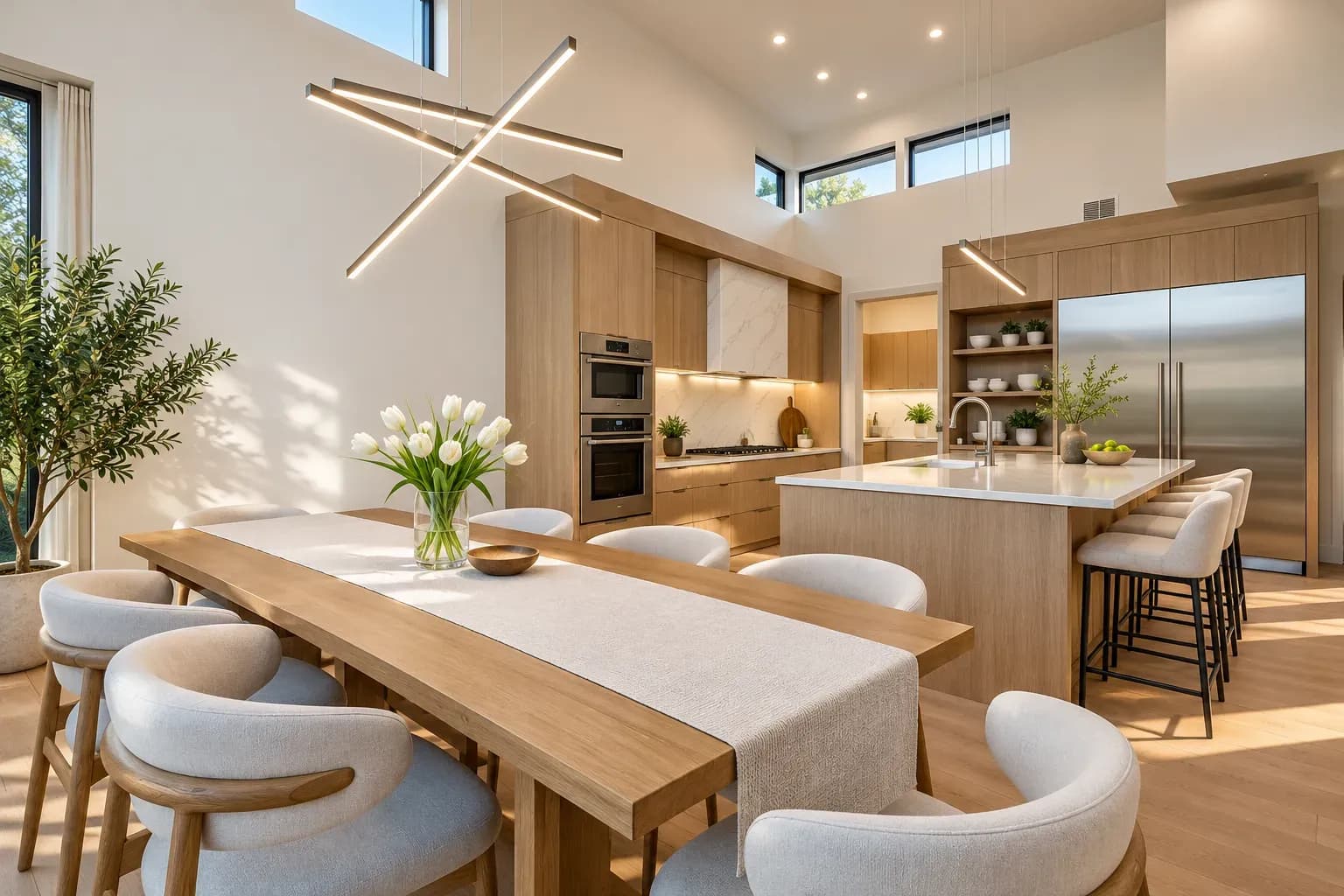
Modern interiors lean on clean lines and functional palettes. Interior designers in Mumbai tend to prefer this style for compact homes where every square foot needs to earn its place. Modern furniture trends are all about making the house feel sleek and spacious without changing the layout, which helps a lot in Mumbai's 1- and 2-BHK apartments.
Contemporary design is looser than modern design, mixing textures and materials without committing to a single rulebook. It's a popular pick for younger Bangalore homeowners off Sarjapur Road or in Whitefield who want a home that can evolve as their tastes and budgets grow over time.
Minimalist spaces are all about maximising style with fewer objects, more negative space, and storage that hides everything from festival lights to old files. For a working couple juggling two commutes and a toddler, minimalism can be a functional choice, as it significantly reduces the need for constant maintenance.
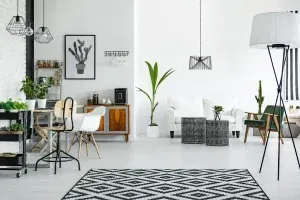
Scandinavian style features light wood, soft whites, and abundant natural light. It suits north-facing Bangalore homes that already get generous daylight, though in darker Mumbai flats it needs warmer lighting layered in through lamps and dimmers to avoid feeling cold.
A fusion of traditional interior design and modern styles is quickly becoming one of the most popular interior design styles in India. Back teakwood furniture, jaali work, brass accents, and rich colour, like mustard, maroon, and deep green, are hallmarks of traditional Indian design. This remains a strong choice among Indian families who don't want their homes to lose their traditional charm through years of remodeling.
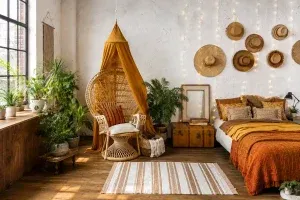
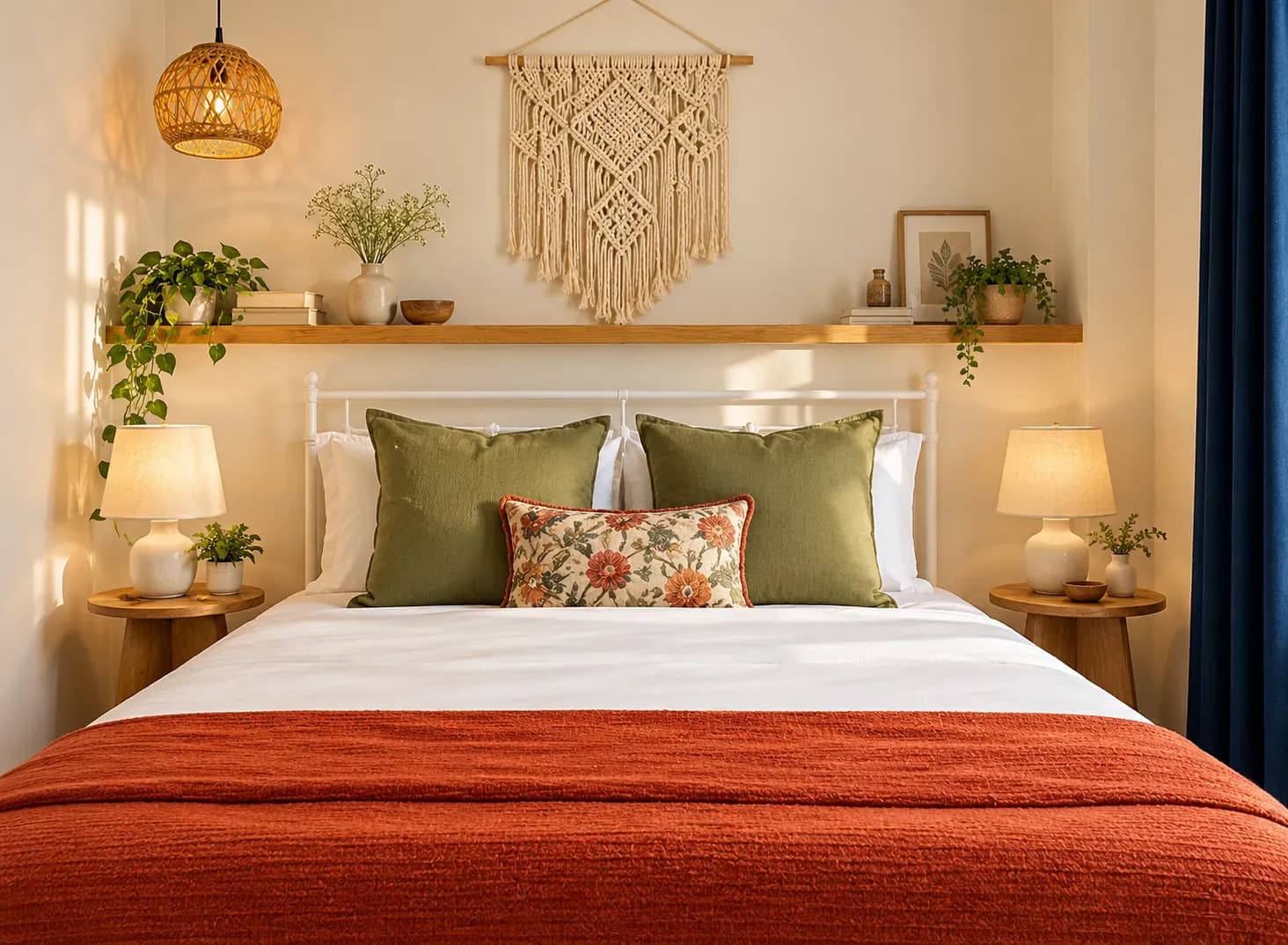
Bohemian interiors layer rugs, plants, and handcrafted décor for a lived-in, personal feel. It works especially well in a rented Bangalore flat, where you want personality and warmth without committing to permanent renovation work.
Industrial style uses exposed brick, metal fixtures, and raw, unfinished surfaces. A good fit for loft-style Mumbai apartments. It also suits homeowners who'd rather skip heavy plastering and finishing costs altogether.
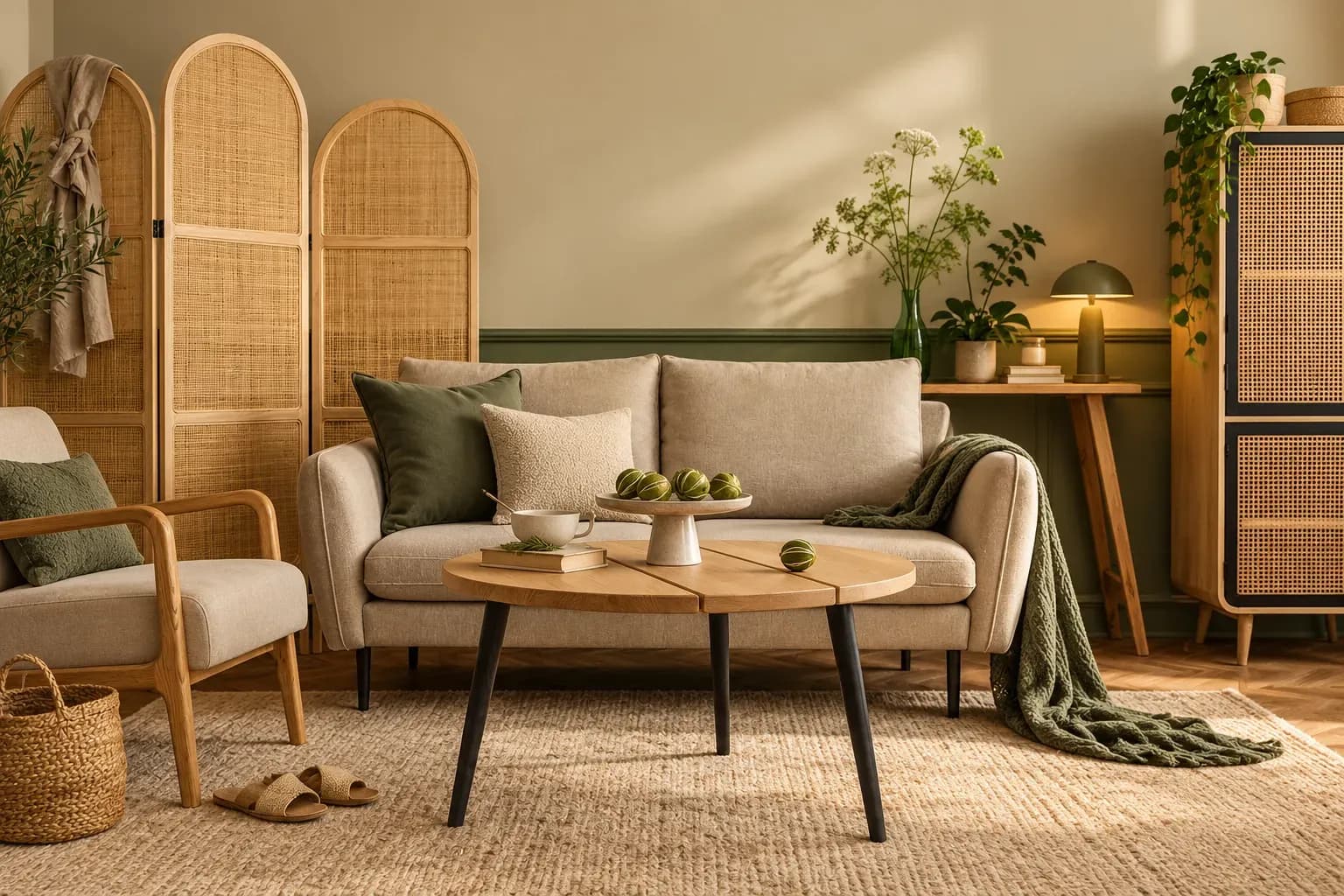
Mid-century modern brings tapered wooden legs, warm wood tones, and a slightly retro colour palette that photographs well without feeling dated. It ages gracefully, which matters if you're not planning to redo your home every five years and want furniture that stays relevant.
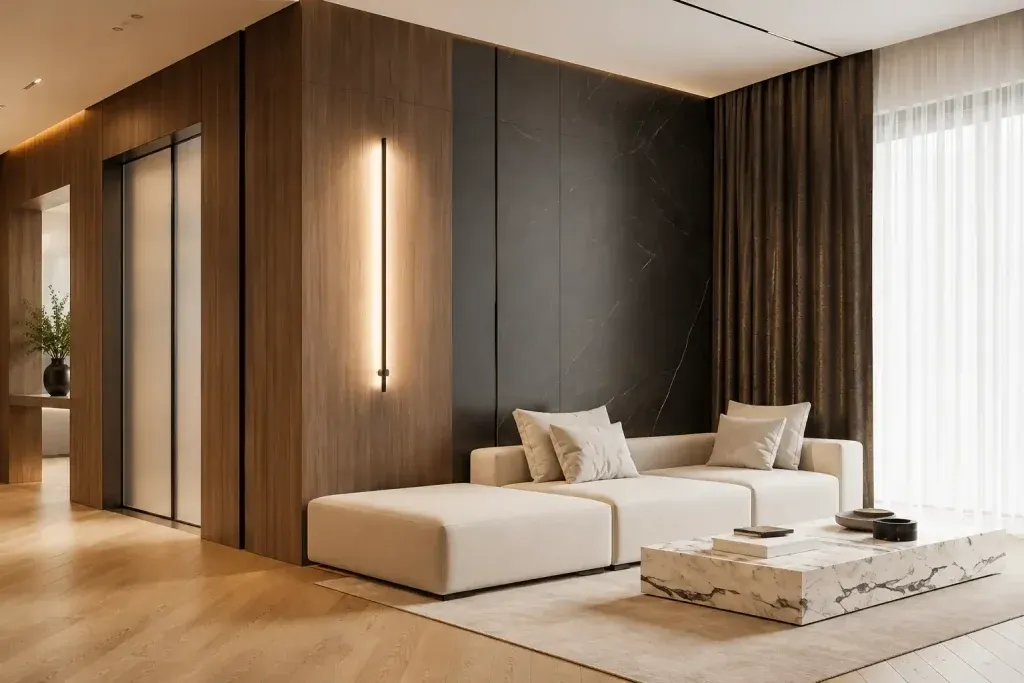
Luxury and glam interiors go big on statement lighting, marble or marble-look surfaces, and metallic accents throughout the space. This suits larger Bangalore villas and Mumbai sea-facing homes with the square footage and ceiling height to let a chandelier actually breathe properly.
Very few Indian homes commit fully to a single type of interior design. Modern interior styles are all about blends. Below are some popular fusions that are commonly seen in Indian homes:
This practical fusion is often required if you want to build a home that you can actually live in.
A good looking interior design style is not necessarily also good to live in. Many homeowners make the mistake of just choosing a style based on how it looks on their friend's Instagram page, without thinking about whether the style would actually suit their home layout or personal lifestyle. Here are some common pitfalls that you might fall into while choosing an interior design style. Avoiding them is a good if you want to find a style that excels at both aesthetics and functionality.
A picture can be made to look stunning in a thousand different ways, and rarely is it a representation of what you will actually get as the end product. Interior design styles are the same. What looks good on Pinterest might not be what is actually right for your home.
Unless you're planning to completely ditch your current furniture, you cannot design a new home without first considering what you already have. Also, planning a new layout with your existing furniture is not only possible, but is also drastically cheaper than redesigning the entire space with brand new items.
Indian home layouts, especially those in crowded cities like Mumbai and Bangalore, can differ drastically from international homes. Directly copying international designs without first considering the reality of Indian homes leads to cramped homes that don't feel good to live in. What you can do is emulate the aesthetics of international designs, but completely reusing the entire layout is unadvisable, more so when you live in a small or 2BHK apartment.
Combining different interior design styles can make a home feel personal, but using too many at once often creates visual clutter. Several contrasting patterns may look appealing individually, yet compete for attention when placed in the same room. Instead, choose one primary style and introduce elements from one complementary style through minor furniture accents.
Trends are a great source of inspiration. However, they should not determine every design decision in your home. Before following a trend, consider your daily routines, storage needs, climate, cleaning habits, and the people using the space. The right interior design style should support your lifestyle even after the trend starts to lose popularity.
Start with how you actually live, not how you want your home to look in photos. If mornings involve a mad scramble for school bags and lunch boxes, your entryway needs storage more than it needs style.
Note down the spots where people or pets like to gather. A pet that claims one corner of the living room, or a kid who does homework at the dining table. Design around these patterns instead of simply following a layout that looks good.
Look at your room size and check what furniture you already own and genuinely want to keep. A style that ignores your existing pieces usually ends up feeling like an expensive do-over rather than a refresh.
Bring in regional influences that already feel like home, such as a Mangalore tile accent, a Rajasthani door, or a South Indian brass lamp. These types of interior decoration choices are often what make a house feel personal.
Among the many styles in interior design you'll come across, the right one is simply the one that doesn't fight your daily routine. Treat any new interior design ideas or interior design themes you find online as a starting point, not a rulebook to follow exactly.
This is where Bonito Designs' LifeDesign philosophy comes in. Bonito Designs builds around how your family actually lives, not just how a room looks in photos. Our designers work directly with the layouts and constraints of homes in Mumbai and Bangalore every day, from narrow balconies to independent villas, so their recommendations are grounded in what genuinely works for your building.
Whether you're drawn to a clean modern layout, a warm traditional space, or a blend of both, Bonito Designs can help you create a home that looks good and actually works. Book a consultation today.
A well-planned small 2 BHK flat interior design should prioritise clear walkways before placing furniture or adding décor. Mapping natural movement paths, choosing appropriately scaled furniture, and using space-saving storage can make compact homes feel more comfortable and spacious. Consider daily routines, circulation, storage, and lifestyle needs together to create a home that works.
19 Oct 2026|5 min readA second bedroom in a 2 BHK can become far more useful when you plan it around everyday routines rather than keeping it only for occasional guests. Convertible furniture, smart storage, layered lighting, and flexible layouts can help the room support work, hobbies, fitness, or relaxation. By planning for both present needs and future changes, couples can create a multipurpose space that remains practical over time.
19 Oct 2026|5 min readA successful 2 BHK flat interior design project depends on clear scope, timely approvals, accurate measurements and proper sequencing of work. Plan procurement, modular production, and site execution around key dependencies to avoid delays. Regular reviews and systematic snag checks help keep the interior design project timeline on track.
17 Oct 2026|5 min read


Your Home Makeover Starts Here.