For most people, a bedroom isn’t just for sleeping. It may also serve as a reading corner, a quiet place to work or simply somewhere to unwind at the end of the day. Fortunately, creating a room that supports all these routines does not require elaborate decoration. Thoughtful yet simple bedroom interior design can bring together comfort, storage and personal style without making the space feel crowded.
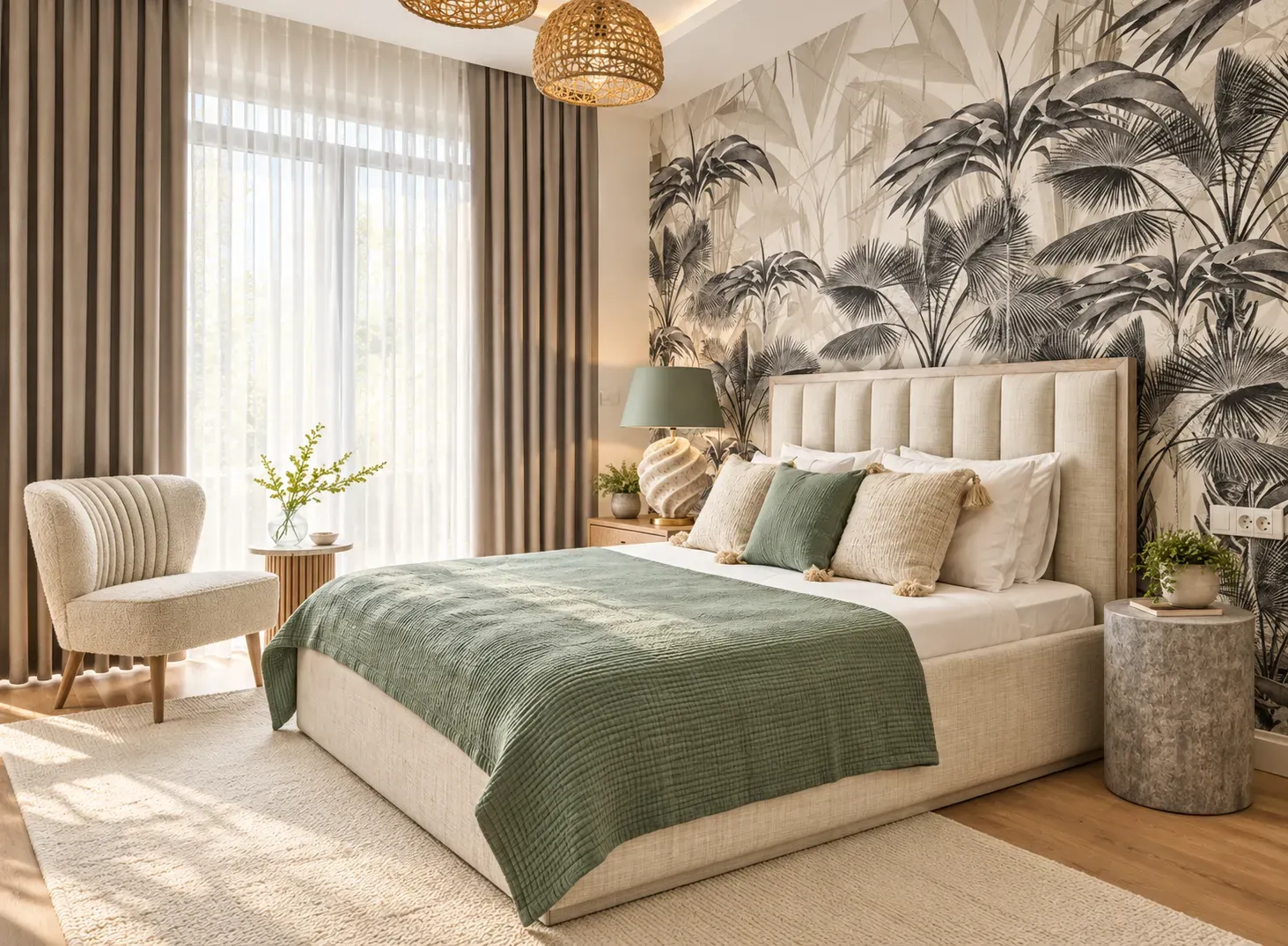
The following ideas show how colour, furniture, lighting and small decorative changes can transform a master bedroom into a comfortable retreat. They can also help you adapt simple bedroom interior design principles to your room's size and character.
Not everyone works best in a separate study. If you occasionally work or read in bed, create a cocoon-like setting that feels enclosed without becoming gloomy. Deep grey, warm neutrals, and controlled contrast can add depth to a simple bedroom interior design. Balance dark walls or timber furniture with white bedding and lighter upholstery.
An eclectic bedroom brings together colours, patterns and pieces from different styles. Try aqua blue or green against a neutral background, then combine focused lighting with softer lamps to change the mood. Keep one colour or material consistent for a simple bedroom interior design that feels collected rather than mismatched.
Few styles feel as refreshing as a coastal bedroom. Use white or pale neutral walls with blue and green upholstery. Seating made from jute, cane or a similar natural fibre can add texture and strengthen the relaxed coastal character.
A traditional bedroom can feel distinctive in a home filled with contemporary finishes. Consider a solid wooden bed, turned posts, classic wall sconces and patterned fabrics. Keeping the surrounding colours restrained lets the detailed furniture stand out without overwhelming the room.
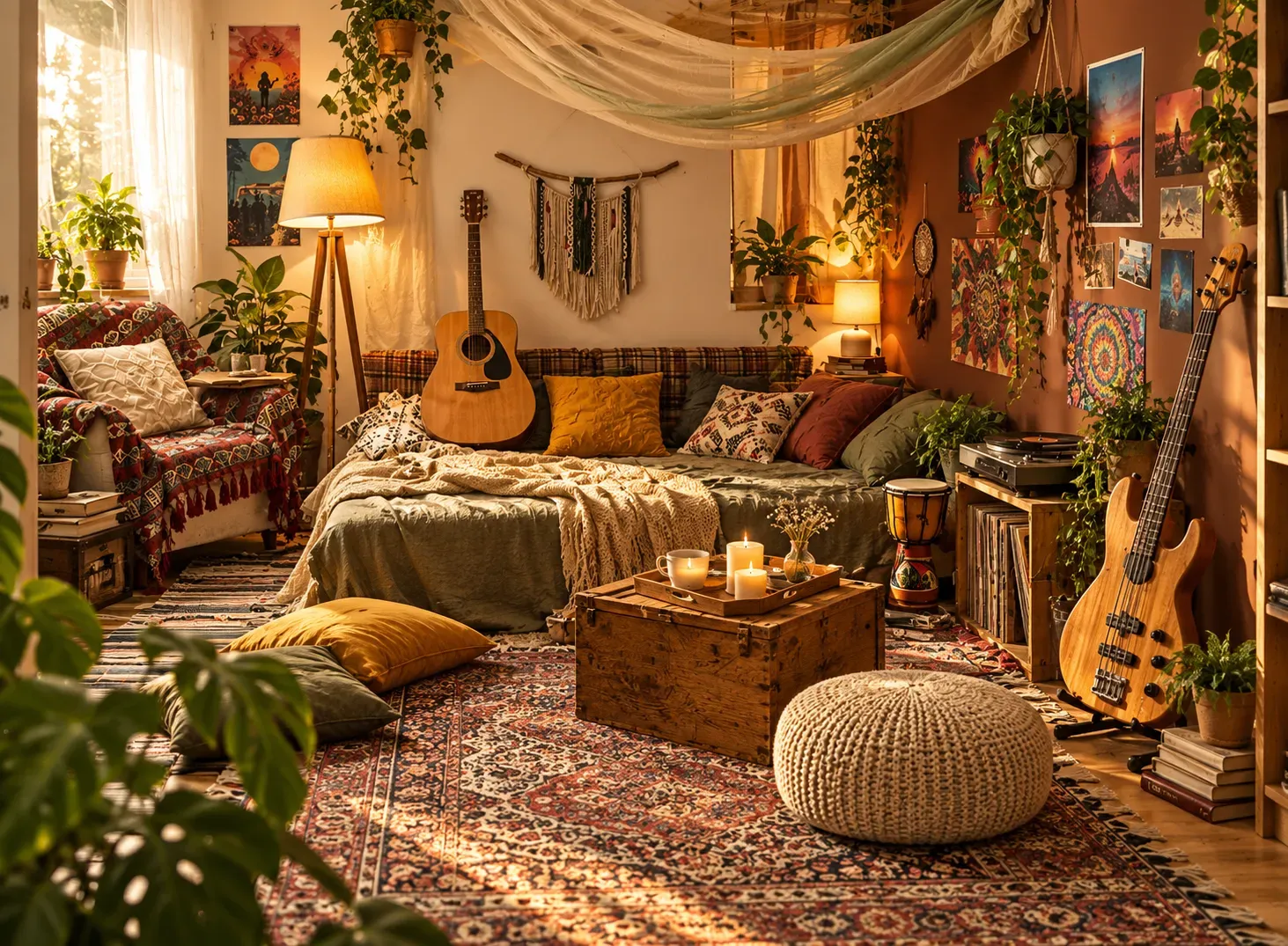
If you enjoy colour and pattern, a Bohemian look offers plenty of freedom. Layer bright cushions, throws, curtains and rugs, but repeat a few shades across the room to hold the scheme together. These colourful modern bedroom designs work best when the bed remains the clear visual anchor.
Art Deco suits homeowners who enjoy geometry, rich colours and metallic details. Create a gallery wall, introduce patterned wallpaper or use a bold mural as the focal point. A restrained interpretation can make the latest bedroom design feel glamorous without turning every surface into a statement.
Many modern bedrooms use a neutral base, clean furniture profiles and limited ornamentation. Glass windows and mirrors can make the room feel brighter. At the same time, timber or textured fabric prevents it from looking cold. For modern interior design bedroom ideas, keep the main surfaces calm and add warmth through a few well-chosen materials.
Moroccan and Bohemian interiors both use colour, but a Moroccan scheme is usually more structured. Patterned rugs, carved furniture, lantern-style lights and rich jewel tones can establish the look. Select a few recognisable elements instead of placing a strong pattern on every surface.
A city bedroom can still borrow the warmth of a modern farmhouse. Wooden flooring, solid timber furniture and simple cotton or linen fabrics bring a natural quality to the space. Painted furniture or pale walls can keep the wood from making the room feel too heavy.
Minimalist design is not about leaving the bedroom empty. It involves choosing fewer pieces and giving each one a clear purpose. In a simple bedroom interior design, concealed storage, an uncluttered bedside table and a limited colour palette can create calm without sacrificing daily comfort.
Maximalism takes the opposite approach, allowing pattern, colour, and collections to share the room. Chandeliers, layered cushions and decorative objects can all belong, provided there is some visual connection between them. Repeat colours or shapes to prevent the arrangement from feeling random.
Decorating a small bedroom can be challenging, so concentrate on a surface that naturally catches the eye. A lamp, framed photograph or small object can give the bedside table personality. For simple bedroom interior design, leave enough space for practical items such as a phone, book or glass of water.
Extend the headboard treatment upwards to connect the bed visually with the ceiling. Panelling, upholstery or a carefully planned false-ceiling detail can create this sense of continuity. The technique directs attention towards the bed and makes it the room’s focal point.
In a simple bedroom interior design, an empty corner can become a useful seating area. Add one or two chairs with a small table for reading or conversation. Before adding them, check that the furniture does not narrow the route between the bed, wardrobe, and bathroom.
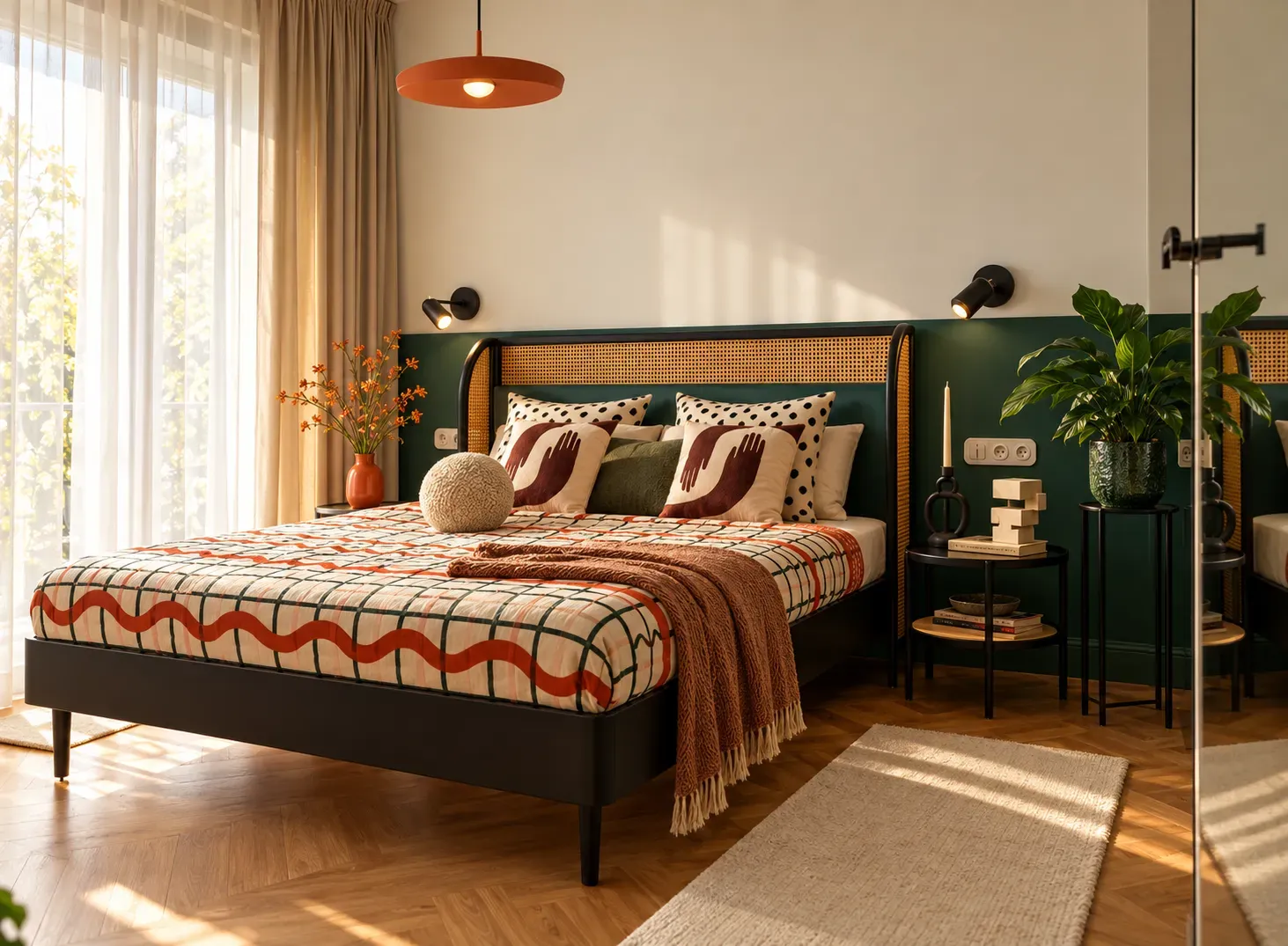
If you also use the bed for reading or occasional work, give it more visual and physical support. An upholstered headboard, layered cushions or a restrained string of lights can highlight the area. Keep decorative additions away from reading lamps and charging points.
Turn the bedroom into a more intimate retreat with soft, warm lighting and tactile fabrics. Curtains around the bed can create enclosure where space allows, while dimmable bedside lamps offer a simpler alternative. Choose details that remain comfortable and practical on ordinary days too.
Scenic wallpaper can bring depth to one wall without changing the entire room. Forest, botanical and coastal prints are restful choices for the wall behind the bed. Select a scale that suits the room, as an oversized print may crowd a compact bedroom.
Mirrors are especially useful in small bedrooms or beside large wardrobes. They reflect daylight and can make the room feel more open when positioned thoughtfully. Among modern interior design bedroom ideas, mirrored shutters offer an effective way to combine this visual benefit with practical storage.
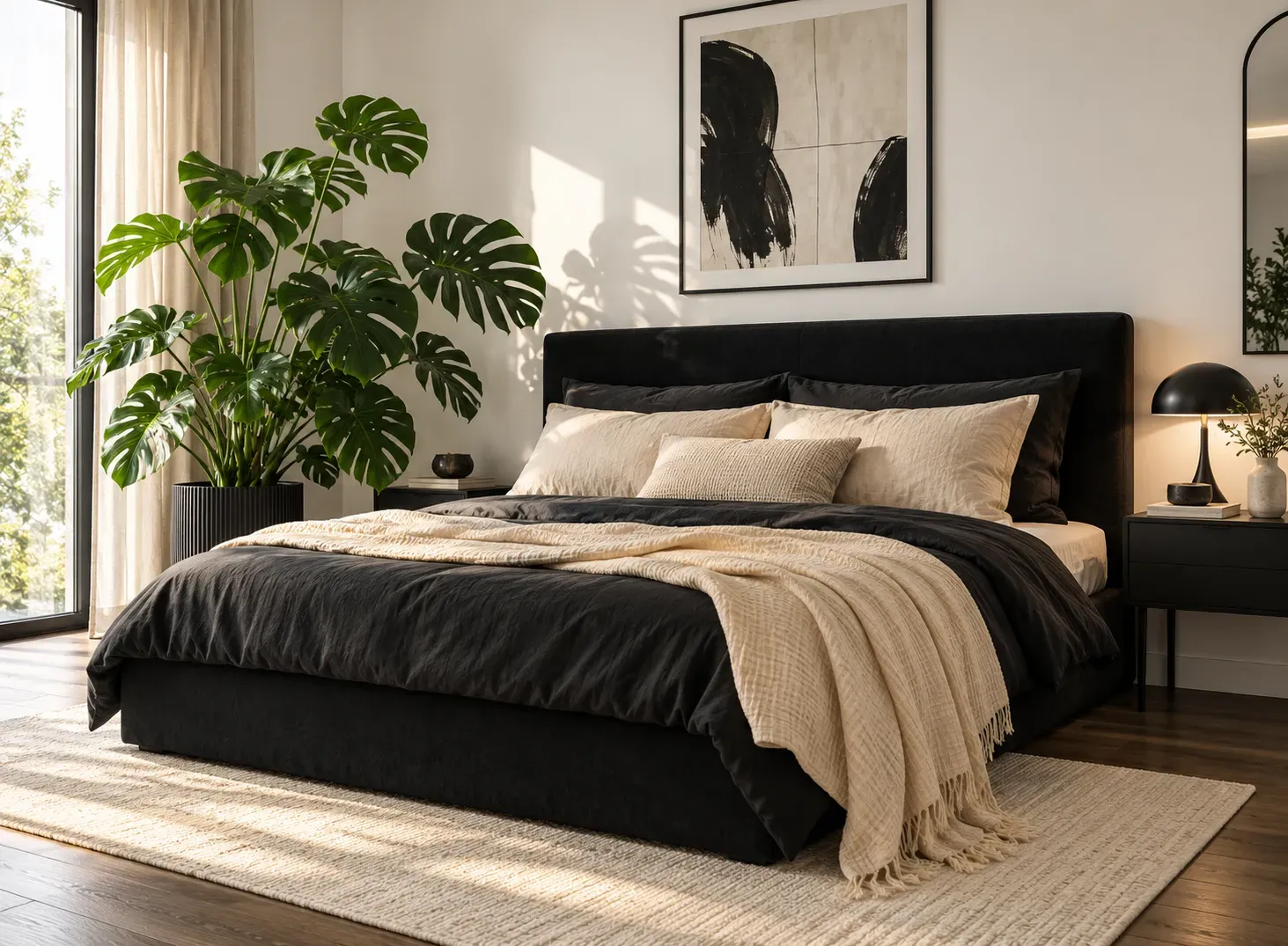
Plants introduce colour and softness to a bedroom. An established floor plant can fill an empty corner, while compact pots suit a window ledge or bedside table. Choose varieties based on the available light, and avoid placing damp planters directly on wooden furniture.
An accent wall works well when you want to change the room without decorating every surface. Paint, wallpaper, panelling or a textured finish can frame the bed and establish a focal point. In a simple bedroom interior design, coordinate this wall with the bedding instead of introducing several unrelated patterns.
Colour doesn't have to stay on the walls. Patterned tiles, painted flooring or a large rug can give the room an unexpected focal point. Check how the floor relates to the walls, ceiling and furniture before committing to a strong shade.
Statement lights are not limited to kitchens and living rooms. A pendant beside the bed or above a study corner can add character while freeing the table below. Position the light over the activity rather than behind the user, and make sure it does not create glare for someone else in the room.
Book lovers may prefer to keep a small library or desk in the bedroom. Use shelving, a compact work surface and focused lighting to establish the study zone. Keeping office storage closed can help the bedroom feel restful once work is finished.
A false ceiling can do more than decorate the room. Changes in level, lighting or finish can distinguish the sleeping area from a study or seating corner. Plan the bedroom layout first, then use the ceiling to reinforce the zones rather than dividing the space arbitrarily.
Don't discard inherited furniture or accessories just because the bedroom is being updated. A vintage chest, chair or artwork can bring character to a newer interior. Restore the piece where necessary and place it where its proportions and finish work naturally with the room for a simple bedroom interior design idea that fuses heirloom pieces with modern furniture.
Transform a compact bedroom by choosing furniture that suits its scale. A slim bed frame, neat bedside tables and vertical storage can improve function without crowding the floor. Neutral tones help the room feel open, while layered fabrics prevent it from appearing flat. These bedroom decor ideas keep a simple bedroom interior design calm, comfortable and easy to maintain.
A white or neutral colour palette can make a bedroom feel restful, but it still needs variation. Combine warm whites with timber, woven fabric or a subtle wall texture. Decluttering and using vertical storage will strengthen the minimalist effect, while a few personal objects can keep a simple bedroom interior design from looking impersonal.
The right bedroom is shaped by more than a decorating style. Bonito Designs’ Life Design process considers how you sleep, dress, work and unwind before planning a simple bedroom interior design. Bonito Designs brings the home bedroom design together with the rest of the home through end-to-end planning, in-house execution and ISO-certified systems.
From the layout and storage to materials, lighting and final finishes, each element is coordinated to support the household’s routines. Book a consultation with Bonito Designs to create a bedroom that feels personal, comfortable and genuinely easy to live in.
Thoughtful villa interior design creates continuity across large homes without making every room look identical. Repeating select materials and colours, planning circulation, balancing social and private zones, and using lighting strategically can help each space feel connected. Also consider corridors, landings, storage, and room-specific needs as part of the overall plan.
16 Oct 2026|5 min readA child-friendly 2 BHK interior design must balance sleep, study, play, storage, and shared family activities in a limited space. Flexible furniture, clearly defined zones, practical storage, durable finishes, and safe circulation help the home adapt as children grow. Planning these elements early can reduce the need for frequent redesigns.
16 Oct 2026|5 min readBangalore’s climate directly affects villa interior design, from material selection and ventilation to daylight control and indoor-outdoor planning. Climate-responsive design can help reduce maintenance while improving comfort and durability. Bonito Designs’ LifeDesign process considers both the family’s lifestyle and local conditions to create villa interiors that are practical, personalised and built to perform over time.
15 Oct 2026|5 min read


Your Home Makeover Starts Here.