When a room feels too small, people tend to buy less, add less, and strip it down until it feels empty. That strategy can be effective, but it typically leaves a space feeling empty rather than truly cosy. Good space design is not about squeezing more into a room or leaving it half-furnished. It involves organising every component, including storage, colour, lighting, furniture, and layout, so that it merits its position. Done well, small home interior design can feel just as complete and personal as a much larger home, without feeling bare.
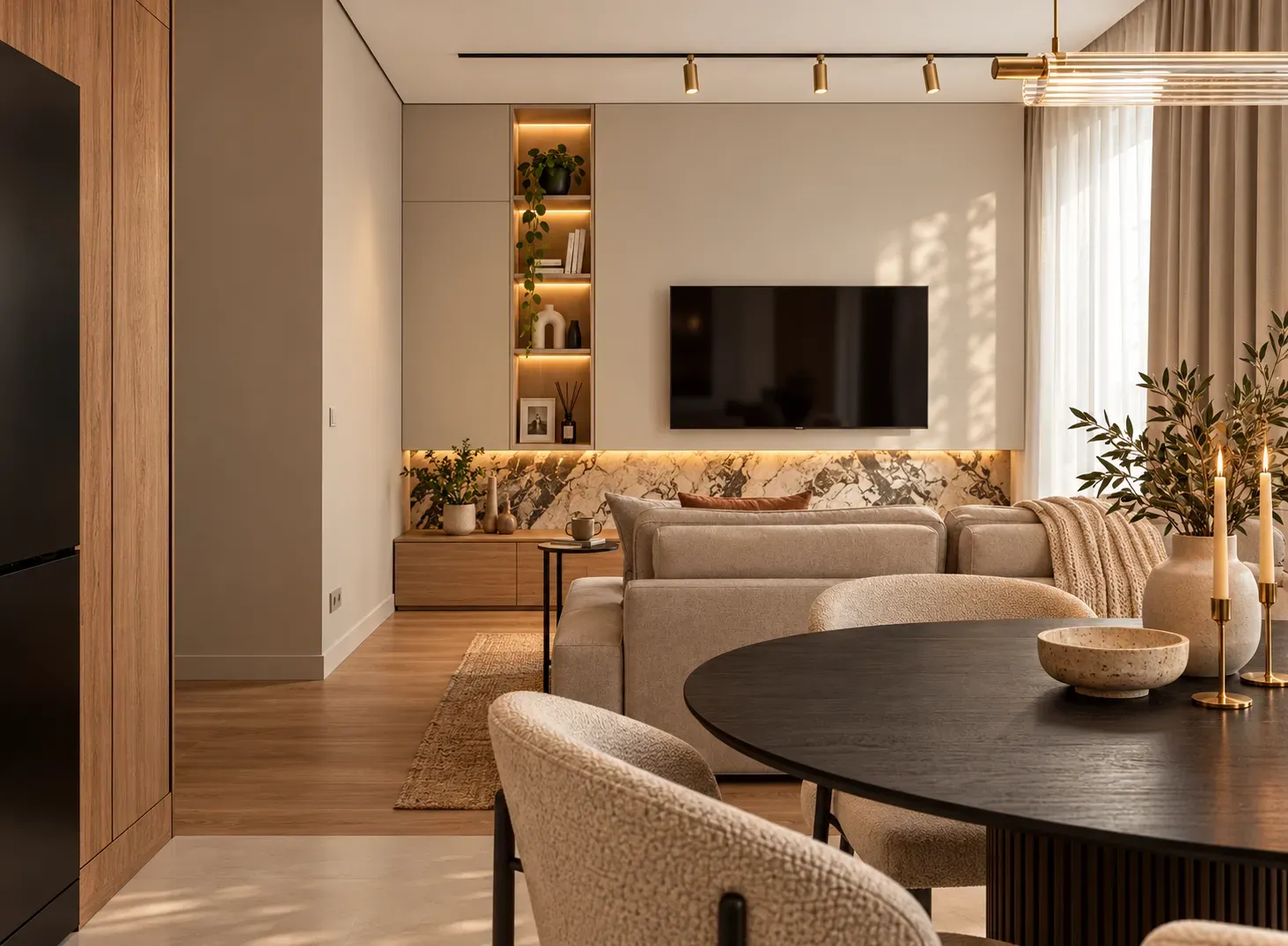
An underutilised area or an awkward furniture arrangement hardly stands out in a larger space. Every choice is magnified in a tiny space.
For this reason, a few non-negotiables are advantageous in contemporary metropolitan homes:
When these principles are met, even a truly small space begins to feel purposeful rather than limited.
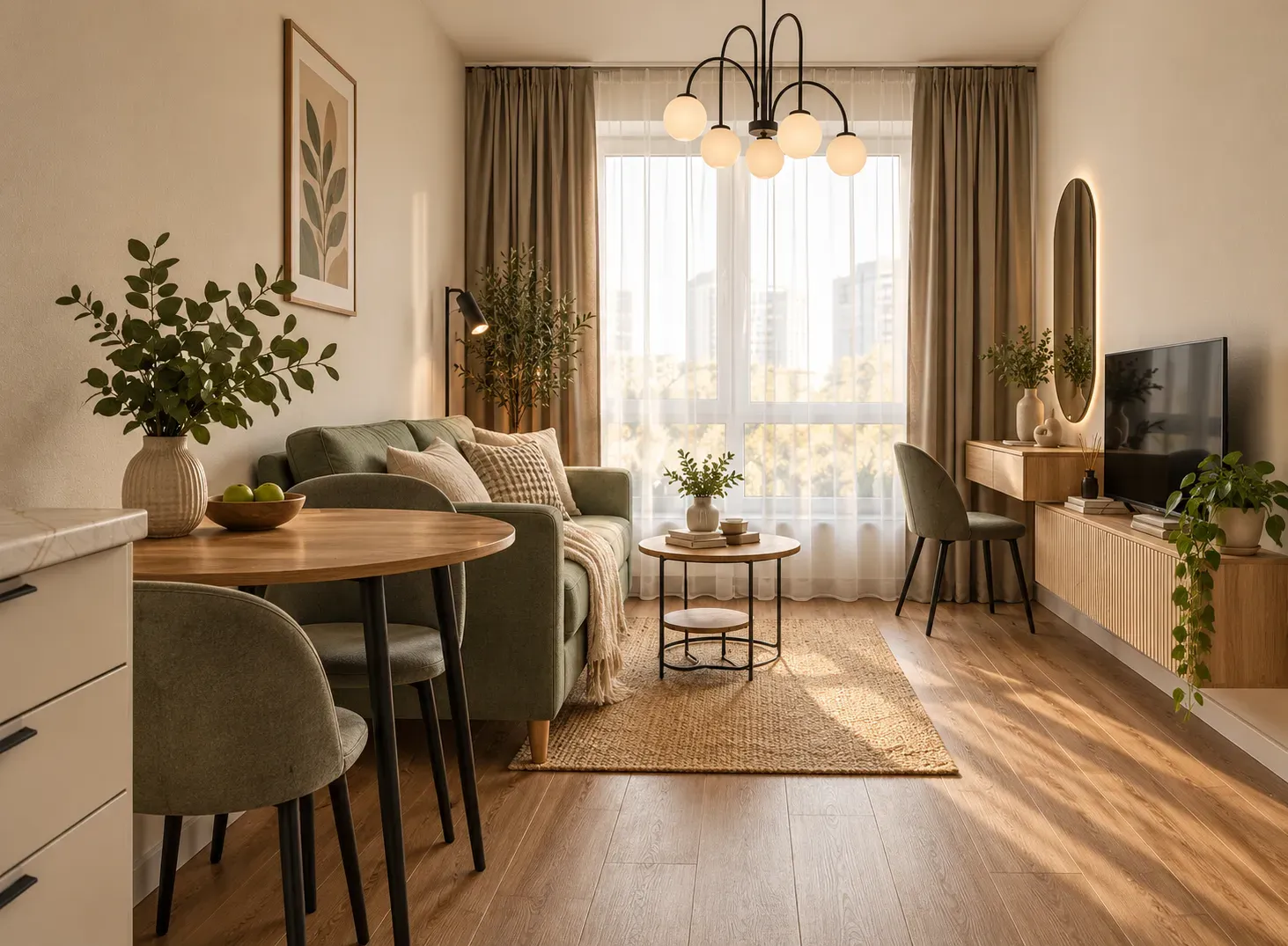
The single biggest lever in small house design ideas is furniture that does more than one job. A compact room can't afford pieces that serve only one purpose when a multifunctional alternative is available.
| Furniture Type | What It Solves |
|---|---|
| Storage beds | Uses under-bed space for linens, seasonal items, or extra clothing |
| Compact or nesting side tables | Provides surface space without a bulky permanent footprint |
| Foldable desks | Creates a work-from-home spot that disappears when not in use |
| Built-in seating with storage | Doubles as a bench and a place to tuck away cushions, books, or games |
| Furniture with concealed storage | Ottomans, benches, and coffee tables that open up to hide clutter |
The aim of small space design isn't to fill a room with furniture. The goal is to ensure that any furniture added is essential to the room and doesn’t drag down the overall aesthetic.
Most small homes quickly use all their floor space, but they rarely use their walls. Here are some useful strategies for making good use of vertical space:
The difference between a small-space design that feels truly well-planned and one that feels crammed is often this one change: thinking upward rather than merely outward.
A common misconception is that stark white is the only colour that works in small spaces. In actuality, a messy space can feel just as clinical and unwelcoming as one that is entirely white.
| Element | How It Helps |
|---|---|
| Lighter wall colours | Reflect more light and create a sense of openness, without needing to be pure white |
| Mirrors | Bounce natural light deeper into the room and add visual depth to a flat wall |
| Natural light | Keeping windows unobstructed makes the single biggest visual difference in a small room |
| Layered lighting | A mix of ambient, task, and accent lighting avoids the flat, single-source glare of one overhead light |
If the colour scheme doesn't drastically change from wall to wall, warm creams, delicate greens, and soft earth tones can all look good in a small space. Layered lighting is equally as important as colour because a single harsh overhead light tends to flatten a small space.
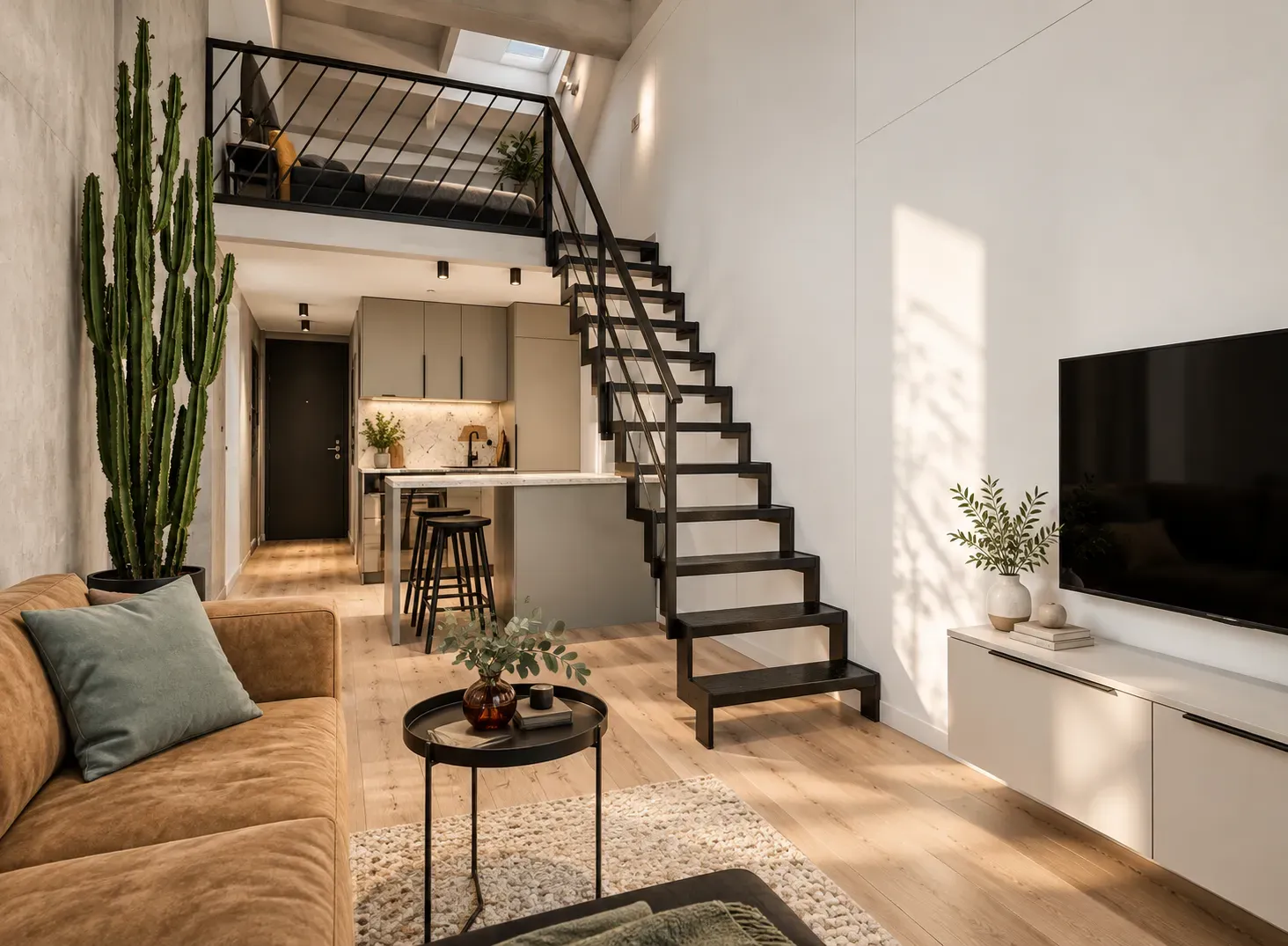
Even with exquisite décor, a small space may feel unlivable if it is difficult to navigate. Just as much consideration should be given to circulation as to the placement of furniture.
A few routines that should be incorporated into any small-space design are:
Physical clearance matters, but so does visual simplicity. No matter how much floor space is truly free, a room with too many colours, patterns, or conflicting textures will feel crowded.
Several dependable strategies typically perform effectively in a variety of compact urban housing types:
Open-plan zoning is the practice of defining distinct zones inside an open space without the need for walls by using a rug, a bookcase, or a change in flooring.
Putting a dining table close to a window so it can be used as an office during the day
Instead of a large piece of furniture that overpowers the space, one well-selected, somewhat smaller version of a stunning piece
Using the same flooring material in all connected small spaces to create a sense of continuity and size
These concepts apply to living rooms, bedrooms, and the increasingly common multipurpose areas in many urban residences that serve as an office, guest area, or hobby corner.
Generic small-space tips can only go so far, since every compact home has its own quirks. This is exactly where Bonito's LifeDesign approach makes the real difference. Rather than using a typical small space design, this interior design service begins by figuring out how a household uses the space in question. The furniture, built-in storage, colour scheme, and lighting choices are all influenced by the family's real-life requirements.
This approach means the final product will feel just right for your family and home, rather than like a generic small-home template. When a small room's layout is organised around how the space is actually used, it can seem cosy and complete.
If you want your small home interior design to feel thoughtful and genuinely personal, book a consultation with Bonito Designs today!
Marble and tiles both offer strong flooring options, but the right choice depends on the room, lifestyle, maintenance needs, and budget. Marble brings natural variation and can be refinished over time, while tiles offer greater consistency, easier upkeep, and practical options for wet or high-traffic areas. Instead of choosing one material for the entire home, homeowners can plan flooring room by room for better durability, comfort, and visual continuity.
27 Sep 2026|5 min readBedroom mirror design can do much more than support daily grooming; they can reflect natural light, create a sense of spaciousness, and add visual interest to the room. From oversized and standing mirrors to decorative clusters, mirrored furniture, and dressing mirrors with storage, the right design depends on the bedroom’s size and daily routines. Thoughtful placement and proportion are essential to ensure the mirror complements rather than overwhelms the space.
27 Sep 2026|5 min readDining room wallpaper can define the dining area, add visual depth and create a strong focal point without taking up valuable floor space. From florals and geometric prints to botanical, metallic and artistic designs, the right choice should complement the room's furniture, lighting and proportions. Practical factors such as wall condition, cleanability, pattern scale and installation quality also matter.
27 Sep 2026|5 min read


Your Home Makeover Starts Here.